
Student Cases

Tech & AI
Tech & AI
No More Performing: From Consulting to a Microsoft PM Role in Three Months
Julia is a Shanghai-born, Toronto-raised student at Northwestern University . After a sophomore year spent trying to fit a consulting mold, she ran consulting and product preparation on two tracks with OSG’s structured mentorship and secured a Microsoft product manager offer within three months — in the same two weeks she was also interviewing with Bain. She writes about recruiting, career pivots, and building a career that does not require becoming someone else. Views shared in this article are her own.
Published on
November 12, 2026
15
min read
For most of my life, adapting has been the job. I was born in Shanghai, went to middle and high school in Toronto, and moved between education systems that ask different things of you. Every time the environment changed, I recalibrated — how to speak, how to carry myself, how to be easy to be around. For years I called that “being adaptable.” It took me a long time to see it for what it was: me, quietly rewriting myself so I would belong. And I had no idea that habit would follow me for years.
Fitting in was never the goal
In college the habit got stronger. Northwestern has one of the most intense recruiting cultures in the country, and like most of my class, I started out in consulting. I pushed myself through coffee chats, networking events, small talk with strangers — anything that would make me legible inside that world. I genuinely loved the consulting club: it put me in front of real clients, and for a while I was sure I was heading in the right direction.
Then something shifted. Consulting rewards breadth over depth. It rewards your ability to present a problem you do not really know, confidently, to a room. That is not the kind of expertise I wanted; there was no long, slow, satisfying climb into a subject. Around that time I came across product management — a role that combines communication with technical depth. It looked closer to the work I actually wanted to do.
What made me stop and think was not the choice between two careers. It was the culture. Watching classmates head into top consulting firms, I recognized something familiar: an environment that asks you to keep matching a certain image, to behave a certain way. That was the same move I had been making since middle school, every time I changed schools — except this time I had been adjusting for so long that I nearly forgot to ask myself the question. Is this what I want?
Tech, by comparison, felt culturally more comfortable and more demanding at the same time. Not because it is easier. Because it does not require me to become someone else.

Two tracks, one voice
Before joining OSG, I had collected a few internships on my own. The summer after freshman year I did a product internship in China; in the fall of sophomore year I did a finance internship through a school program. I applied here and there, but never went deep, never committed fully.
The DIY stretch was the most anxious period. No interviews, no good openings, and — worse — no way to tell whether the path I was on was even the right one. There was no one to check my read of the market, so I pieced everything together alone and lost a lot of time doing it. Add a heavy course load, and the pressure was close to suffocating.
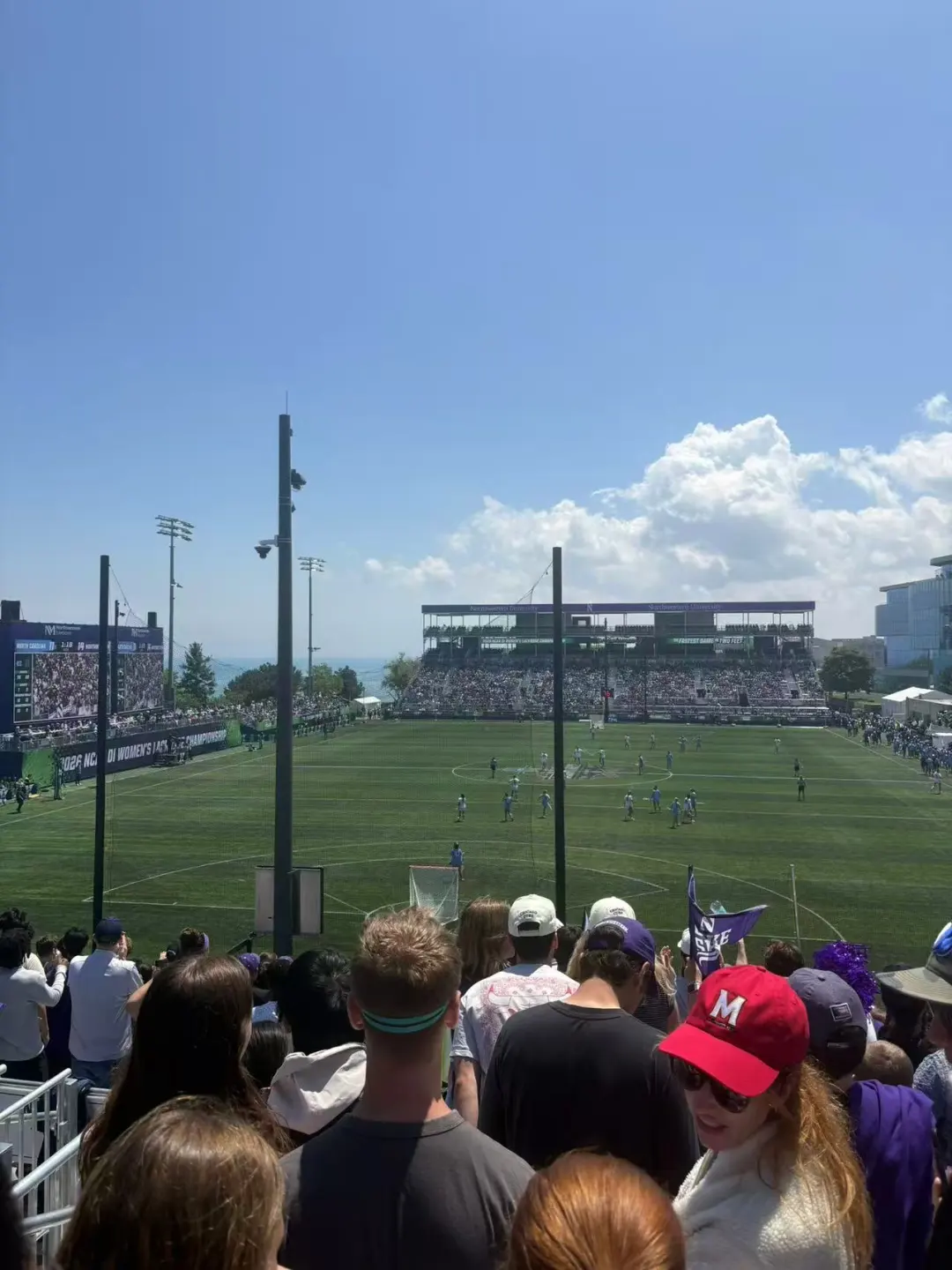
That is when I decided to join OSG: to prepare with a system instead of by trial and error.
I started on two tracks at once, consulting and product. My PM lead mentor, Alissa, mapped out the consulting timeline for me, walked me through how to prepare cases systematically, and turned scattered preparation into a clear sequence. She also kept me moving — checking in on progress, urging me to send more applications, pushing me forward on the days I wanted to stall.
My technical mentors were just as patient. Most of the interviews I got as a sophomore were for technical roles, and they helped me take my experience apart, learn to tell it well, and rehearse the specific questions those interviews would ask. That division of labor is why a two-track plan did not turn into two half-plans.
Feedback, in real time
The tension finally loosened during PM casing. Alissa explained the role patiently and built the structure from zero for me — the frameworks, the language, the shape of a good answer. I got access to resources and information I simply could not have assembled on my own.
But what mattered more was one thing she showed me: a PM interview does not only test technical ability. It tests how you communicate, your personality, your presence.
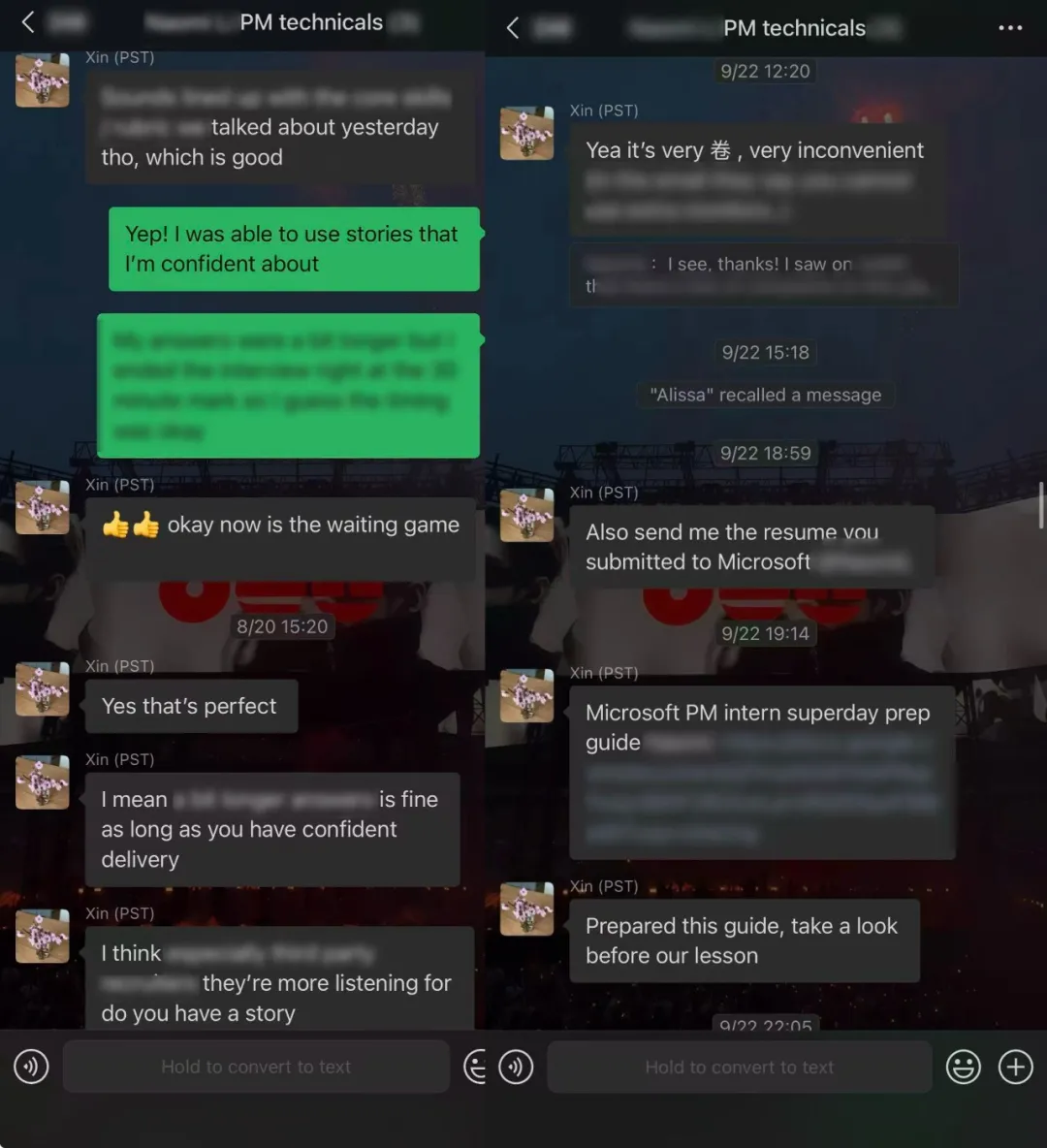
That landed. My self-introduction had been a formula — I recited my resume in order and hoped it sounded impressive. Working with her, I folded my actual experience into it. And I realized I did not need to turn into someone else to be taken seriously. My experience and my personality were the pitch.
Later I noticed something else: the consulting preparation had not been wasted. Presenting, structuring an argument, telling a story that lands — those carried straight into PM interviews. The two tracks reinforced each other.
Composure under a compressed calendar
In early August I applied broadly. By the end of the month, Microsoft invited me to a first round — with two days’ notice. My mentors jumped in immediately: Product Sense, product design, user experience, data analysis, drilled in blocks. In a very short window, I had something to stand on.
Mid-September brought the final round. I had a little over two weeks this time, but I was also preparing a Bain first round, still in China, and moving to the US. Every hour arrived in fragments. I was spread thin in every direction.
The mentors stitched those fragments back together. They fit practice sessions around my schedule, kept me moving between packing boxes and airports, ran mock after mock and gave me feedback each time. Without that, I would not have walked into the final round prepared.
The final round ran nearly three hours. The interviewer I remember most looked severe. He kept pushing on my answers, told me plainly he was not satisfied, asked me to come at the question from another angle. My confidence eroded with every follow-up. I walked out feeling it had gone badly.
Alissa caught me before I spiraled. She reminded me, again and again, that a probing interviewer is not necessarily rejecting you — often it is a stress test of how you think and how you respond. We went back through the interview together: what worked, what to adjust. She told me not to let one conversation define me. Her steadiness pulled me out of self-doubt and put me back on my feet.
Looking back at those two weeks: two consulting processes, a Microsoft final, and the start of a new semester, all at once. I am not sure how I got through it. I am glad that, under that kind of pressure, I stayed composed.
A week later, an email arrived with the word “Congratulations” in the subject line. What I felt was not joy so much as relief — a long-held breath finally let out. I could go back to being a student. Back to class. No more rewriting my resume every night, no more refreshing application portals.

What I want to remember is the version of me in that interview who had stopped trying to match an image. If I could go back to my middle-school self — the one bracing to adjust to every new environment — I would tell her this:
Adapting is a skill. But you don’t have to become someone else to belong somewhere. You don’t need to fit an image — you need to find the place that fits you without asking you to change.
*Disclaimer: OSG has no cooperation/affiliation with the companies mentioned in the article; OSG students enhance their abilities through OSG services and secure offers through regular campus recruitment/social recruitment channels.

Free Career Planning Session
Book a free 1-on-1 session with an OSG mentor and map out your path to top firms!
Book Your Free Session →Ready to Write Your Own Success Story?
Book a free 1-on-1 session with an OSG mentor and map out your path to top firms!
Book Your Free Session →Explore More Resources



Frequently Asked Questions
Yes. Microsoft’s PM loop weighs product sense, structured thinking, and communication at least as heavily as technical depth. Candidates come from business, economics, and liberal arts backgrounds; a CS degree helps in the technical discussion, but it is not a gate. What you do need is evidence that you can reason about users, scope a problem, and defend a trade-off.
Expect roughly three to five weeks from application to decision: a recruiter screen, one or two product or technical rounds, then a final loop of several back-to-back interviews in a single day. Individual teams move faster or slower depending on headcount. The practical implication: by the time an invitation arrives, the preparation window may be days, not weeks — so build your product stories before you apply.
It helps with structure and communication: framing an ambiguous problem, sequencing an answer, presenting to a skeptical audience. It does not replace product-specific preparation. You still need product sense, a feature-design walkthrough, metrics reasoning, and behavioral stories about how you handled disagreement or ambiguity. Consulting gives you the delivery; product preparation gives you the substance.