


Student Cases

Consulting
Consulting
BCG London Called on a Monday. Here's What the Month Before Looked Like.
Interviewers can't see how long you practiced. They can only read your language, your expression, your body language — and decide if you're the right fit. Showing up as yourself is the only strategy that actually works.
Published on
June 1, 2026
6
min read
Most people treat the BCG London application as something to build toward over years. Rose did it in a term. She had no consulting internship. She had no fixed conviction that consulting was the career. What she had was a system, six mock partners, and a willingness to start before she was sure. This is what that month looked like.
Before the Application: How I Actually Thought About Consulting
I was not one of those people who showed up at university knowing exactly what they wanted. I grew up in a family where business came up at dinner, my parents talked about markets, company decisions, macroeconomics — and I absorbed it without knowing what to do with it. By the time I got to Cambridge, I had opinions about industries and enjoyed pulling apart how businesses worked. I just had not connected that to a career yet.

Consulting was interesting to me for a specific reason: it buys you time without wasting it.
If you are not yet sure what you love, consulting gives you exposure across industries, transferable skills, and a network you can use anywhere. Someone asked me once why I would push myself toward a demanding career I was not fully passionate about. My answer was that I had not yet found the thing I was most passionate about. In the meantime, I wanted to be somewhere I was learning fast and meeting people who thought differently. Consulting fit that logic.
What surprised me about Cambridge was how normal that reasoning was. The career culture here is serious. People around me had clear plans, interesting internship histories, well-thought-out target lists. I was not alone in figuring this out, which made the whole process feel less like an isolated sprint and more like something I was doing alongside people who understood it.
Getting the Interview and Starting from Zero
I applied to BCG at the start of Lent Term. About a week and a half later, the first-round invitation came in.
The timeline compressed everything. I knew I needed a structure quickly — something that would let me learn case interviews from scratch without spending weeks reinventing a method on my own. That was what drew me to One Strategy Group. The curriculum was organized, the mentor matching was fast, and the whole setup was designed to be efficient. Several people around me had already signed up. What I kept hearing was that it saved time, which mattered more than anything else when the recruiting calendar was already moving.
My lead mentor, Zoran, started me from the beginning. We covered the fundamentals, then moved directly into mock interviews. That shift — from learning frameworks to actually practicing cases — was where things started to click.
What Six Mock Partners Taught Me
Before One Strategy Group, my preparation method was watching case interview videos on YouTube, pausing every few sentences, copying the language and cadence of whoever I was watching. It worked up to a point. I understood the structure. I could follow the logic. But I had no real sense of whether I was actually landing it.

Working through mock interviews with six different partners through One Strategy Group career coaching changed that. Each person had a different style, a different pace, a different way of pushing back. I started noticing things I could not have seen from videos — where my structure sounded rehearsed instead of reasoned, where I rushed through a quantitative section instead of slowing down, where I was right on the substance but losing the room on delivery.
Case interviews reward two things: clear thinking and the ability to communicate under pressure. The second one only develops through repetition with real people. By the time I walked into the first round, I had enough reps that the format itself was no longer the variable. I could focus on the actual problem.
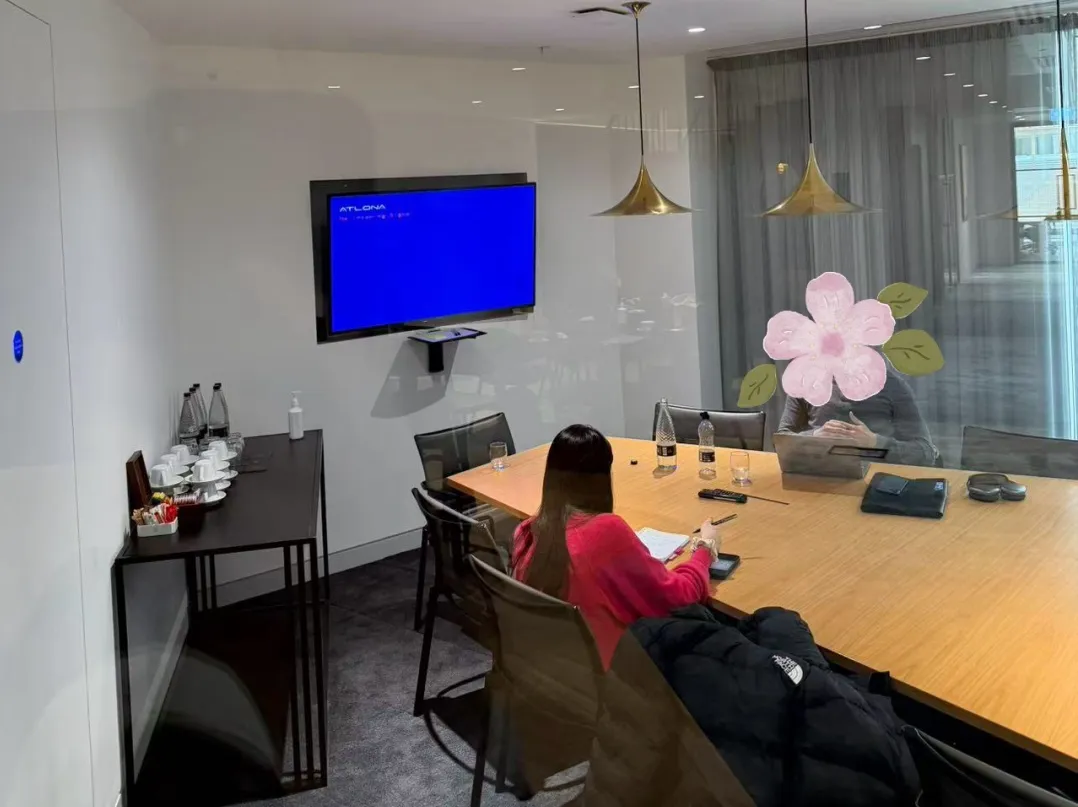
I enjoyed the cases more than I expected. Each one is a different company, a different situation, a different set of constraints. There is no standard answer. The behavioral rounds felt more like conversations — less structured, harder to game, which meant authenticity mattered more than technique.
Inside BCG London's Final Round
The days before the final round, Zoran arranged three additional One Strategy Group mentors for me specifically for the final push. Sessions ran late. Some happened past midnight because the daytime schedule was full. I also spent time at the OSG London office doing in-person mock rounds — working through cases face to face, which is different from doing them over a video call in ways that are hard to describe until you have done both.
The night before the final, I came across a clip of Olympic freestyle skier Eileen Gu. She said: "I train like I've never won, and I compete like I've never lost."
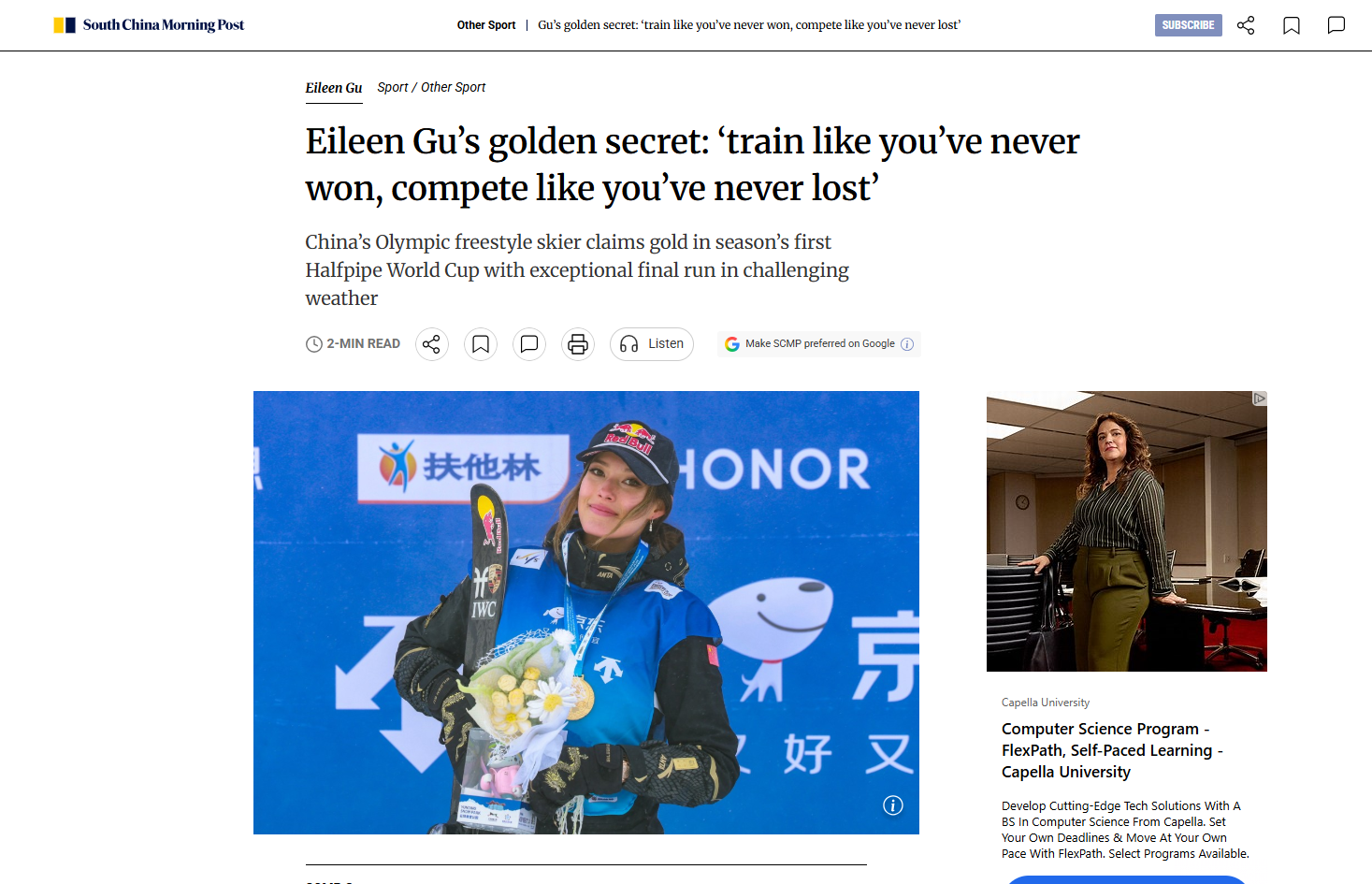
The line stayed with me. I did the preparation. The next morning was not about adding anything new — it was about trusting what was already there.
BCG's overall acceptance rate is widely understood to be around 1% of applicants, and the London office is among the most competitive globally. I knew the numbers were going in. They did not change the preparation, but they clarified the stakes.
The Office Walk-Through That Confirmed Everything
Walking into BCG's London office, the first thing I noticed was the reception area — an open coffee bar, natural light, baskets of bagels on the counter. The interview panel told me to grab a coffee before we started. I did. It felt less like a gatekeeping exercise than I had expected.
One of my interviewers had visited over 130 countries. More of them were personal trips than work trips — around 70 to 30 by his estimate. He mentioned that consulting creates natural access to international projects, and that you can be deliberate about seeking them out. I had not thought about the job that way before. That conversation shifted something. I stopped thinking about consulting as a résumé decision and started seeing it as a lifestyle I might actually want.
The office itself — wood tones, green plants, walls covered in employee photos arranged as a family tree, whiteboards full of notes in the hallways — looked like a place where people were actually working, not performing the idea of working. That mattered to me.

The final round felt like a conversation that happened to include a case. I left not knowing the outcome, but knowing I had shown up as myself. That was the only version of the interview I had prepared to give.

The Offer Call: One Month, One Term
The timeline from application to offer: applied at the start of Lent Term, first-round invite within ten days, same-day turnaround to the final round, offer call the following week after a weekend. Roughly thirty days, start to finish.
When the offer call came, I did not feel relief in the way I expected. There was no weight lifting. It felt more like confirmation — like things had gone the way I had quietly believed they would if I did the work. Calm, not euphoric.
What I remember most from that month is that I was not only recruiting. I went to formal dinners with friends. I celebrated the new year. My birthday fell in that stretch. The preparation was intense, but it did not consume everything. That balance was not accidental — it came from having a structure I trusted, which meant I was not spending spare hours second-guessing whether I had covered enough.
Two Things I Would Tell Anyone Starting This Process
Collect things that seem useless. My final round included a travel-related case. I love traveling — I have for years, not because it seemed professionally relevant, but because I am curious about places. That background gave me something real to bring to the case. A senior strategist at BlackRock once spoke at Cambridge and said something I have thought about since: do not dismiss what looks useless. The things you accumulate out of genuine interest tend to show up in ways you cannot plan for.
Be likeable, not performative. An interviewer cannot tell how many cases you ran. They can see whether you are present, whether you listen, whether you respond to pushback without becoming defensive, whether they would want to sit next to you on a project flight. Fit is a real variable. It is assessed through things you cannot rehearse — so the best preparation for it is being someone worth knowing, not rehearsing a version of yourself that answers questions correctly.
I did not come into this process with a ten-year plan. I came in curious, reasonably prepared, and willing to find out what I was capable of. From a bilingual school overseas to Cambridge to a BCG London offer — none of it was obvious at the start. Most of it came down to starting before I was certain, and trusting the process enough to stay in it.
Disclaimer: One Strategy Group has no affiliation or partnership with BCG or any other firm mentioned in this article. Rose secured her offer through BCG's standard campus recruiting process.
Free Career Planning Session
Book a free 1-on-1 session with an OSG mentor and map out your path to top firms!
Book Your Free Session →Ready to Write Your Own Success Story?
Book a free 1-on-1 session with an OSG mentor and map out your path to top firms!
Book Your Free Session →Explore More Resources



Frequently Asked Questions
Yes. This case shows a Cambridge student securing a BCG London offer in one term with no consulting internship beforehand. What mattered more was structured case preparation, repeated mock interviews with different partners, and showing genuine fit in the behavioral rounds.
There is no fixed number, but volume with varied partners matters. In this case, six different mock partners exposed weaknesses that solo video practice could not. Each surfaced different gaps in structure, pacing, and delivery under pressure.
It provides structured case curriculum and matches applicants with multiple mentors for repeated mock interviews. The service suits students on compressed recruiting timelines who need to build case fluency fast rather than assembling a method on their own.



.jpg)