



Student Cases

Investment Banking (Finance)
Investment Banking (Finance)
The Jazz Musician Who Landed a Bulge Bracket IB Offer in Hong Kong
For a long time I kept waiting until I felt motivated enough to sit down and work. The thing that actually got me through was a routine I'd follow on the bad days too, when none of it felt good and I wanted to quit.
Published on
June 17, 2026
4
min read
The last interview of my recruiting season was scheduled for a Saturday morning, right after my final college exam. The banker called from a car on his way to the airport, camera off. He skipped the usual openers and asked something I actually wanted to answer: outside of school and finance, what do you spend your time on? I told him I play and sing jazz, and that I gig fairly often. That was how the conversation that ended with a bulge bracket investment banking offer started, and it tells you most of what you need to know about how I broke into IB.
Late to the Recruiting Race
I went to a liberal arts college partly because it let me wait until the end of sophomore year to declare a major. I spent my first three semesters on philosophy, sociology, psychology, and music, and the rest of my time playing in bands and figuring nothing out in particular. By the time I noticed classmates lining up offers in banking and consulting, I was behind, and I knew it.
So I paused. I took a semester off, worked at a bar, and sat in on jam sessions most weeks. One night two of the musicians on stage turned out to be a lawyer and a consultant by day. Watching them play, relaxed and good at it, something clicked. I wanted a life where the things I cared about could sit side by side instead of crowding each other out. Finance, and banking specifically, looked like one of the few paths that asked for both technical depth and real engagement with people.
When Motivation Wasn't Enough
The first time I made it deep into a process, it was an early program at a Tier 1 boutique. I remember prepping three pages of technicals the night before and feeling stiff the whole way through. I got one question wrong, recovered into a first round, and still got cut. I had no real Plan B. On most days I couldn't make myself sit down for an hour of prep, let alone send a networking email.
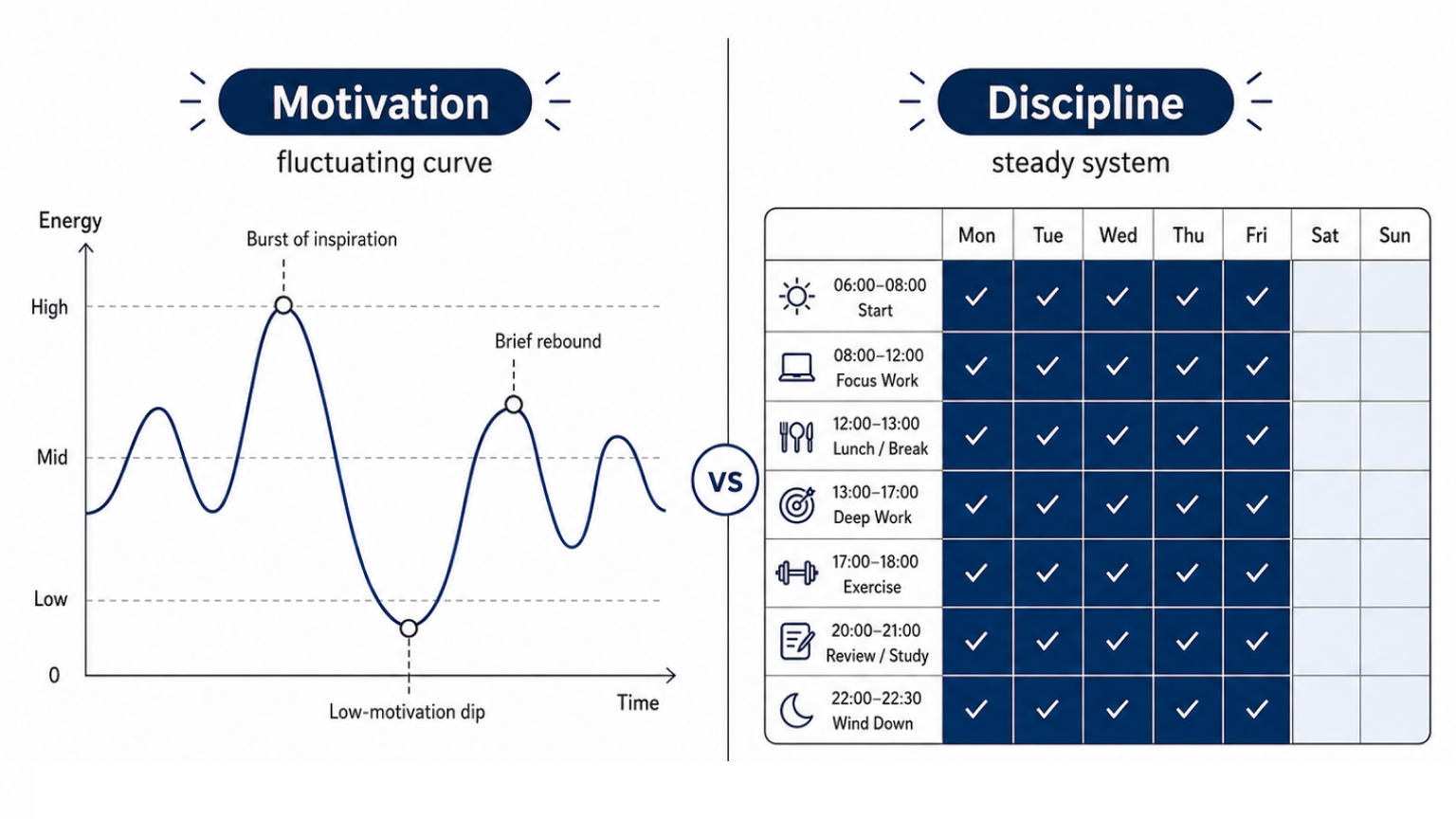
A friend from school introduced me to One Strategy Group, and a few conversations in, my main mentor, Archer, reframed the problem for me. I'd been treating motivation as the thing I was waiting for, when the actual fix was duller. A routine that ran whether or not I felt like it that morning. Once I put classes, practice, the gym, and recruiting into a fixed schedule, I stopped negotiating with myself every day.
Breaking the Information Barrier
The other thing I didn't have was a map. My résumé held one thin finance internship, and I couldn't tell which boutiques were realistic targets or how to approach them. Archer's One Strategy Group mentorship was specific where I needed it most: how to approach a mentor for guidance, how to define the kind of early profile I was building toward, and that would actually read well to a banker. None of it was glamorous, just the basic scaffolding I kept tripping over when I tried to do this alone.
The Behavioral Interview Was the Real Test
Technicals never scared me the way behavioral rounds did. A technical question has a correct answer you can study toward. A behavioral question is really asking the same thing over and over: who are you, and should we trust you with this? The hardest and most useful work I did in One Strategy Group career coaching was pulling my answers back to something true about me, instead of polishing stories into something that sounded good and meant nothing. My mentor and RA ran me through the behavioral set again and again, including how to talk about earlier rejections without flinching, until the answers stopped sounding rehearsed.
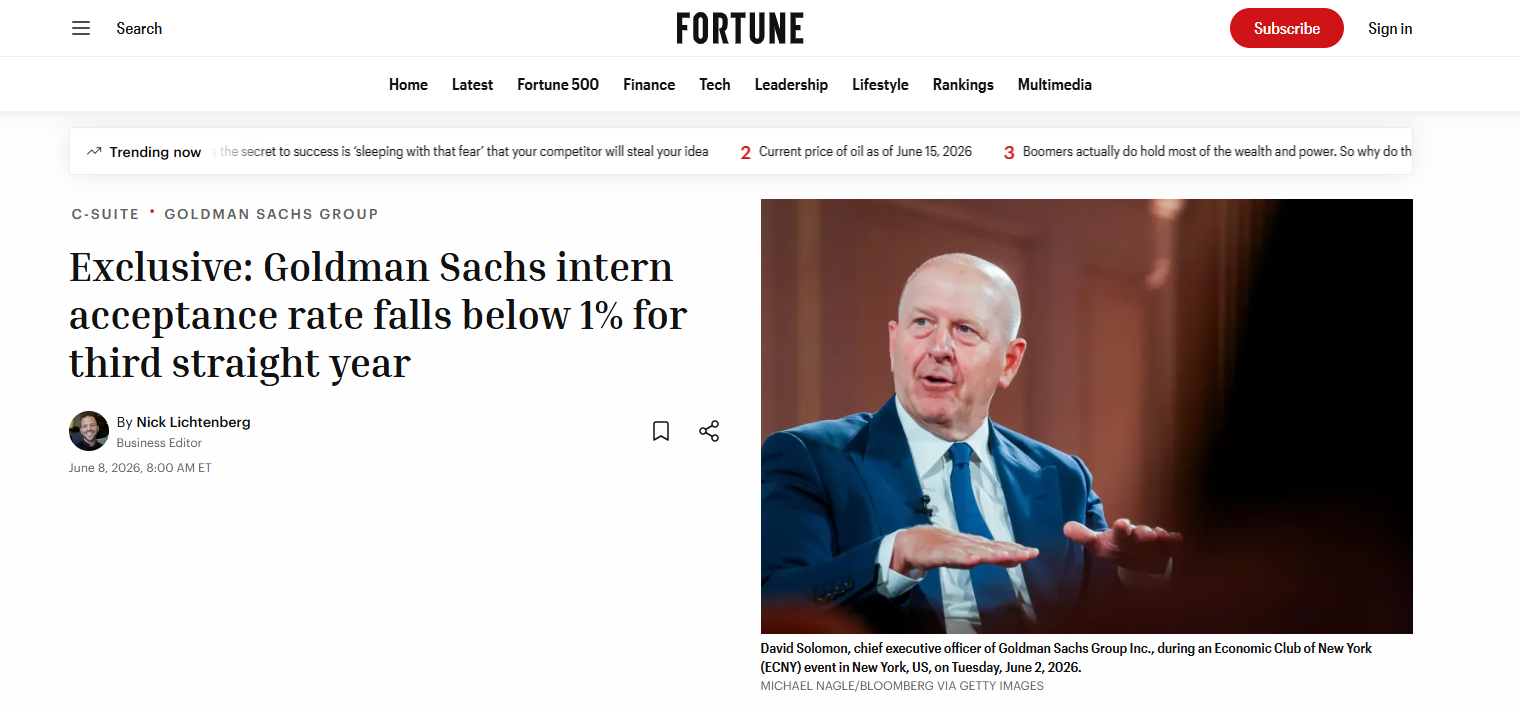
To be clear about the odds at the top of this funnel: Goldman Sachs took in more than 360,000 applicants for its 2025 internship class and accepted roughly 0.7%, according to Fortune's reporting. Fortune later confirmed the rate has stayed under 1% for a third year running. What that number really shows is that volume alone won't move you through, which is why the behavioral round carries more weight than people expect.

How APAC Bulge Bracket Interviews Work
After that first rejection, I tried to run every interview the way I'd run an improvised set. Prepared enough to be loose, not so scripted that I couldn't respond to the room.
The bulge bracket processes in the region leaned hard on market sense. Several ran early rounds as group assessments: a 40-minute to one-hour written test on how closely you follow markets, then a group discussion and a presentation built around a current news story. For one of them I deliberately picked a less obvious story, a company downstream in a supply chain I'd actually covered during an internship. I stayed off the broad trends and talked through something I'd genuinely researched. That was easier to defend and harder to fake.
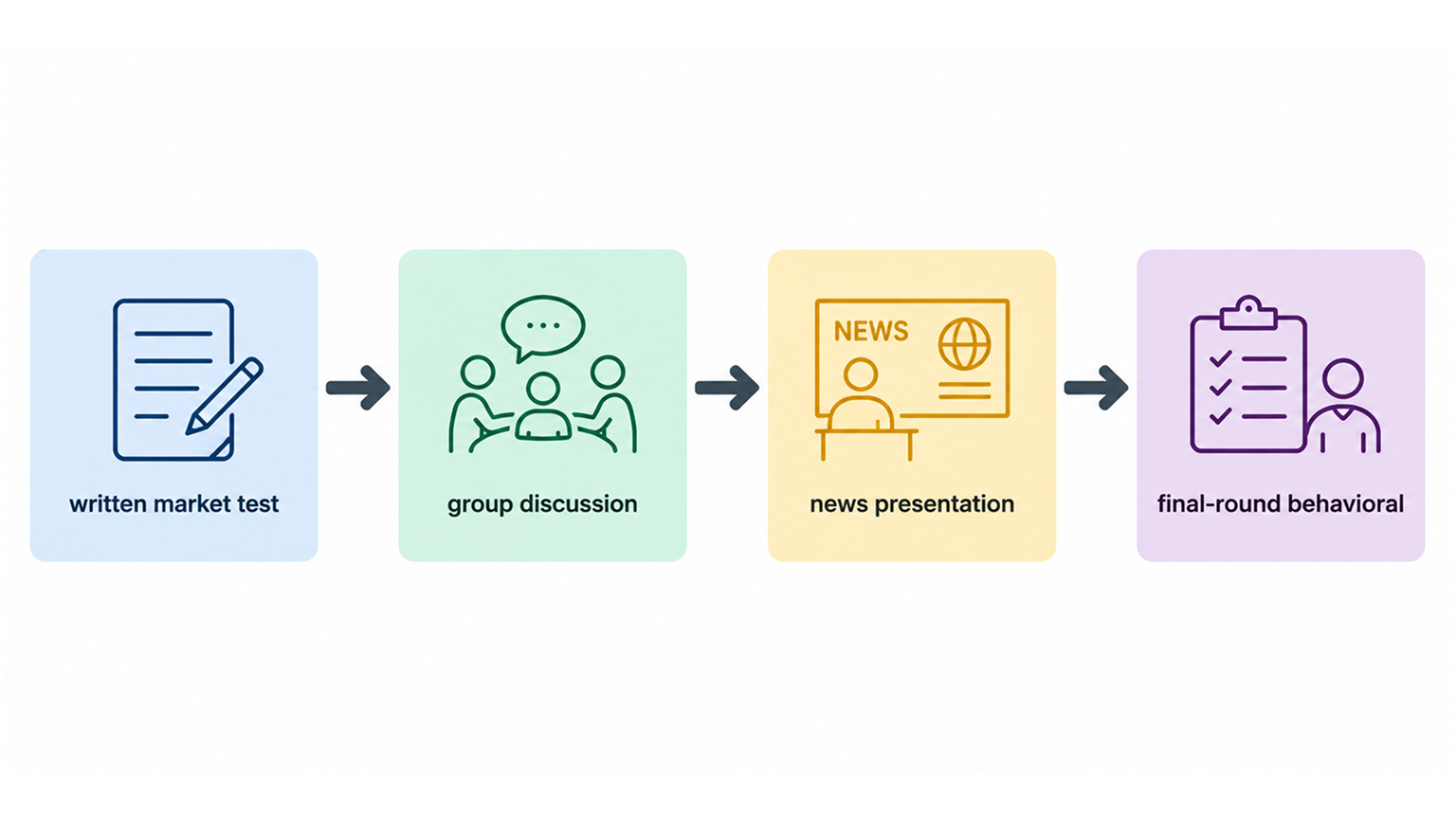
Final rounds were two or three managing directors or senior bankers, and they were almost entirely behavioral. I tied each answer back to something real, my music, the way I read a room, how I make calls under pressure. By the time the airport call came, it all felt familiar by then. Twenty minutes after I got back to my dorm, an email from HR asked if I was free to talk.
Why Discipline Beats Motivation in IB Recruiting
The offer call landed quietly, more like a slow exhale than the rush I'd pictured. I finished my last exam on Friday, got the call Saturday morning, and flew home Sunday afternoon. What stayed with me had little to do with the name on the offer. It came down to something plain: a structure I could follow held me up on the days motivation didn't show, and I didn't have to become a machine to use it.
I still play jazz, and it isn't a line on my résumé. Banking will be one way I get to understand how different people see the world, and the music stays mine. The path was a messy, non-standard one, and it was honest about who I am, which turned out to matter more than I expected when someone finally asked.
Disclaimer: OSG has no partnership or affiliation with any company mentioned in this article. OSG students build their own capabilities through OSG's services and secure offers through official campus and lateral recruiting channels.
Free Career Planning Session
Book a free 1-on-1 session with an OSG mentor and map out your path to top firms!
Book Your Free Session →Ready to Write Your Own Success Story?
Book a free 1-on-1 session with an OSG mentor and map out your path to top firms!
Book Your Free Session →Explore More Resources



Frequently Asked Questions
Yes. Felix came from a liberal arts college, started recruiting late, and got cut from his first process before landing a bulge bracket offer. A non-target background made it harder, but a structured routine and strong behavioral answers carried more weight than pedigree.
Several bulge bracket firms in the region ran early rounds as group assessments: a written market-sense test of 40 minutes to an hour, then a group discussion and a news-based presentation. Final rounds were two or three senior bankers asking mostly behavioral questions.
One Strategy Group mentorship gave Felix the concrete steps he kept stalling on alone: opening cold conversations, defining an early profile, and rehearsing behavioral answers until they sounded true. It works best for candidates who lack a clear map rather than the will to follow one.



.jpg)