



Student Cases

Investment Banking (Finance)
Investment Banking (Finance)
I Wasn't a Finance Major. Here's How I Got a Moelis IB Offer in Energy.
The technicals and the résumé just get you in the room. What actually decides the offer is whether the person across the table thinks you're already one of them — and you get about two minutes to figure out who that person is.
Published on
June 16, 2026
6
min read
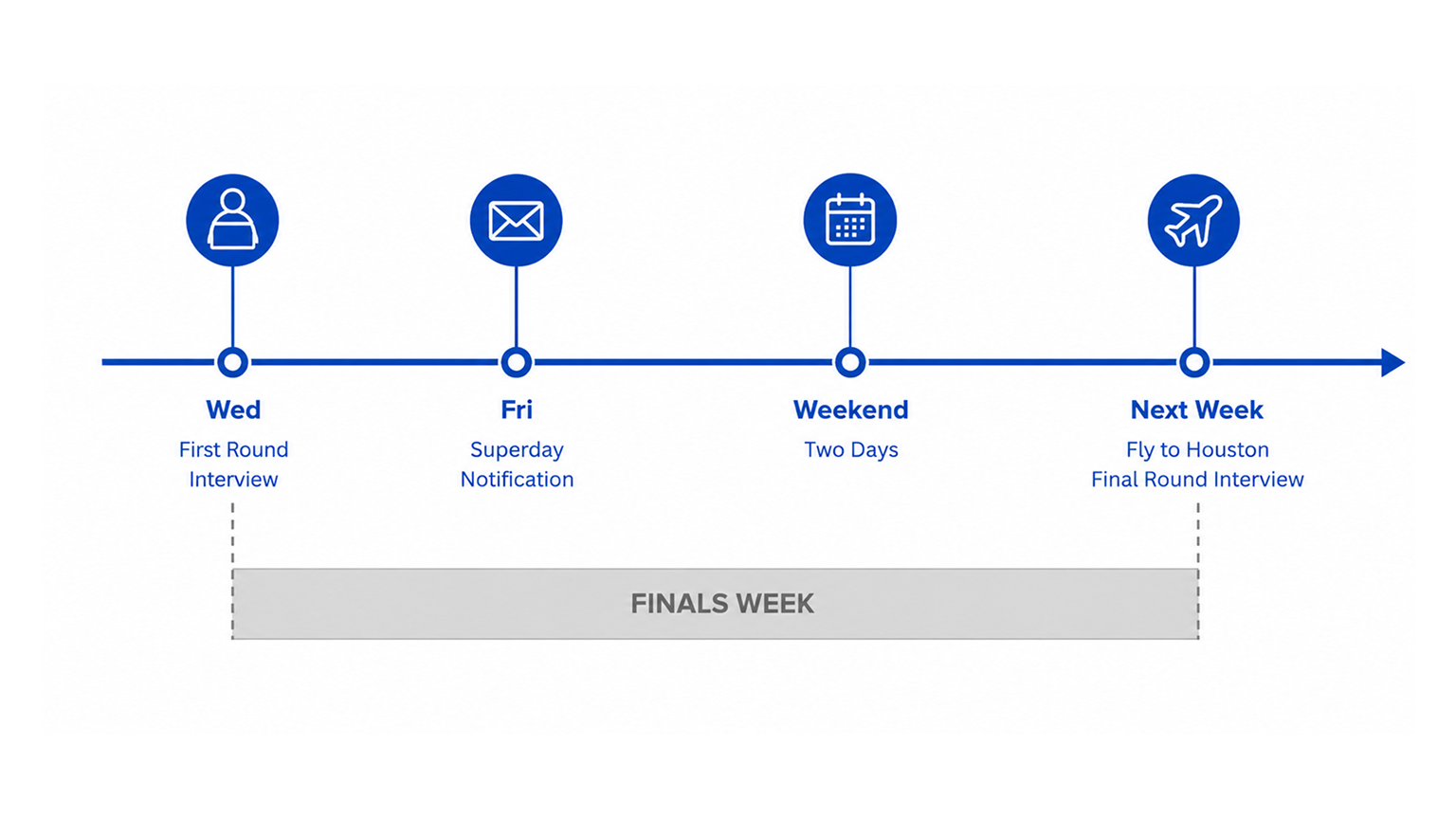
The first-round invite for the Moelis investment banking summer analyst seat came on a Wednesday. By Friday I had a Superday slot. The catch: the whole stretch overlapped with my finals week, and the final round meant flying to Houston mid-exams. My mentor asked how I planned to handle it. "I'm not going to sleep," I said. That was the honest answer. For two weeks I studied for finals by day and prepped interviews by night, running on about five hours of sleep.
When Two Interviews Collided With Two Finals
The timeline was brutal in a way nobody warns you about. I finished the first round on a Wednesday in mid-October. Friday brought the Superday notice. That gave me the weekend to prepare, and then I was on a plane to Houston the following week for the final round.
All of it landed on top of finals.
I'm someone who normally stops at 90 percent. I'd rather hit the best version of something I can reasonably reach than burn myself out chasing the last 10 percent of perfect. A first job felt like the exception worth breaking that rule for. So I didn't sleep much, treated bubble tea as a survival tool, and got both things done at once.
Why I Almost Didn't Recruit At All
I came into college with no idea what I was doing, recruiting-wise. I studied statistics and economics, but my early curiosity was neuroscience, not markets. Finance was background noise from family conversations, never a plan.
When I started college, friends around me were already signing on with One Strategy Group and mapping out their paths. I wasn't. I didn't know the difference between buy-side and sell-side, and I half-resisted every nudge to research firms.
By the end of freshman year, watching everyone else line up internships, the anxiety caught up with me. I'd been treating my own stubbornness as independence, and I could see it costing me. That summer I signed with One Strategy Group mentorship, because I needed a system to catch the things I'd been ignoring: the email phrasing, the early programs, the internal resources networking rarely surfaces on its own.
How Regional Investment Banking Offices Recruit
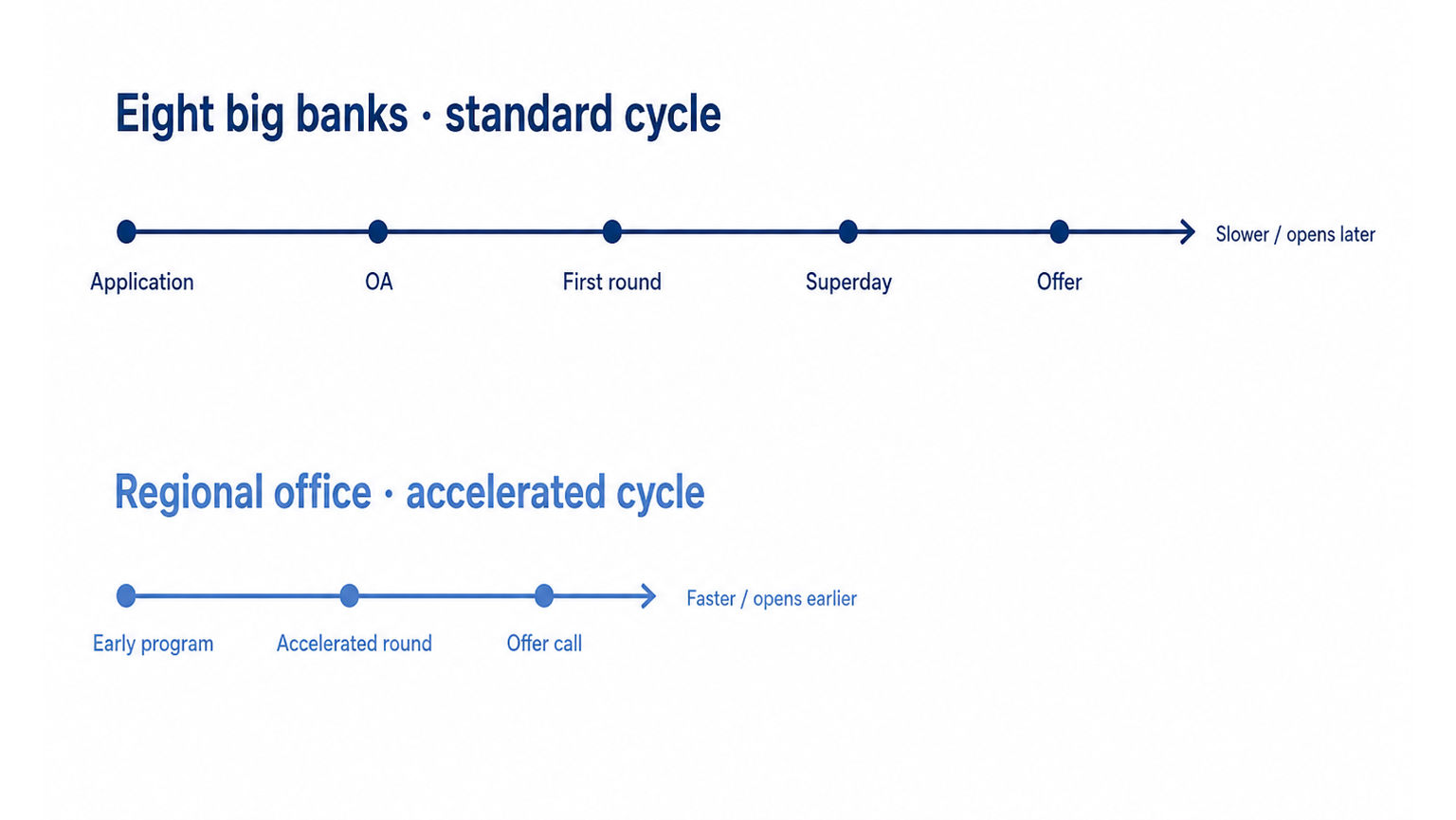
A lot of regional offices in North America, places like San Francisco, Houston, and Chicago, recruit almost entirely on their own. An office might have 15 to 20 people. The group runs its own hiring, and the timeline moves fast. If you only know the rules for the generalist class at the eight big banks, you might not even learn when these offices interview.
That gap was the single biggest advantage I got. My lead mentor at One Strategy Group, Kyrie, pointed me to an early program in the Moelis Houston energy group built for sophomores, with a direct line into the accelerated round for the 2027 summer.
The broader shift made the timing matter even more. According to American Banker's October 2025 reporting, banks now recruit students during sophomore year, before some have taken a single finance class, and the firms themselves say they can't pull the timeline back. For someone not from Houston and not from a finance track, I'd never have thought to look there without being told it was open.
What "Accelerated" Actually Means on the Calendar
Accelerated means the window opens earlier and closes faster than the standard cycle. The application surfaces well over a year before the internship starts, decisions move quickly inside the group, and a strong fit can turn into an offer call within hours of the final conversation. Miss the opening and there often isn't a second one.
Reading the Interviewer in a Boutique Bank Final Round
I walked into Houston fully prepared — technicals, sector knowledge, answers ready. Then the interviewer ran what felt like a pressure test for most of it, going quiet and leaving me to keep the conversation alive by asking my own questions.
For someone who'd packed in the technicals, that was a jolt. But I understood what it was checking. The Houston rounds care whether the chemistry fits. If you click with the people, the offer call can come the same afternoon. The silence was a test of whether I could stay composed and open a comfortable conversation when a client goes cold on me.
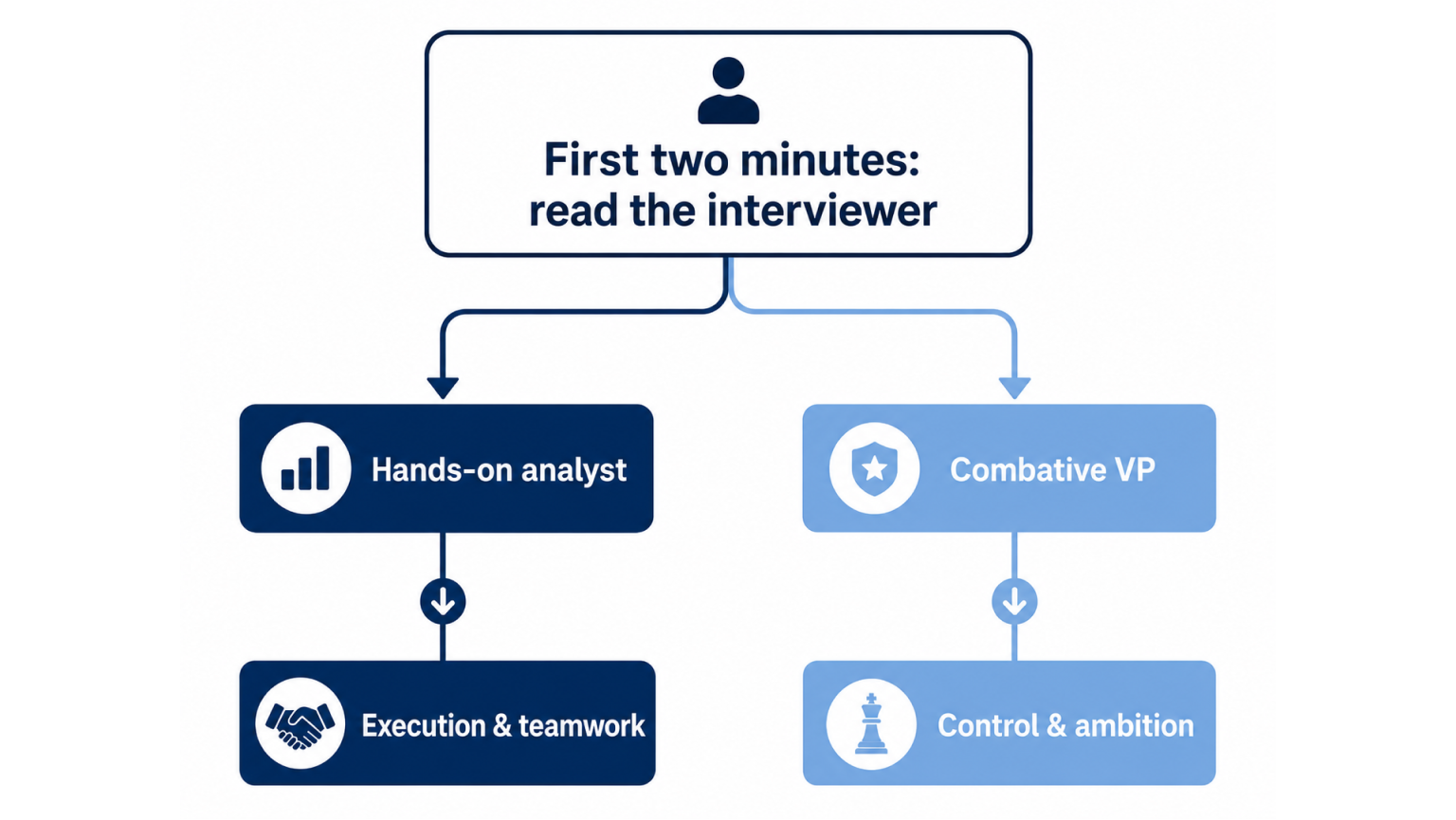
So I read the room. In the first two minutes I'd try to place the interviewer. With a hands-on analyst, I leaned on execution and how I work on a team. With a more combative VP, I showed control and ambition instead. The point was never to give the right answer. It was to make the other person feel I was already one of them.
Why the Prep Was 50+ Hours of Industry Knowledge, Not Just Technicals
Before the final round, my mentors and I put more than 50 hours into industry knowledge, not just the modeling drills. That depth was what let me ask a sharp, specific question when the conversation stalled. The technicals got me into the room, and knowing the sector well enough to hold a real conversation was what carried me through it.
Why Energy Investment Banking in Houston
People kept asking why I'd chosen something this specialized, and why Houston of all places.
The honest answer is that energy sits close to the center of almost everything moving in the macro picture right now. Shifts in geopolitics and the build-out around AI show up in this sector early. Houston is where a lot of that meets, the point where the energy transition and new technology run into each other. By the time I understood the group, the specialization had stopped feeling niche and started feeling like the most interesting room I could be in.

The Love Letter, and the Call
The wait afterward was its own kind of test. I found out the firm had started notifying some candidates while I'd heard nothing, and I'd more or less decided I was out.
Rather than sit with it, I sent a short, sincere follow-up note restating why I wanted the team and the role. The reply came that same night, with a call set for the next day. When the phone rang, I already knew. The feeling when the offer was real wasn't a rush. It was a quiet, slightly dazed calm, like finishing a long trip and asking myself whether that was really it.
What pulled me toward Moelis wasn't only that it's a fast-growing younger firm with more room than the older shops. It was the people. Through networking I'd spoken with seven or eight bankers there and gotten to know maybe twenty people in the office. They felt less like they were screening for the best analyst and more like they were looking for the right teammate.
I'll also say this plainly. Women are scarce in energy coverage, and breaking into a Houston circle that runs on local relationships took a certain steadiness. I'd like to use whatever position I reach to make that room a little less lonely for the people coming after me.
What I'd Tell Someone Starting Now
A few things I'd pass along.
Assess yourself honestly, but don't underrate yourself. Don't chase what's wildly out of reach, and don't let fear talk you out of the target you could hit if you stretched.
Don't bet on luck. Prepare before the invitation arrives, not after. My first round and final were a week apart with finals stacked on top, and I barely made it through that compression.
Take the chemistry seriously. The résumé and the technicals are the threshold. What often decides the offer is the behavioral read, the vibe check most people underestimate. Watch the interviewer, adjust how you talk, and let the room feel like you belong in it.
And mine the information gap. Don't fix your eyes on the same handful of big firms everyone else is watching. The path widens fast when you learn about an opening a little earlier than the next person. That was most of what One Strategy Group career coaching gave me: a clearer map of where the doors actually were.
Disclaimer: OSG has no partnership or affiliation with Moelis or any other company mentioned in this article. OSG students build their own capabilities through OSG's services and secure offers through official campus and lateral recruiting channels.
Free Career Planning Session
Book a free 1-on-1 session with an OSG mentor and map out your path to top firms!
Book Your Free Session →Ready to Write Your Own Success Story?
Book a free 1-on-1 session with an OSG mentor and map out your path to top firms!
Book Your Free Session →Explore More Resources



Frequently Asked Questions
Yes. A statistics and economics background was enough here, paired with deep sector prep. The bigger lever was targeting a regional energy group running its own fast sophomore-year cycle, not the standard generalist track most candidates fixate on.
Treat it as a fit conversation, not a quiz. Read whether the interviewer is a hands-on analyst or a combative VP within two minutes, then adjust. Back it with deep industry knowledge so you can ask sharp questions when the room goes quiet.
A mentor surfaces openings outside the obvious banks, like a regional office hiring sophomores on a timeline few candidates see. One Strategy Group coaching mapped where those doors were and drilled the interview reads that decide boutique offers. It suits early students starting cold.



.jpg)