



Student Cases

Investment Banking (Finance)
Investment Banking (Finance)
From Research to Investment Banking: My PCR-like Job Search Journey
Andrew is a driven individual who successfully transitioned from a background in biological research to a career in Healthcare Investment Banking. Drawing parallels between the scientific process of PCR and his job application journey, Andrew shares insights on self-reflection, strategic preparation, and leveraging unique backgrounds to achieve career goals in finance, with the support of OSG.
Published on
July 31, 2026
6
min read
Before my story begins, I’d like to introduce you to a biological concept: Polymerase Chain Reaction, or “PCR”. It involves three steps: Denaturation, Annealing, and Elongation, to continuously replicate and amplify a segment of DNA.
I think likening my job application season to a complete Polymerase Chain Reaction couldn't be more fitting.
Two years into university, I transitioned from deep biological research to investment banking applications. In a coincidental yet inevitable way, I also went through the three stages of PCR. Next, I will elaborate on these three stages: Denaturation, Annealing, and Elongation.
Denaturation: When the established trajectory is 'heated up' and broken apart
The initial stage of Polymerase Chain Reaction involves increasing temperature to denature and separate the DNA double helix, thereby breaking its original stable structure and causing a change in molecular conformation. This process is called "DNA Denaturation." In my opinion, this process is quite similar to myself when I first entered university: breaking away from an almost pre-written life path, beginning to constantly self-reflect and introspect, gradually clarifying my truly interested learning direction, and resetting future goals accordingly.
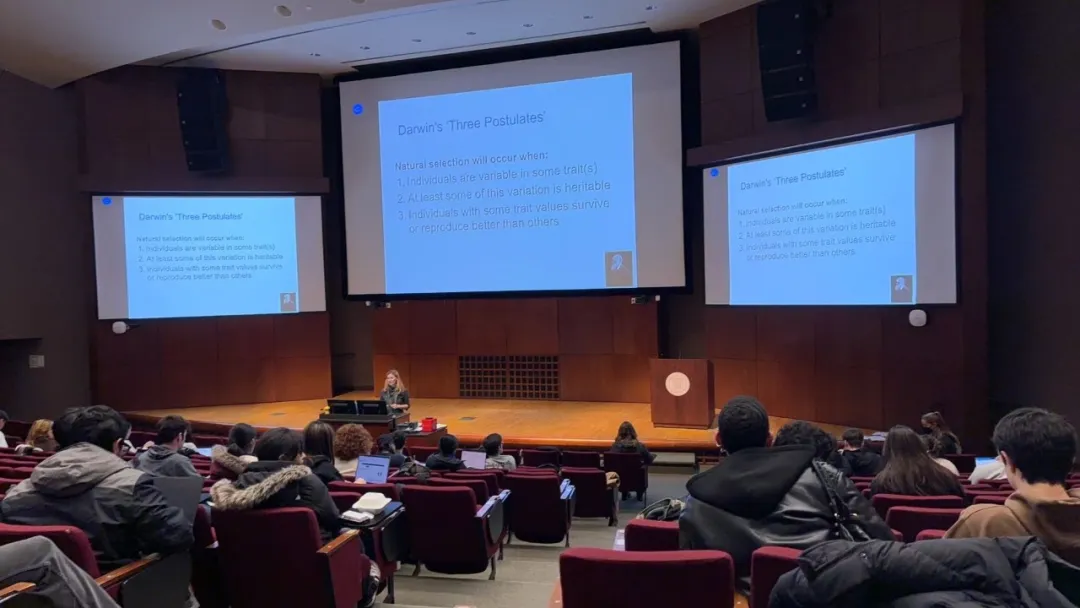
From high school, I was deeply immersed in biology. My daily routine consisted of labs, competitions, courses... I assumed my future would either be in scientific research or medical school, a path that seemed destined to continue. Even after starting university, everything remained the same; my environment, course selections, and plans continuously reinforced the direction of biological research.
But some things began to change quantitatively. During my less busy time in the first semester of my freshman year, I found more 'gaps,' opportunities to ponder questions I had never seriously considered before. For example, am I truly suited for a career in scientific research? Will my perspective become increasingly narrow within the lab? Every day, I focused wholeheartedly on whether a certain mechanism was valid or a particular data point was significant, like examining a grain of sand with a magnifying glass, but ignoring changes in the surrounding environment. While research itself is undoubtedly important, the sense of detachment from the real world began to make me subtly uncomfortable.
Just like the denaturation step in PCR—by increasing temperature, the DNA double helix is unwound, and the originally stable structure is broken apart. That instability is precisely the prerequisite for all subsequent possibilities.
Concurrently, I gradually started to encounter more different paths. Through courses, student organizations, and introductions from peers, I first came into contact with the finance industry , learning about its pace, its results-driven nature, and how it directly impacts companies, industries, and even the larger real world.
Biology and finance, I couldn't help but compare these two paths: one is inwardly convergent, continuously deepening understanding on a single issue; the other is outwardly connective, integrating different information and transforming it into decisions.
I found myself more interested in the latter.
Annealing:
Aligning the 'Primers'
The second step in Polymerase Chain Reaction is "Annealing." In this stage, by lowering the temperature, primers can specifically bind to the original DNA strands, laying the foundation for subsequent elongation. This process perfectly mirrors my state during the first semester of my sophomore year: sending cold emails, networking, fully preparing for the upcoming application season.
After joining OSG in the second semester of my freshman year, I realized that whether I succeeded in my job search or not, the biggest issue wasn't "whether I was suitable for finance," but whether I used the right methods. I was very aware of my shortcomings: having grown up in China, my networking skills were almost non-existent. In the beginning, when I made those first few calls, as soon as I deviated from my pre-prepared script, I would become nervous, rigid, and incoherent. I felt very awkward, and my confidence was slowly eroding.

Until one time, my lead mentor Steven said to me: "If networking isn't your strong suit, then make your interview performance the best it can be." I began to make peace with myself. Perhaps networking couldn't become my advantage in the short term, but I could focus my energy on other controllable aspects: preparing for interviews and refining my expression.
Until one time, my lead mentor Steven said to me: "If networking isn't your strong suit, then make your interview performance the best it can be." I began to make peace with myself. Perhaps networking couldn't become my advantage in the short term, but I could focus my energy on other controllable aspects: preparing for interviews and refining my expression.
Under the guidance of OSG mentors, my job search preparations in my sophomore year finally began to get on track.
From the most basic financial concepts to later understanding the logic of the DCF model, and then attempting my own stock pitch. During this process, I also made a delightful discovery: my original biology background was not a burden for applying to finance; instead, when preparing for biotech-related content, I could more naturally understand complex concepts like clinical data, mechanisms, and pipelines, which was actually my advantage. Moreover, my mentors continuously guided me to transform scientific concepts into deeper thinking: how this information could be translated into business judgment and valuation logic.

It was then that I truly realized I wasn't "changing careers," but "connecting."
And when I received an offer for a preparatory internship, that was the most important milestone of this stage. It was like a "primer" in PCR, allowing me to truly "bind" with this industry for the first time. This process not only gave me practical interview experience but, more importantly, rekindled my confidence: I could actually gain a foothold in this seemingly unattainable field.
The essence of Annealing is matching and alignment. In this stage, I strived to gradually align my background, abilities, and goals.

Elongation: Extending Everything to Results
"Elongation" is the third stage of Polymerase Chain Reaction. The preparations from the first two steps are put into actual use, ultimately achieving the amplification target. After a full year of accumulation and refinement, my application season finally ushered in the "elongation" moment, and past efforts gradually translated into results.
In late January this year, I received interview invitations from Deutsche Bank, Moelis, and Perella Weinberg almost simultaneously. That week felt like being fast-forwarded; no sooner had one interview ended and I hadn't fully debriefed, I had to immediately switch to the next. One night, I was repeatedly refining answers to questions, and the next morning, I was already rushing to the airport.
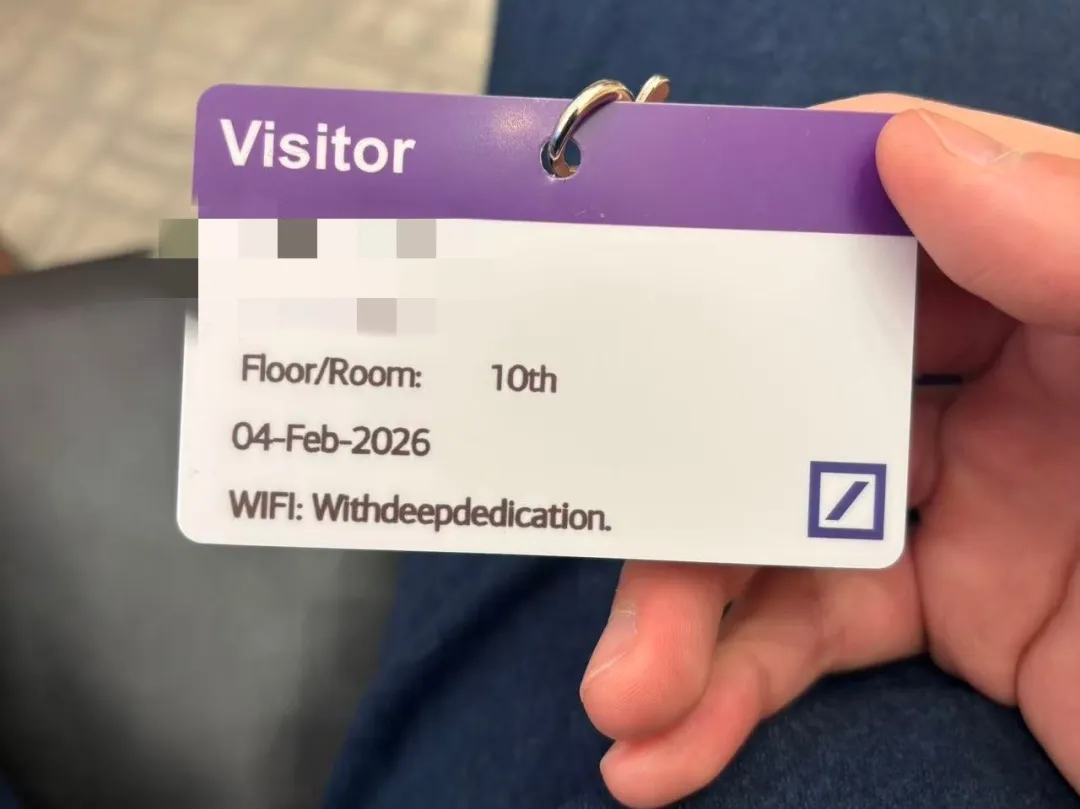
Deutsche Bank's final round interview was my first in-person interview. Flying from Ithaca to New York, I felt exceptionally nervous. Without the buffer of a screen, everything became more real. Fortunately, one of the interviewers was a Cornell alumnus, and we chatted about everything from the weather to school, from dorms to experiences. This relaxed state was completely different from previous interviews: I no longer cautiously avoided mistakes but actively expressed myself and connected.
Even more fortunately, I successfully received an offer from Deutsche Bank in my very first final round interview! Its significance was not just the result itself, but more like a "signal": telling me that all those moments where networking had hit me had not defeated me, and as long as my confidence remained, everything else would be fine.
In subsequent interviews with several bulge bracket investment banks, I distinctly felt my own changes: my answers were more natural, my logic clearer, and I was more confident in expressing my thoughts. Even in the highly challenging 12-person panel interview for Bank of America's healthcare group, I no longer hesitated and ultimately secured an offer.
If the first two stages were about preparation, then this stage was about truly "extending" all that accumulation.
From the lab to investment banking, I never left the Healthcare field; I just changed the way I participated in it. If scientific research amplifies the truths of the microscopic world, then finance amplifies the impact of those truths on the real world. And what I truly want to do is connect these two things. This is why I ultimately chose to work in the Healthcare Investment Banking group.
Just like PCR:
What's truly important is never just replicating the DNA itself,
But your Primer: the segment you choose to amplify.
*Disclaimer: OSG has no cooperation/affiliation with the companies mentioned in the article; OSG students enhance their abilities through OSG services and secure offers through regular campus recruitment/social recruitment channels.
Free Career Planning Session
Book a free 1-on-1 session with an OSG mentor and map out your path to top firms!
Book Your Free Session →Ready to Write Your Own Success Story?
Book a free 1-on-1 session with an OSG mentor and map out your path to top firms!
Book Your Free Session →Explore More Resources



Frequently Asked Questions
Bulge Bracket Investment Banks" typically refer to the largest and most comprehensive investment banks globally, such as Goldman Sachs, Morgan Stanley, J.P. Morgan, Bank of America Merrill Lynch, Citi, UBS, Deutsche Bank, and Barclays. They primarily offer a full range of financial services including investment banking (M&A advisory, IPO underwriting), sales & trading, asset management, and research.
Working at a Bulge Bracket firm generally requires a top academic background (from reputable universities in finance, economics, mathematics, engineering, or related fields), excellent quantitative analytical skills, strong communication and presentation abilities, and problem-solving aptitude. Furthermore, relevant internship experience (especially at financial institutions), a deep understanding of financial markets, strong resilience under pressure, and teamwork spirit are all crucial.
The typical interview process for investment banks usually includes online applications, phone interviews (or video interviews), first-round in-person interviews, and a final-round interview. "Superday" is a common format for the final round; it is often an intensive, full-day (or half-day) series of back-to-back interviews where candidates meet with multiple employees (from analysts to managing directors) within the firm. Superday is a critical stage that determines whether a job offer is extended, aiming to comprehensively assess a candidate's technical knowledge, behavioral traits, and cultural fit.



.jpg)