Student Cases

Quant
Quant
The Most Romantic Female Quant Trader: Winning a $500K Salary With Elegance in a World of Brilliant STEM Minds
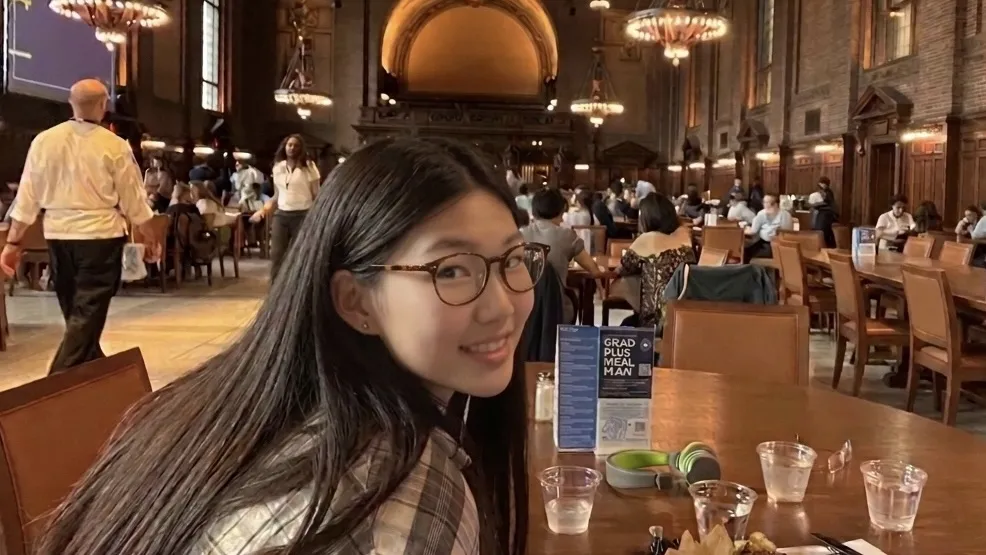
Linda is a quant trader who blends mathematical rigor with artistic sensibility. Thanks to OSG’s targeted quant recruiting coaching, she overcame tough interview challenges and landed a coveted offer at SIG. She shares her personal journey of exploring quant trading and interview preparation. All views shared are her own.
Published on
November 18, 2026
13
min read
Math and Art: Two Lenses to See the World
Ever since I was young, math and logic have felt familiar, and they’ve always been my strongest suit.
My family and teachers encouraged me to think independently. They never pushed me to simply memorize fixed answers. Instead, they guided me to dig deep and fully understand why things work the way they do. This upbringing shaped me into a calm, logically minded person who prioritizes closed-loop reasoning.
When complex or unexpected issues pop up, I rarely panic. I set aside my emotions first, identify the core priorities, and work through solutions step by step.

Beyond math, I’m passionate about art. I love visiting galleries, drawing, and creating visual work.
Art and my sense of beauty pull me away from endless numbers and lines of code, giving me space to reset and organize my thoughts. It also sharpens my intuition, keeping my thinking flexible and imaginative instead of rigid.
I’ve come to realize art and math share a deep connection. A painting relies on proportional composition, color balance, and the subtle power of negative space. In the same way, elegant mathematical theories distill simple patterns out of a chaotic world.
For me, math and art are never opposing forces. They represent my rational and emotional sides, working together to help me view the world from multiple perspectives.

I chose quant trading largely because of my personality and interests. During college, my course on advanced probability theory pulled me fully into the quant space.
Quant Trading: My Perfect Fit
Early in my freshman year, countless career paths opened up to me. Like many peers, I weighed several options: pure math academia, software engineering at tech firms, traditional investment banking… Each had its appeal, yet none felt like where I truly belonged.
I once believed every problem had one definite, correct answer. But standing at this crossroads, faced with so many promising paths, I struggled to pick one that felt right.
That mindset shifted once I studied advanced probability. I learned that nearly everything in life carries randomness. We often hunt for a single perfect answer, yet the real world rarely offers one.
I learned the critical skill: making high-probability, positive-expected-value decisions amid uncertainty, while accepting setbacks along the way.
It was around this time that I explored top proprietary trading and market-making firms — and found quant trading. It instantly clicked.

Quant trading lets me connect my favorite mathematical models and logical thinking directly to fast-moving financial markets. The market gives immediate, objective feedback on every decision I make. I loved this environment, where skill and reasoning speak for themselves.
Quant trading is an intellectual challenge built around uncertainty — exactly the mindset probability taught me.
Once I understood the industry clearly, I knew this was the path I wanted to chase.
The High-Stakes, Interactive Nature of Interviews Can’t Be Learned From Textbooks Alone
Quant recruiting opens earlier every year. Top trading roles are extremely competitive, with almost no room for mistakes. Once I set quant trading as my top target, I decided working with experienced mentors to manage my recruiting timeline was a worthwhile investment.
I quickly hit a major roadblock when studying independently: I could not replicate the high-pressure, interactive energy of real interviews.
I worked through quant prep books, derived probability problems, and revised my resume, but I only scratched the surface. Real market-maker trading interviews are far more than solving problems on paper. Interviewers often change rules mid-question or add new constraints to test whether I can adjust my thinking on the spot.
This on-the-spot adaptability and dynamic strategic thinking are impossible to build by studying alone in a room. That’s when I joined OSG.

The first and most important thing my mentors helped me with was learning how to articulate my thought process during interviews.
I used to work quietly on scratch paper and only share my final answer. This silent, “black-box” approach puts candidates at a huge disadvantage in intense quant interviews.
Through multiple mock interviews, my mentors helped me break this habit. They taught me to verbalize my assumptions and reasoning as I worked through each problem.
Even with hard questions, interviewers could follow my analysis and watch how I adapt under pressure.

My mentors also refined my resume and technical storytelling. At first, I struggled to translate academic, theory-heavy university projects into language that resonated with industry hiring teams. They cut vague, generic descriptions and reframed my experience around my solid math foundation, modeling workflows and algorithm details. The result was a sharp resume aligned with what trading teams look for.
For tough market-making pricing questions, we practiced endless variations of classic problems. I stopped relying on memorized formulas and built a repeatable framework to break down unfamiliar questions.
Days Filled With Anxiety on Scratch Paper Finally Paid Off
This recruiting season came with plenty of setbacks. Under tight time limits and difficult questions, I got stuck many times. I doubted whether I was quick enough to meet the standards of top quant firms.
But probability taught me to ease that pressure. I reminded myself: even if I did not land an offer at the most competitive shops, the math and algorithm skills I built would still open doors in tech and data roles. My hard work would never go to waste.
Shifting my focus from “will I get an offer?” to “what can I learn today?” helped me relax and fully unpack the logic behind every mistake.

I interviewed at multiple prop shops, and their interview pipelines were extremely fast-paced. One round stood out: the interviewer kept adding new constraints to test my limits. Thanks to the high-pressure mock interviews at OSG, I stayed calm. I split the big problem into smaller probability questions, walked through my derivations, and shared my risk-control ideas. I could tell from their reaction that the conversation went well.
SIG is widely recognized as one of the top firms for quant trading and derivatives market-making.
I had connected with their team through earlier programs, and I admired their flat, honest culture focused purely on intellectual problem-solving. Discussions were free of unnecessary formalities. The only thing that mattered was whether your logic held up and how deeply you thought. This culture of respecting sharp thinkers and clean reasoning was exactly what I wanted.
The moment I received the offer call, I felt a huge sense of relief and certainty.
I owe so much to my parents throughout this recruiting journey. When I signed up for OSG, I knew the program was a significant investment. After learning about it, my parents supported me without hesitation, hoping I could get the best outcome.
Their support made this journey much smoother. Back-to-back interviews drained me mentally, and I often felt exhausted and anxious. Their understanding and quiet encouragement helped me recharge and reset quickly. My mentors’ post-interview debriefs also kept me grounded and saved me from countless avoidable mistakes.
The quant trading offer I received came with very generous compensation. My summer earnings alone will cover twice the cost of my OSG program!
All those pages of scratch paper filled with derivations, all those long focused study sessions — they finally paid off.
This offer marks a meaningful new beginning, and I’m excited about the rest of college and my future career.
Disclaimer: OSG has no cooperation/affiliation with the companies mentioned in the article; OSG students enhance their abilities through OSG services and secure offers through regular campus recruitment/social recruitment channels.

Free Career Planning Session
Book a free 1-on-1 session with an OSG mentor and map out your path to top firms!
Book Your Free Session →Ready to Write Your Own Success Story?
Book a free 1-on-1 session with an OSG mentor and map out your path to top firms!
Book Your Free Session →Explore More Resources



Frequently Asked Questions
SIG is a leading global proprietary trading firm famous for derivatives market-making, quantitative trading, and a culture centered on rigorous logical problem-solving and intellectual curiosity.
SIG quant interviews heavily focus on probability, expectation calculations, market-making pricing questions, and dynamic follow-up constraints. Interviewers often modify problem rules mid-discussion to test real-time reasoning and risk awareness.
Strong probability intuition, clear verbal communication of your thought process, flexible problem decomposition, and basic risk management awareness are critical. Memorizing formulas alone is not enough for their interactive interviews.