Does Having a Sports Background Help with Investment Banking Recruiting?
Sarah Li, (pseudonym)is a former competitive tennis player with experience in investment banking and private equity. Having gone through finance recruiting while balancing competitive athletics and academics, she has firsthand experience translating skills developed through sports into resumes, networking, and behavioral interviews. Her work focuses on investment banking recruiting, interview preparation, networking strategy, and helping students position their experiences effectively for careers in finance.
Published on
October 26, 2026
5
min read

This guide explains how students can use a sports background to strengthen their investment banking recruiting profile. It covers how to turn athletic experiences into stronger behavioral interview stories, resume points, and authentic networking conversations, while highlighting the skills that can transfer from sports to finance. It also explains why athletics can help candidates stand out but should complement technical preparation and relevant experience.

Below, One Strategy Group (OSG) breaks down how students can use their sports background throughout investment banking recruiting, from resumes and interviews to networking and overall recruiting strategy.
Note: Being an athlete will not automatically get you an investment banking offer. What can give you an advantage is knowing how to translate your sports experience into evidence of leadership, teamwork, resilience, time management, and performance under pressure, then using those experiences effectively throughout recruiting.
Student-athletes often develop skills that translate naturally to Wall Street, but knowing how to present those experiences matters. This guide explains how to use athletics to strengthen your resume, behavioral interview stories, networking opportunities, and transferable skills for finance recruiting.

Sports and Wall Street have always had an interesting relationship.
91 of the world's top 100 banking brands invest in sports sponsorships. That is why you can often see J.P. Morgan around the US Open, Goldman Sachs partnering with the McLaren Formula 1 Team, US Bank with NFL, or Bank of America with the Masters Tournament.
These partnerships are more than logos on cars, courts, or stadiums. Sports give financial institutions access to something especially valuable: relationships. They bring together clients, employees, and fans around a shared interest. That same dynamic can play out on a much smaller scale during finance recruiting.
For students, sports can create an easy conversation starter during networking, provide memorable stories for investment banking interview prep, and offer real examples of leadership, teamwork, resilience, and performance under pressure.
But simply having “Varsity Athlete” on your resume is not an automatic advantage. What matters is how you turn that experience into something relevant to investment banking.
So, how can you actually use a sports background throughout the recruiting process?
1. How Can a Sports Background Help with Investment Banking Interviews?
The biggest recruiting advantage of sports is not the athlete label itself. It is the collection of real experiences you can use to demonstrate leadership, teamwork, resilience, coachability, and performance under pressure.
Think about what happens over several years of competitive athletics.
You lose. You win. You make mistakes in front of other people. You receive feedback you may not agree with. You work with teammates with different personalities. You sometimes have to perform when you are tired, nervous, or underprepared.
Those experiences overlap with many of the qualities behavioral interviews are designed to assess.
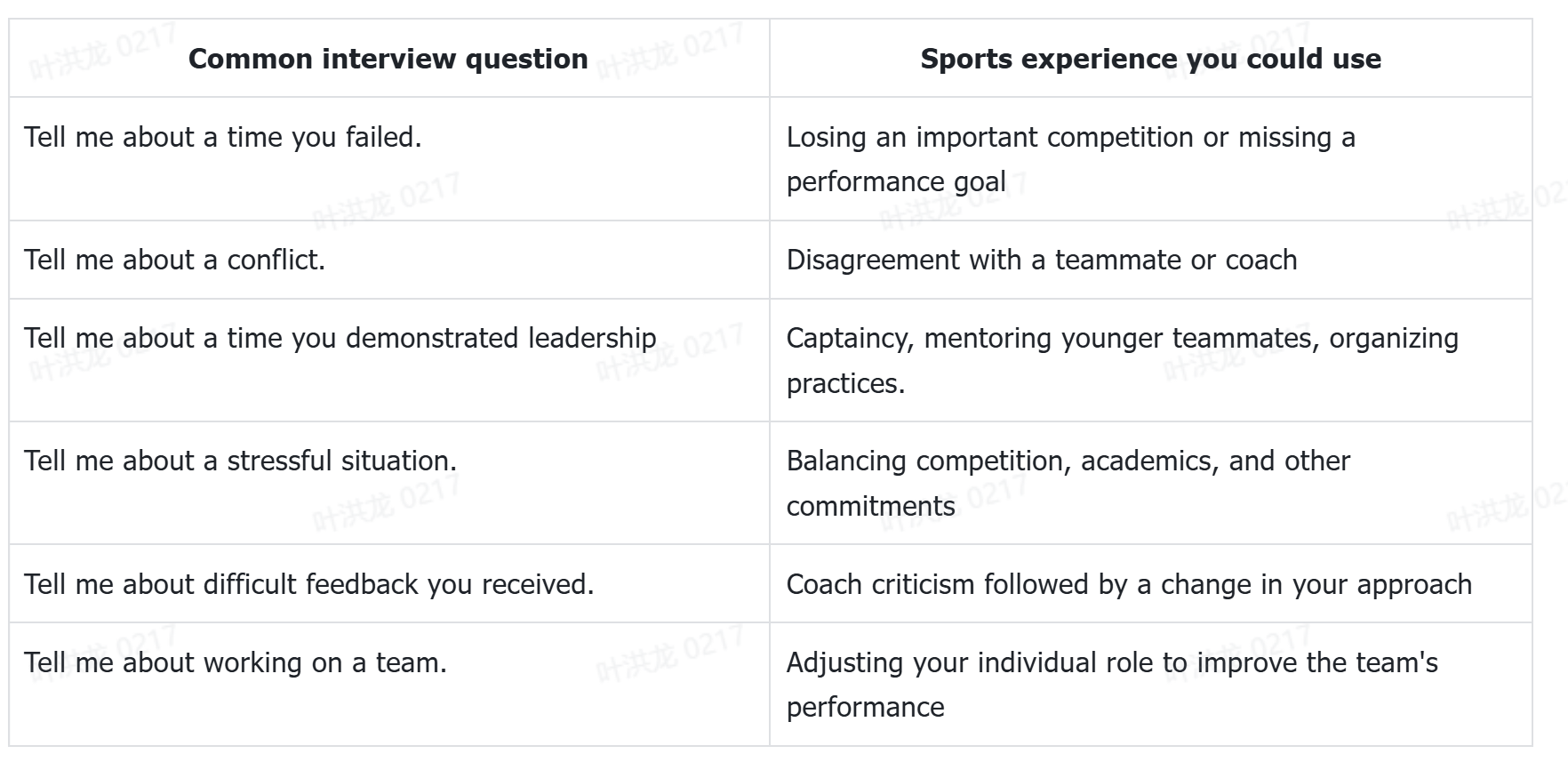
This makes sports especially useful when preparing for the behavioral side of investment banking (IBD) interviews. Technical questions still require separate preparation, but athletics can give candidates a deep pool of material for the behavioral side of the interview.
Translate the experience instead of describing the game
A strong sports story focuses on your decisions and development, not just the final score.
Common mistakes student-athletes make during investment banking interview prep include assuming that an achievement speaks for itself, spending too much time talking about what they accomplished rather than what they learned, or getting too technical about the sport.
For example, imagine an interviewer asks about a time you failed and you choose to talk about an important tennis match. If you spend most of your answer explaining the opponent, tournament format, and final score, you are not telling the interviewer much about how you respond to failure or improve afterward.
Instead, structure your answer using the STAR method:
Situation: What was happening, and what challenge were you facing?
Task: What were you responsible for or trying to accomplish?
Action: What did you personally do in response?
Result: What happened, and what did you learn or change afterward?
The key is to spend less time explaining the sport itself and more time explaining your actions, decisions, and growth. The sport provides the setting; how you handled the situation is the actual interview story.
A real-world example is Madison Crutchfield, a former Division I lacrosse player at Duke who later joined Goldman Sachs and became a vice president in equity derivative sales.
Crutchfield has discussed a lesson from her Duke coach: “Play fast, not hurried.” She later connected that principle with working on a trading floor, where people frequently need to act efficiently under time pressure without becoming careless.
The lesson here isn't that playing lacrosse prepares someone to price derivatives.
It is that Crutchfield could translate an athletic lesson into professional behavior.
That's what candidates should aim to do with their own experiences.
So, instead of simply saying “Playing tennis taught me teamwork,” ask yourself: “What actually happened that proves I learned teamwork?
And remember that sports stories cannot replace technical preparation. Behavioral storytelling and finance technical interview training solve two different parts of the interview. A memorable leadership story will not compensate for being unable to walk through a DCF, explain the three financial statements, or discuss enterprise value versus equity value.
2. How Should You Use Sports Experience on an Investment Banking Resume?
Sports belong on an investment banking resume when they demonstrate meaningful achievement, leadership, commitment, or another dimension of your background that a recruiter would not otherwise see.
Ask yourself: How competitive was the team? How much time did you commit? Did you hold a leadership role? Did you receive an award? Did you help organize anything? Did you compete regionally or nationally?
A potential resume bullet could look like: Competed on a 12-member varsity team while maintaining a full academic course load; trained 15+ hours per week and represented the university in regional competition.
What should you emphasize?
The answer depends on your actual athletic background.
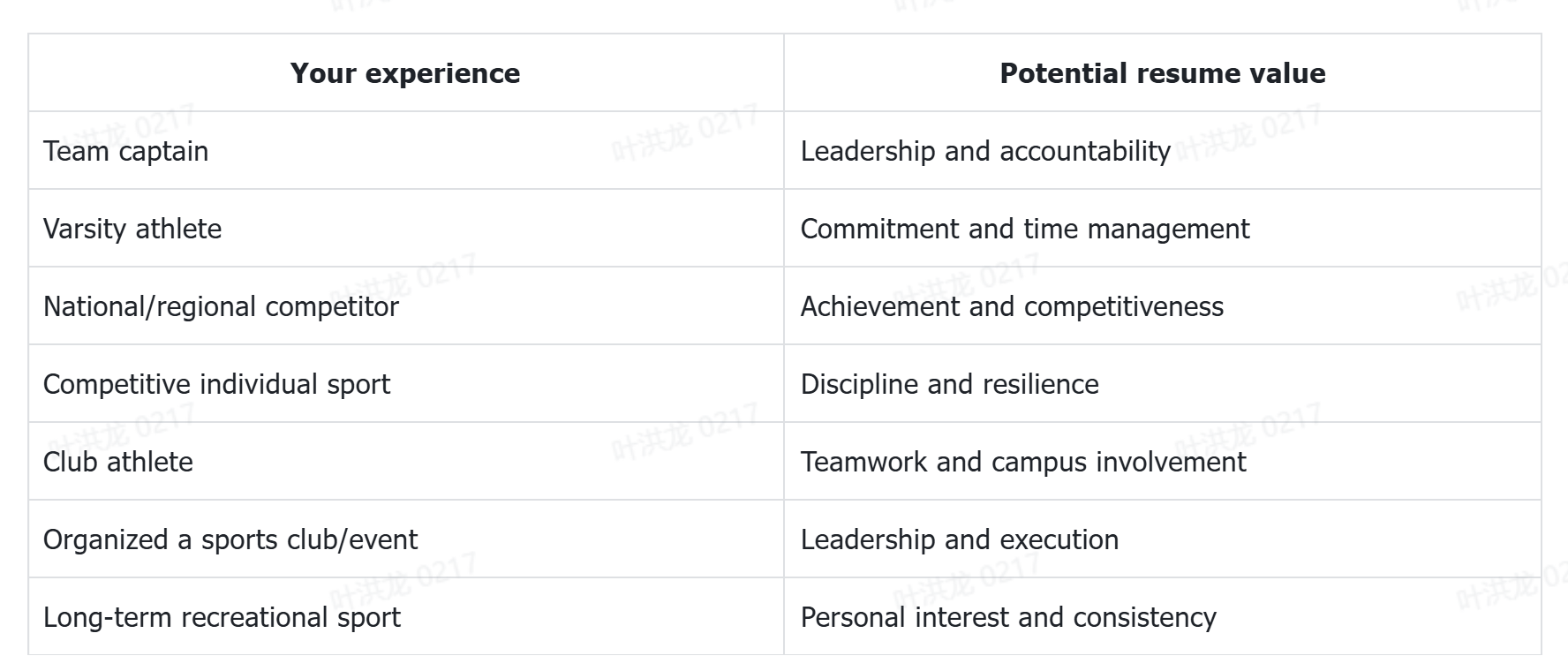
When editing your resume for investment banking, the objective should not be to make every activity sound like investment banking.
A tennis captain does not need to describe the team as if they were managing an M&A deal.
Instead, communicate what was genuinely difficult or distinctive about the experience.
Where should sports go on the resume?
The stronger the achievement, the more prominent it can be.
An NCAA athlete, national competitor, or team captain may deserve multiple bullets under Leadership & Activities. Someone who regularly plays recreational golf may simply include “Golf” under Interests.
Ask yourself three questions:
Does this experience show something meaningful about me?
Is there an achievement, responsibility, or commitment I can explain?
Is this more valuable than another item competing for the same resume space?
3. Can Sports Make Investment Banking Networking Easier?
Yes. Sports can make networking easier because a genuine shared interest gives two people something to discuss beyond applications, deals, and recruiting, but the connection only works when it is authentic.
Imagine you are preparing for a coffee chat with an alumnus and notice that they played lacrosse at your university.
Immediately, you have something more personal to discuss than: “Why did you choose investment banking?”
The same principle applies outside varsity athletics.
Maybe you both ski. Maybe you follow Formula 1. Maybe the banker runs marathons, and you recently completed your first half-marathon. Maybe you both support the same NBA team.
These details can turn a transactional conversation into a more natural one.
Sports are particularly useful for follow-ups
The best networking relationships usually develop across multiple conversations, and shared interests can create natural reasons to reconnect.
Suppose someone tells you during a coffee chat that they are training for the New York City Marathon.
Several weeks later, you have a genuine reason to message them: “How did the marathon go?” That feels much more personal than simply saying, “Just following up to stay in touch.”
This aligns with a broader principle of finance recruiting: networking works better when you approach bankers as people rather than treating every conversation as a direct request for a referral.
There is also a wrong way to use sports in networking.
You hear that senior bankers play golf, so suddenly your LinkedIn interests include golf.
You learn that someone supports the Knicks, so you try to talk about basketball despite not watching it.
That misses the point.
Sports are useful because genuine common ground makes conversations easier, not because there is a secret list of hobbies you need for investment banking.
If you genuinely love tennis, talk about tennis. If you run, talk about running. If you follow soccer every weekend, that can be your connection.
And if you do not care about sports, find another genuine shared interest.
Effective networking is not about convincing everyone that you are exactly like them. It is about finding authentic points of connection while learning about their experiences.
4. Can Athletic Skills Still Matter After Investment Banking Recruiting?
Potentially, yes. Competitive sports can build habits such as discipline, accountability, teamwork, responsiveness to feedback, and composure under pressure. These habits can remain relevant long after recruiting ends.
This is where the relationship between athletics and finance becomes more interesting.
During recruiting, sports may give you a resume bullet, a behavioral story, or a connection with the interviewer.
Once you begin working, nobody cares about that bullet if you cannot do your job.
But some of the behaviors developed through athletics can continue to matter.
Examples:
Brian Moynihan: from Brown rugby to Bank of America
Bank of America Chair and CEO Brian Moynihan was a member of Brown University’s rugby team while studying history there. Brown’s own biography confirms his rugby background, and his former coach later described qualities including drive, ambition, energy, and strong decision-making.
Henry Kravis: competition, teamwork, and accountability
KKR co-founder Henry Kravis wrestled in high school and became co-captain of his wrestling team. He later competed on Claremont McKenna's varsity golf team and has discussed how athletics shaped his views on competition, teamwork, and personal accountability.
In discussing wrestling in particular, Kravis reflected on the fact that although an athlete competes as part of a team, individual performance still requires personal accountability. When you lose, blaming somebody else does not change the result.
5. What If You Don't Have a Sports Background?
Not playing sports does not put you at a disadvantage in investment banking recruiting. Athletics are only one source of the experiences recruiters may use to evaluate leadership, teamwork, resilience, and motivation.
This matters because articles about athletes in finance can easily create the wrong impression.
There is no hidden checklist of investment banking recruiting requirements that says you need varsity athletics, golf, marathon running, or any other sport.
If you do not play sports, don't manufacture an athletic identity because you think it will make you look more like a banker.
You probably already have experiences that demonstrate the same qualities.
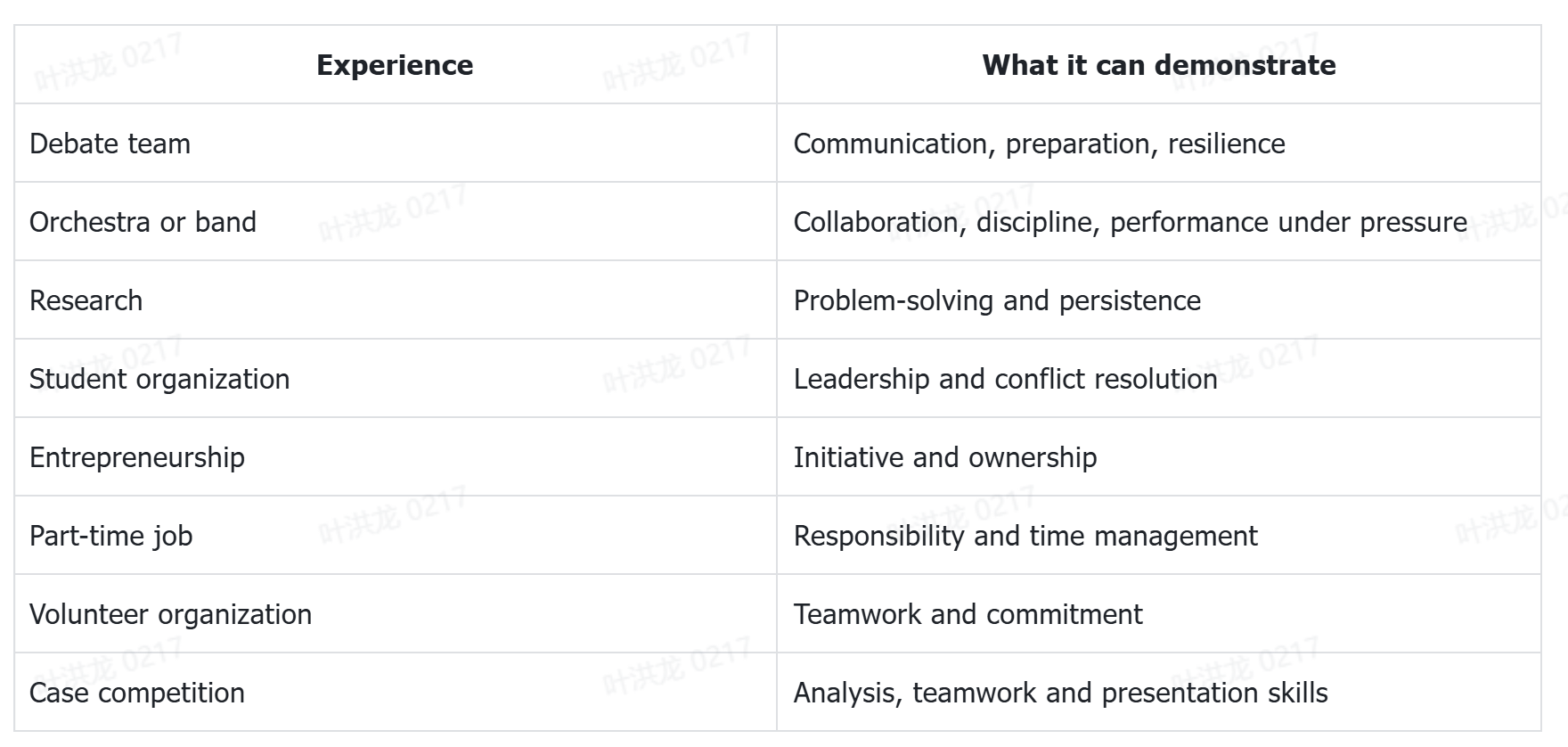
Someone who spent months preparing for a major musical performance can demonstrate discipline.
A researcher whose experiment failed multiple times can discuss resilience and problem-solving.
A student organization leader who had to resolve conflict between team members can demonstrate leadership.
The underlying framework remains the same:
Experience → Challenge → Action → Result → Reflection
This is why good investment banking interview prep should begin with your actual experiences rather than a list of answers you think bankers want to hear.
What actually matters in investment banking recruiting?
Sports can strengthen a candidate's story, but they are only one part of the core preparation needed for investment banking recruiting.
Candidates still need to build a complete profile that can include:
Strong academic performance
Relevant internships and experiences
A clear and concise resume
An understanding of accounting and valuation fundamentals
Behavioral interview preparation
Thoughtful networking
Knowledge of the firm, office, and role
Clear reasons for pursuing investment banking
This is particularly important because investment banking recruiting can begin earlier than many students expect, and timelines can differ by bank, office, and group.
Your sports background may make you memorable.
It does not replace preparation.
6. Conclusion: Your Sports Background Is Only as Valuable as How You Use It
A sports background can help with investment banking recruiting, but simply being an athlete is not the advantage. Knowing how to translate that experience is.
The years you spent training, competing, working with teammates, handling losses, and responding to feedback can give you experiences that other candidates may not have. Those experiences can become strong resume bullets, memorable behavioral interview stories, natural networking conversations, and examples of qualities like leadership, resilience, teamwork, and accountability.
But sports should complement the rest of your preparation, not replace it. You still need strong technical knowledge, relevant experiences, thoughtful networking, and a clear reason for pursuing investment banking.
So instead of asking whether playing a sport will help you break into Wall Street, ask a better question: “What has my experience taught me, and how can I show that to a recruiter?”
That is ultimately what turns a sports background from another line on your resume into a meaningful part of your investment banking recruiting story.
About OSG
We provide career exploration, technical preparation, applications, networking support, and mock interviews. Our mentors help students navigate the investment banking recruiting process, from building a strong resume and developing their story to preparing for behavioral and technical interviews.
Students can also explore our student cases to see how candidates from different backgrounds have approached finance recruiting.
Free Career Planning Session
Book a one-on-one conversation to discuss target roles, your recruiting stage, and preparation priorities.
Explore More Resources
DebaterTurnedHedgeFund Candidate: Landing a Citadel Offer on Wall Street
The Jazz Musician Who Landed a Bulge Bracket IB Offer in Hong Kong

Free Career Planning Session
Book a free 1-on-1 session with an OSG mentor and map out your path to top firms!
Book Your Free Session →Ready to Write Your Own Success Story?
Book a free 1-on-1 session with an OSG mentor and map out your path to top firms!
Book Your Free Session →


Frequently Asked Questions
It can strengthen your candidacy, but it is not an automatic advantage. Athletics are most useful when you can translate them into specific examples of leadership, teamwork, resilience, coachability, and performance under pressure while still demonstrating strong technical and recruiting preparation.
Meaningful varsity, NCAA, national, regional, or leadership experience can fit under Leadership & Activities with achievement-focused bullets. Recreational sports are usually better placed under Interests unless they demonstrate a significant commitment or accomplishment.
Students work with OSG Mentors who help candidates turn their existing experiences into a clearer recruiting story while preparing for other parts of the process, including resume positioning, behavioral and technical interviews, networking, applications, and mock interviews. The goal is to make athletics one authentic strength within a complete investment banking recruiting profile.