



Student Cases

Investment Banking (Finance)
Investment Banking (Finance)
From Pre-Med to Wall Street: How I Broke Into Bank of America Investment Banking from a Non-Target School
Learn how a Johns Hopkins student broke into investment banking from a non-target school. Discover strategies, early insight programs, and interview prep tips that led to a Bank of America offer.
Published on
May 18, 2026
7
min read
When you go to a school known globally for medicine, saying you want to do investment banking gets you some weird looks. According to 2026 recruiting timeline data from Yale’s Office of Career Strategy, bulge bracket banks are now opening junior summer analyst applications up to 12 to 18 months in advance.
The recruiting cycle is moving faster than ever. If you go to a school without a massive Wall Street alumni network, the pressure to figure things out early is intense. I was completely lost until I found a structured path to breaking into investment banking from a non-target school.
Here is how I pivoted from a 10-year medical track to securing a Bank of America investment banking offer as a non-target student, and the exact steps I took to get there.
Pivoting from Pre-Med to Investment Banking
In high school, my dream was to open my own clinical psychology practice. Naturally, I went to Johns Hopkins University (JHU) and double-majored in Economics and Psychology.
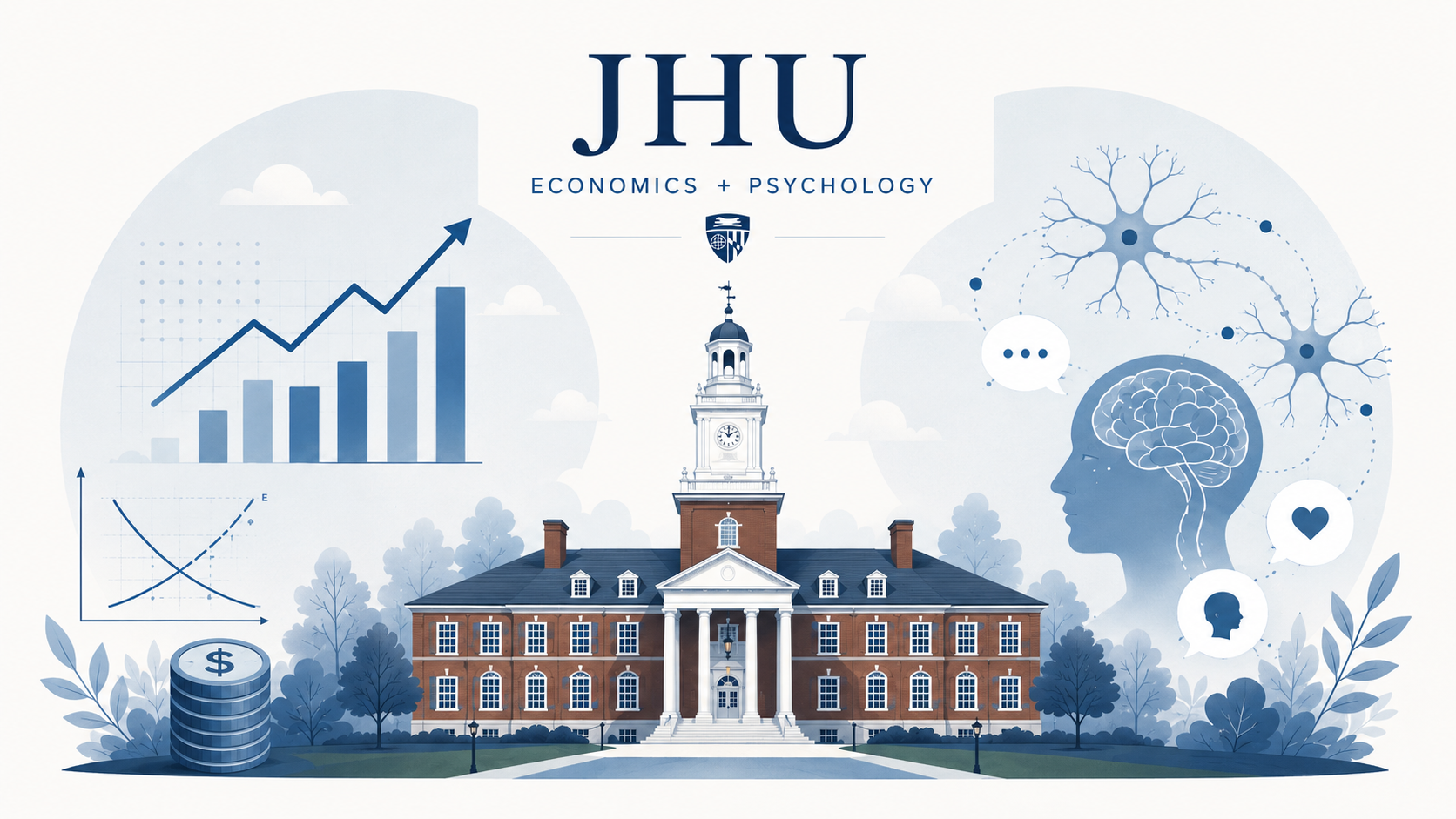
When I got to campus, the environment was intense. Almost everyone was pre-med or studying biology. JHU is a powerhouse in the medical field, so I briefly considered following the crowd. Being a doctor is prestigious and pays well. I had access to some of the best medical resources in the world right in front of me.
But then I looked at the actual timeline. Between sponsorship, grad school, residency, and board exams, I was looking at over a decade of studying before making real money. I know myself well. I did not want to be a test-taking machine memorizing complex medical terms for the next ten years. I wanted professional impact and financial independence much sooner.
I decided to find a career path that didn't require an immediate graduate degree. During my freshman fall, I started talking to friends about different career options. That is when a close friend introduced me to finance. He explained that in investment banking, you can start working on high-impact deals right out of college. I was hooked. It felt like the fastest way to understand how massive companies operate.

Navigating Wall Street Recruiting from JHU
Once I set my sights on finance, reality hit hard. JHU is an incredible school, but it is not a traditional target school for Wall Street. We simply do not have a massive pipeline of investment banking alumni. I was operating in the dark.
My friend recommended I look into One Strategy Group career coaching. He knew upperclassmen who had landed great offers through their network. I knew I couldn't afford to waste time guessing what to do. I joined the program right at the start of my freshman year.
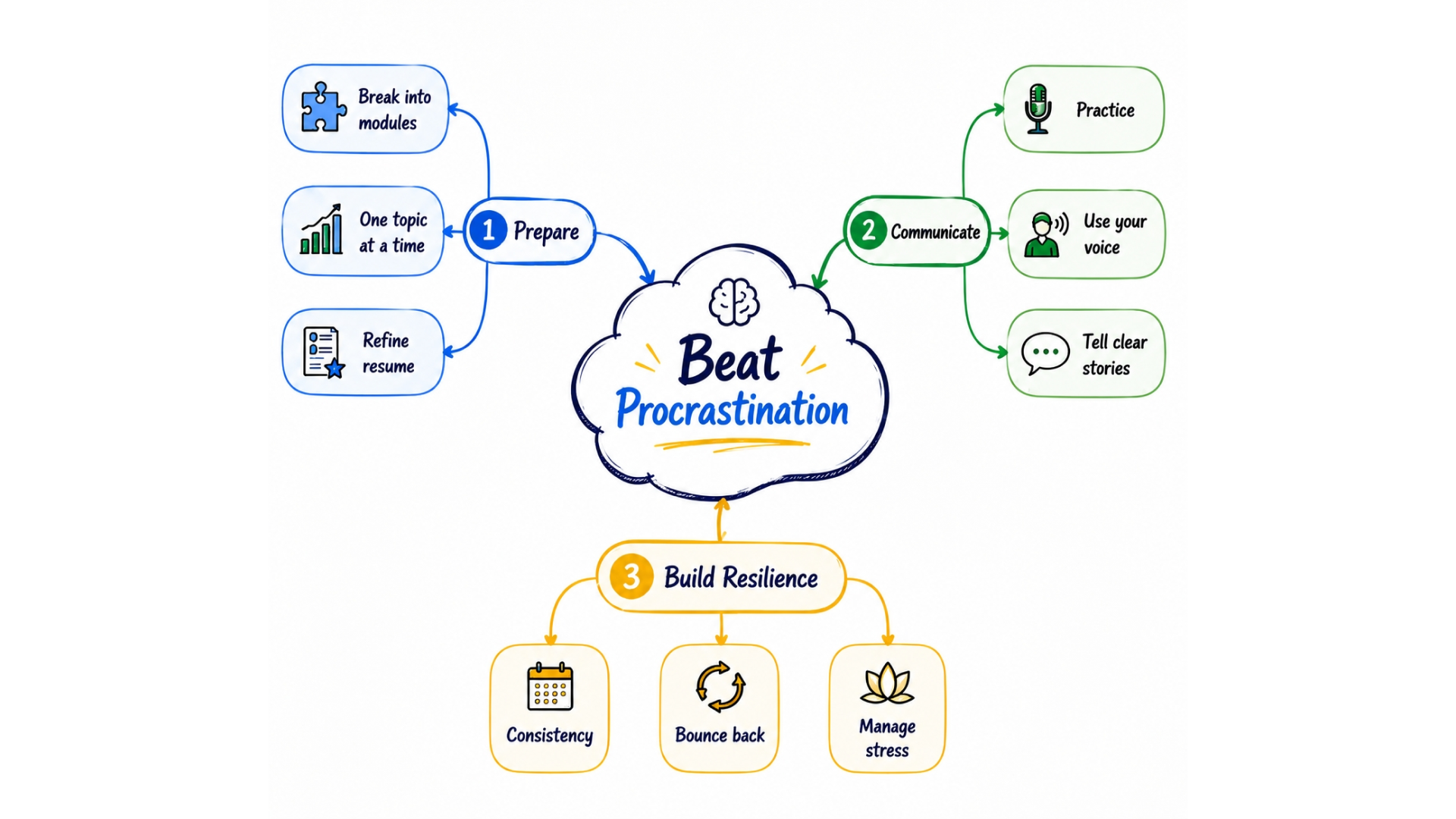
For someone like me who struggles with procrastination, One Strategy Group mentorship was exactly what I needed. It functioned as a navigation system that broke down a massive goal into executable steps.
Overcoming Procrastination in Investment Banking Prep
Modular Finance Technical Prep & Resume Optimization
Preparing for IB behavioral questions was a key step in my college to investment banking journey. My lead mentor was incredible. He laid out clear objectives without adding unnecessary pressure. He responded quickly and kept me on track.
My resume mentor was equally efficient. Every time I completed a new foundational internship, he helped me update my resume immediately. We removed weaker bullet points and repackaged my actual work using professional industry terminology.
Technical interview prep felt like a massive mountain to climb. The concepts aren't impossibly hard, but the sheer volume of information is overwhelming. I kept putting it off. Eventually, I learned to use a modular framework. Instead of trying to study everything at once, I would tell myself, "Today, I am only going to master the accounting section." Once I took that first step, the momentum built naturally. It was actually easier than some of my college classes.
From Scripted Answers to Authentic Interview Communication
Preparing for investment banking behavioral questions was my biggest hurdle. At first, I tried writing out and memorizing verbatim scripts for every possible question.
During a mock interview, my mentor Paul stopped me and said, "You sound like a robot. It's too mechanical." That was a wake-up call. I immediately switched my strategy. I started outlining just three core bullet points for each story instead of full sentences. This small shift completely changed my delivery. My answers flowed naturally, and I stopped panicking if I forgot a specific word.
Building Resilience During Wall Street Recruiting
Seeing everyone around me grinding away made me feel like I was constantly falling behind. My peer advisor was my anchor during this time. Even on weeks where I only managed to complete five networking calls, she never criticized me. She reminded me of my potential and helped me build the psychological resilience I needed to push through the empty anxiety.

Fast-Track Strategy: Landing My Investment Banking Superday
Last November, while many students were still waiting to see which programs would open, my mentors pushed me to target Bank of America’s early insight programs.
Targeting Bank of America’s early insight programs, and applying within the summer analyst recruiting timeline, fast-tracked my Superday invitation.
I submitted my application within three hours of the portal opening. That precision timing—moving half a year ahead of the standard curve—is what fast-tracked me directly to the Superday this February.
Before the final round, I reviewed all my networking calls. The bankers I spoke with at BofA were incredibly supportive. They replied to my update emails and even offered to mock interview me. I felt valued.
The Superday itself was fast and surprisingly conversational. I only had three interviewers, and the whole process took about an hour.
The Managing Director who interviewed me was so welcoming. He didn't have a checklist of standard behavioral questions. We just talked like regular people. The technical interviewers were equally encouraging. When I nailed a concept, they showed genuine appreciation. I wasn't nervous at all, which allowed me to answer flawlessly. My introduction flowed chronologically, and I knew every single bullet point on my resume inside and out.
Two hours after the interviews wrapped up, I was sitting on the train home. My phone rang. It was the offer call. I felt pure relief.
Advice for Students Pursuing Investment Banking from Non-Target Schools
For anyone trying to break into investment banking from a non-target school, the most important strategy is to show up as your authentic self.
Because of my psychology background, I talked about things I genuinely cared about during my MD interview. He could feel my actual energy and optimism. You cannot fake that. Senior bankers can tell immediately if you are truly interested or just playing a part. Find what you are best at, own your unique background, and the right team will value you for it.
Free Career Planning Session
Book a free 1-on-1 session with an OSG mentor and map out your path to top firms!
Book Your Free Session →Ready to Write Your Own Success Story?
Book a free 1-on-1 session with an OSG mentor and map out your path to top firms!
Book Your Free Session →Explore More Resources



Frequently Asked Questions
Yes, but the timeline and method are different. Non-target students need to start networking 12 to 18 months earlier than target school peers, and they have to source bulge bracket contacts independently rather than relying on campus pipelines.
Replace full memorized answers with three core bullet points per story. This lets you deliver the same content conversationally without panicking if you forget a specific phrase. Senior interviewers can tell within 30 seconds whether you are reading or talking.
One Strategy Group career coaching pairs candidates with active bankers for mock interviews, resume calibration, and timing strategy on programs like BofA's early insight. The structure helps non-target students access the kind of insider knowledge that target schools provide through alumni networks.



.jpg)