How to Break Into OpenAI and Big Tech
Ryan Tynes has experience helping students prepare for competitive recruiting across technology, AI, quantitative finance, and other technical fields. His work spans career strategy, technical interview preparation, project development, and recruiting execution, giving him firsthand insight into the challenges students face when targeting highly selective companies such as OpenAI and other leading technology firms.
Published on
November 23, 2026
5
min read

This guide explains how tech and AI recruiting works and what companies such as OpenAI, Google, Meta, Microsoft, Amazon, and other leading technology firms look for in candidates. It covers technical skills, coding, system design, projects, behavioral interviews, problem solving, communication, compensation, and interview readiness. It also explains why technically strong students can still struggle in interviews and how structured tech interview prep can help candidates identify and improve specific weaknesses.
Below, One Strategy Group (OSG) breaks down how big tech and AI companies evaluate candidates, what makes OpenAI recruiting different, and how students can prepare through technical training, projects, recruiting strategy, mock interviews, and targeted feedback.
Note: Tech recruiting processes vary by company, role, team, location, and recruiting cycle. Interview formats, compensation, and job requirements can change over time. Strong technical or academic performance does not guarantee an interview or offer. Candidates should always check each company’s current job descriptions and official recruiting information when preparing.
1.How Does Tech Recruiting Work?
Tech recruiting has become increasingly specialized.
A student interested in technology is no longer choosing only between broad categories such as software engineering and product management. Within software engineering alone, candidates can target backend, infrastructure, machine learning, AI, security, developer tools, distributed systems, product engineering, or research engineering.
The range of companies students target has expanded as well. Google, Meta, Microsoft, and Amazon remain major destinations, while OpenAI, Anthropic, Databricks, TikTok, Stripe, and other technology and AI companies have created additional highly competitive career paths.
That means there is no single formula for tech recruiting prep.
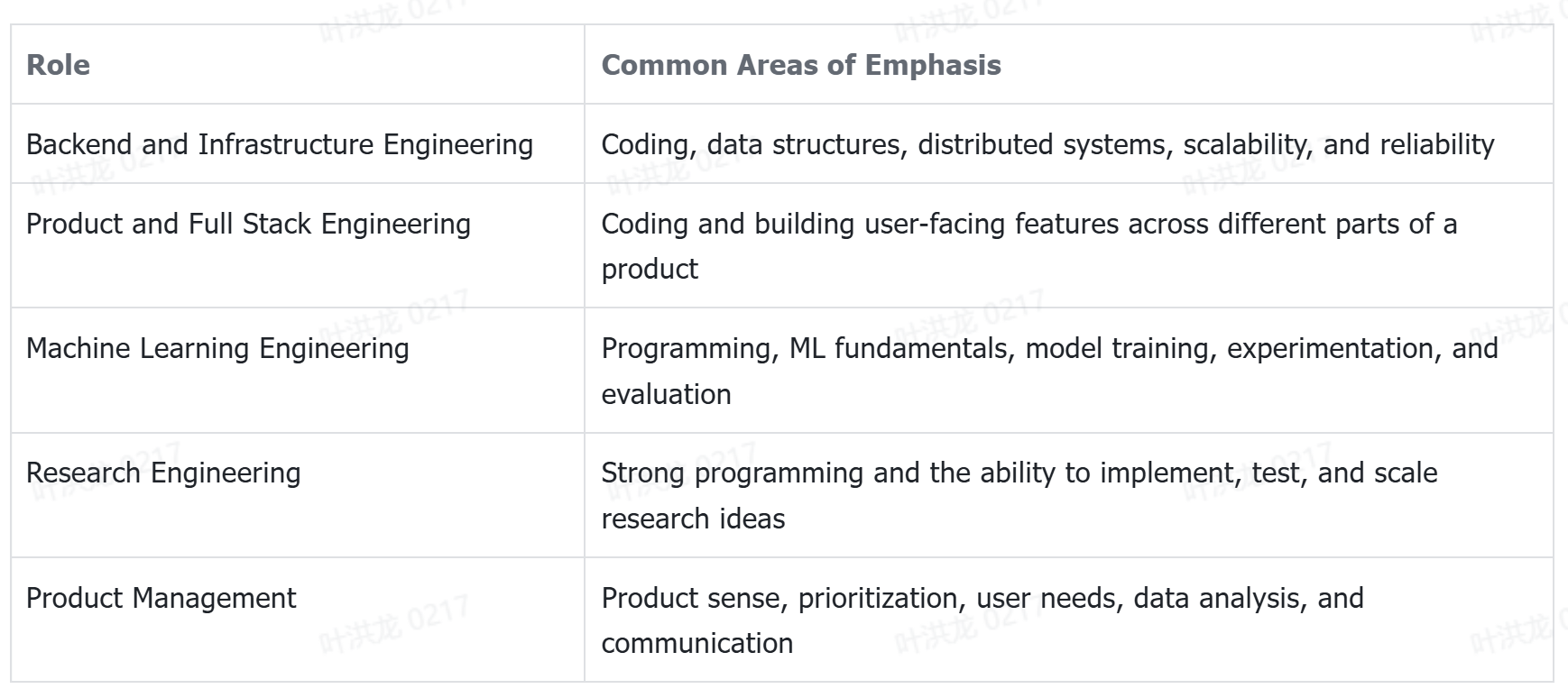
A student targeting machine learning engineering may need a different technical profile from someone targeting backend software engineering. A product candidate will prepare differently from an infrastructure engineer. Even two software engineering teams inside the same company can prioritize different skills.
Here is how several common roles differ in what they emphasize:
A useful way to think about the recruiting process is:
Target Role → Build Relevant Skills → Develop Experience → Apply → Interview → Improve Through Feedback
This makes role selection an important first step. Instead of beginning with “How do I get into Big Tech?”, candidates should first ask what role they are targeting and what that role actually evaluates.
2.Why Are AI and Big Tech Roles So Competitive?
The appeal of tech and AI careers is easy to understand.
Candidates may have opportunities to build products used by millions of people, work on complex technical problems, develop highly transferable skills, and work alongside experienced engineers and researchers. Compensation at leading technology companies can also be significantly higher than in many other entry level career paths.
The growth of AI has also added another layer of competition.
OpenAI, Anthropic, Google DeepMind, Meta, Microsoft, and other companies are building models, infrastructure, developer tools, consumer products, and enterprise AI systems. That creates opportunities across software engineering, machine learning, product, research, infrastructure, security, and other technical areas.
At the same time, these positions attract candidates from computer science, engineering, mathematics, physics, statistics, and other technical backgrounds. For example, one OSG student initially prepared for consulting before realizing that product management was a better fit and ultimately accepted an offer as a Microsoft PM.
This range of backgrounds makes tech recruiting especially competitive. Simply being “good at coding” or having a strong technical background may not be enough.
Candidates need to demonstrate how their skills fit a particular role and how effectively they can apply those skills when the problem is unfamiliar.
3.What Skills Do Top Tech Companies Look for?
The exact requirements vary by company and position, but strong candidates generally need more than the ability to produce working code.
Across leading technology companies, technical recruiting can evaluate some combination of the following:
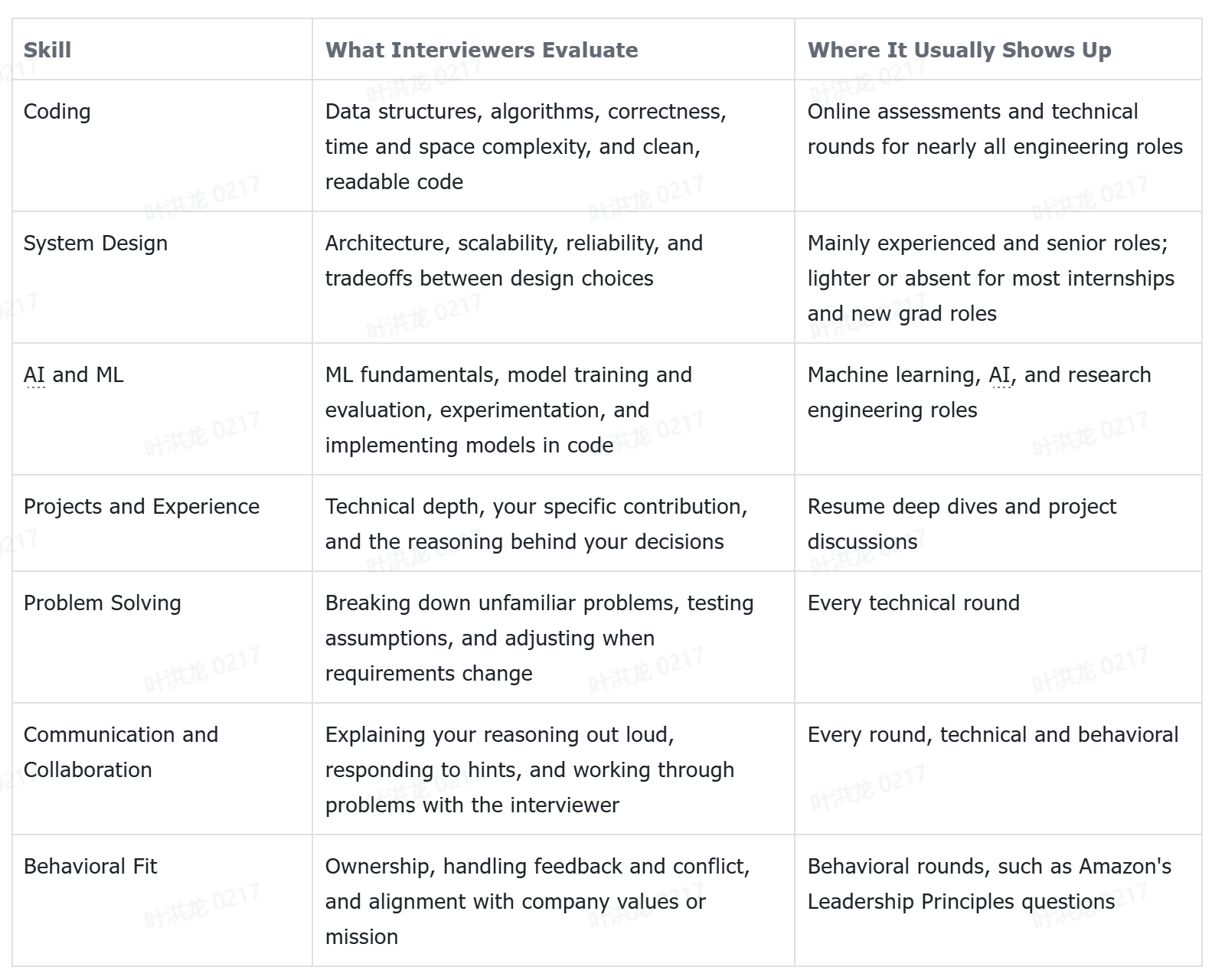
Most top companies test some version of these skills, but each one puts its weight in different places. For example, Amazon builds its behavioral questions around its Leadership Principles, Google is known for algorithm-heavy coding rounds, Meta for fast-paced coding, and Stripe for practical rounds that test debugging and API integration.
However, across all of them, one theme stays the same. The important distinction is between knowing something and being able to apply it.
Imagine a candidate correctly implements a cache during a coding interview. The interviewer then changes the problem. What happens if memory is limited? How would the solution change if requests arrive concurrently? What happens if the cache needs to operate across multiple machines?
The candidate is no longer being tested only on whether they know how to build a cache. The interviewer can now see whether they understand the assumptions behind the original solution and whether they can adapt when those assumptions change.
That is why effective software engineering interview prep should go beyond memorizing common coding patterns.
4.How Much Do OpenAI and Top Tech Companies Pay?
Compensation is another reason tech and AI recruiting attracts significant attention.
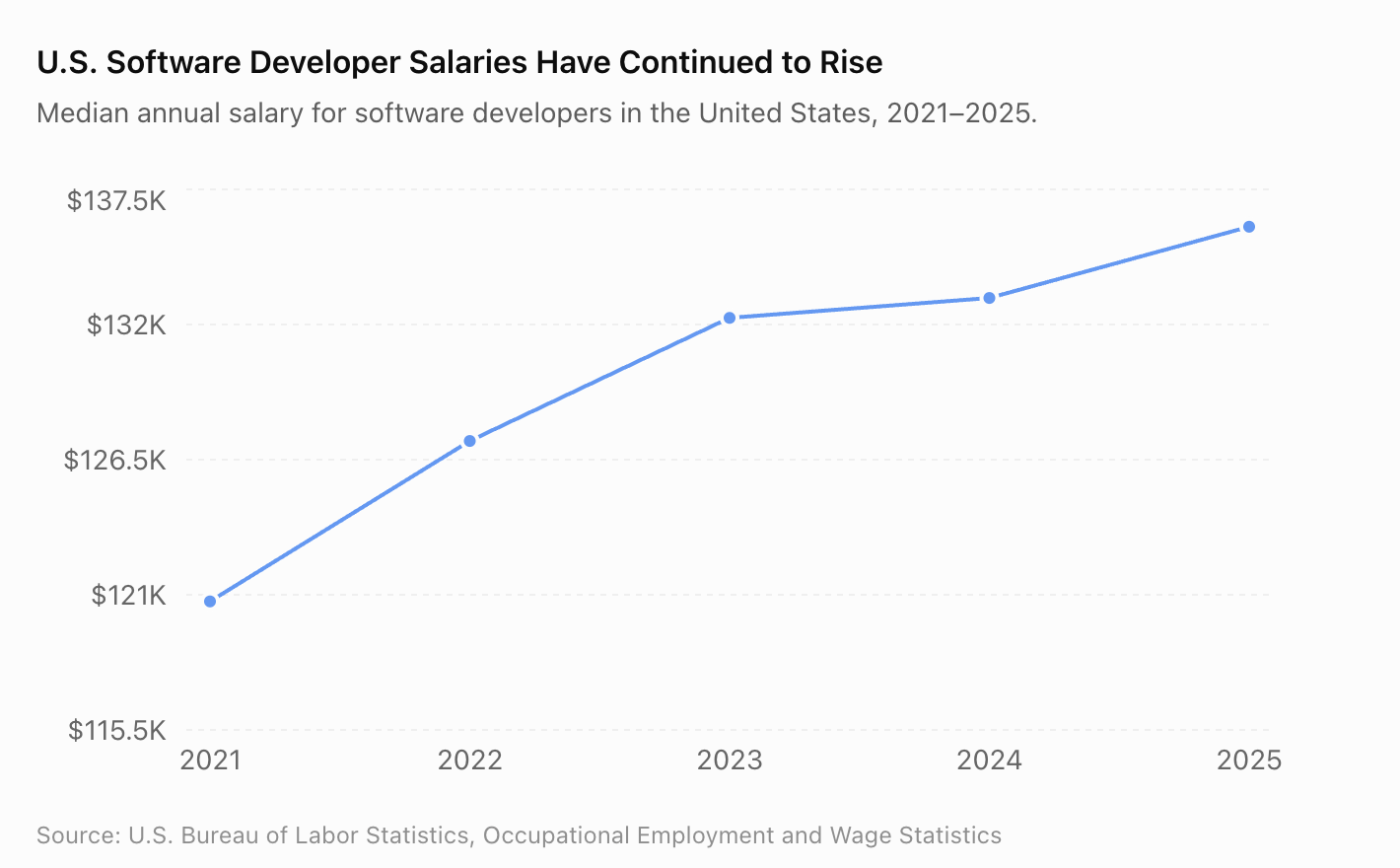
Tech compensation can include more than a base salary. Depending on the company and position, an offer may include:
Base Salary + Equity + Bonus = Total Compensation
This distinction matters because two positions with similar base salaries can have very different total compensation packages.
Current OpenAI job postings show how wide the range can be. For example, a Full-Stack Software Engineer role on the OpenAI Edu team lists a base salary of $230,000 to $385,000 plus equity, while a Developer Productivity Software Engineer role lists $210,000 to $490,000 plus equity. OpenAI states that eligible employees may also receive performance related bonuses and that actual base pay depends on factors including location, skills, knowledge, and experience.
These figures should not be interpreted as what every software engineer or new graduate will earn. Compensation can vary significantly by role, seniority, experience, location, equity package, and individual offer.
OpenAI’s current Software Engineer, Applied Emerging Talent (2027) role provides a useful comparison for early career candidates. The position lists $180,000 in compensation plus equity for candidates with zero to one year of relevant experience.
The larger point is that the financial upside of top tech and AI positions helps explain why recruiting can be so competitive.
5.What Does OpenAI Look for in Candidates?
OpenAI looks beyond credentials. It wants both experts and high-potential candidates who learn quickly, communicate clearly, take feedback well, and understand why they want to work on its mission.
One of the most notable points is that OpenAI says it is not credential driven. Instead, the company says it wants to understand each candidate's background and what that person can contribute to the team.
That does not mean technical standards are low.
It means a prestigious university, high GPA, or previous big tech internship does not tell the entire story.
OpenAI says it is interested in both established experts and candidates who demonstrate high potential. The company describes high potential partly as the ability to enter a new domain quickly and produce results. It also emphasizes collaboration, effective communication, openness to feedback, and alignment with its mission and values.
OpenAI’s own recruiting advice adds several other qualities to that picture. Candidates are encouraged to demonstrate ownership, agency, curiosity, the ability to build and execute, clear communication, and a thoughtful understanding of why they want to work at OpenAI.
For students, that distinction matters.
One candidate might have an impressive resume but struggle when asked to solve an unfamiliar technical problem. Another may have fewer recognizable company names but demonstrate exceptional problem solving, technical depth, and learning ability.
OpenAI also currently lists a Software Engineer, Applied Emerging Talent (2027) position in San Francisco The role asks for zero to one year of relevant experience, proficiency with JavaScript and React, experience with backend languages such as Python and relational databases, and an interest in AI and machine learning. Notably, the posting says direct AI or ML experience is not required.
So for candidates considering OpenAI interview prep, the question is not simply:
“Do I already know everything about AI?”
A better question is:
“Can I demonstrate that I learn quickly, build effectively, and solve difficult problems?”
6.How Does the OpenAI Interview Process Work?
The exact OpenAI recruiting process varies by role and team, but the company’s official interview guide provides a general framework.
Application and Resume Review
The process begins with the application.
This is where role targeting matters. A generic software engineering resume may not communicate the same fit as one that clearly highlights technical skills, projects, and experiences relevant to the specific position.
A project should not simply say:
Built an AI application using Python.
A stronger version might read: “Built a Python and React study assistant that retrieves answers from course notes; designed the retrieval pipeline and cut average response time from 6 seconds to 2 seconds for 300 student users.”
If you are currently recruiting and are unsure whether your resume effectively communicates your technical experience, our mentors can provide personalized feedback and help you strengthen your positioning.
Introductory Call
Candidates who advance may speak with a recruiter or hiring manager.
OpenAI recommends being prepared to discuss work and academic experience, motivations, and goals. It also recommends becoming familiar with the company's recent work, particularly developments connected to the team being interviewed for.
That means “Why OpenAI?” should not sound interchangeable with “Why Google?” or “Why Meta?”
Candidates should understand the specific position and team they are targeting.
Skills Based Assessment
Depending on the position, OpenAI says assessments may include pair coding interviews, take home projects, technical tests, or more than one assessment. Some of these assessments allow AI tools, while others are designed to test independent problem solving, so it is worth reading the instructions carefully and practicing both ways.
This is where technical interview prep training becomes particularly important.
The candidate is not simply demonstrating whether they can eventually arrive at the right answer. Interviewers can also observe how they interpret a problem, structure their thinking, communicate assumptions, and respond when the problem changes.
OpenAI explicitly says its interviews are designed to understand how candidates think, including how they approach problems, make decisions, and communicate their reasoning.
Final Interviews
OpenAI says candidates typically complete four to six hours of final interviews with four to six people over one or two days.
For engineering interviews, the company says it generally evaluates well designed solutions, high quality code, performance, test coverage, communication, and collaboration. Interviews are also designed to stretch candidates beyond their comfort zones.
That last point is important.
A technical interview is not necessarily designed to give candidates a sequence of questions they already know how to answer. Part of the evaluation can be seeing what happens when they reach the edge of what they know.
7.What OpenAI Interview Questions Should You Prepare For?
OpenAI interview questions vary significantly by position, so reported questions should be treated as examples rather than a guaranteed question bank.
However, several categories are particularly useful when preparing.
Coding Questions
Coding interviews can test whether candidates can translate a technical problem into efficient, readable, and well tested code.
Candidates should be comfortable with areas such as algorithms, data structures, time and space complexity, testing, edge cases, code quality, and problem decomposition.
But solving the original problem is only one part of preparation.
After a candidate produces a solution, an interviewer might ask:
Why did you choose this data structure?
What is the time complexity?
What edge cases could break the solution?
How would you test it?
How would your approach change if the input became much larger?
Is there another way to solve the problem?
This is why OpenAI interview prep should focus on understanding rather than memorization.
System Design Questions
System design can become especially important for certain software engineering positions.
Candidates may need to reason about databases, APIs, scalability, reliability, storage, latency, architecture, and how different parts of a system interact.
For example, instead of simply asking a candidate to design an application, an interviewer can introduce new constraints. What happens when the system reaches millions of users? What happens if one service fails? How should the system handle a sudden increase in traffic? Where are the bottlenecks?
A strong answer therefore needs more than a diagram.
The candidate should be able to explain why the architecture makes sense, what tradeoffs were made, and how the design would change under different conditions.
That is the type of skill targeted by system design interview prep.
Behavioral and Communication Questions
Technical candidates sometimes underestimate behavioral interviews.
That can be a mistake.
OpenAI explicitly emphasizes collaboration, communication, and openness to feedback as part of its hiring philosophy. Its recruiting guidance also encourages candidates to show ownership, agency, curiosity, and clear communication.
Candidates should therefore be prepared to discuss previous projects, technical mistakes, disagreements, feedback, priorities, and situations where they had incomplete information.
Questions might include:
Tell me about a project you owned from beginning to end.
Describe a technical decision that turned out to be wrong.
Tell me about a disagreement with a teammate.
How did you respond to difficult feedback?
Why OpenAI?
The interviewer is trying to understand what the candidate personally contributed, how they think, and how they work with other people.
Common Practice Problems for OpenAI-Style Interviews
Note: The problems below are common practice problems that you might get in a real interview. Several are classic, publicly available exercises, such as LRU Cache and Time-Based Key-Value Store on LeetCode, and all of them reflect the practical, build-it-yourself style that OpenAI’s interview guide describes. Use them to practice the skills covered above rather than as a prediction of what you will be asked.
• Coding: Implement an LRU (least recently used) cache with get and put operations.
• Coding: Build a time-based key-value store where get returns the value that was active at a given timestamp.
• Coding: Serialize and deserialize a key-value store when keys and values can contain any character, including your delimiter.
• Coding: Build a simplified spreadsheet API with getCell and setCell, including formulas and dependency tracking.
• Coding: Implement a GPU credit ledger that supports adding credits, charging usage, and checking balances when requests can arrive out of order.
• System design: Design a webhook delivery system.
• System design: Design a web crawler that runs at scale.
• System design: Design an LLM-powered enterprise search system.
• Behavioral: Tell me about a technical misjudgment that delayed a project. What did you learn?
Worked Examples: How Interviewers Can Change the Problem
Earlier in this guide, we described an interviewer changing a cache problem partway through. The examples below show what that looks like in practice, using questions from the list above. Each one starts with the original problem, adds a changed condition, and walks through how to rethink the solution.
Example 1: LRU cache (coding)
• Original problem: Build a cache with a fixed capacity. get(key) returns a value and put(key, value) adds one. When the cache is full, remove the least recently used item. Both operations should run in O(1) time.
• Standard approach: Combine a hash map (key to node) with a doubly linked list ordered by recent use. A get moves the node to the front, and a put removes the node at the back when the cache is full.
• Changed condition 1: Each entry now expires after a time-to-live (TTL).
• How to rethink it: Store an expiry time on each node. On get, check whether the entry has expired and remove it if so, which keeps get at O(1). Then name the tradeoff: expired items can sit in memory until someone reads them, so you might add a periodic cleanup or a min-heap ordered by expiry time.
• Changed condition 2: Many threads now call get and put at the same time.
• How to rethink it: Point out that get also changes the list order, so reads need protection too. The simplest correct fix is one lock around every operation. If the interviewer asks about speed, split the cache into shards with their own locks, and explain that "least recently used" becomes approximate across shards.
Example 2: Time-based key-value store (coding)
• Original problem: set(key, value, timestamp) stores a value. get(key, timestamp) returns the value with the largest timestamp that is less than or equal to the one given.
• Standard approach: If timestamps for each key always increase, append each value to a list and use binary search on get. set is O(1) and get is O(log n).
• Changed condition: Timestamps can now arrive out of order.
• How to rethink it: Appending no longer keeps the list sorted, so binary search breaks. You could insert each value into its sorted position (simple, but O(n) per insert in an array), use a balanced tree or sorted map (O(log n) for both operations), or append and sort before the next read if writes far outnumber reads. A strong answer names the tradeoff and asks which usage pattern to expect.
Example 3: API rate limiter (system design)
• Original problem: Limit each API key to 100 requests per minute on a single server.
• Standard approach: Keep a token bucket for each API key in memory. Tokens refill at a steady rate, and each request spends one.
• Changed condition 1: The API now runs on many servers behind a load balancer.
• How to rethink it: Memory on one server no longer gives an accurate count, because one key's requests are spread across servers. You can move counters into a shared store such as Redis with atomic updates, which adds a network call to every request. Or you can keep local limits and accept that the global limit is only approximate.
• Changed condition 2: The limit is now based on tokens processed by a language model, not the number of requests.
• How to rethink it: The true cost is not known until the model finishes responding. One approach is to reserve an estimated number of tokens when a request starts, then correct the count once actual usage is known.
Example 4: Model evaluation (machine learning roles)
• Original question: A fraud detection model reaches 95% accuracy. Is it a good model?
• Changed condition: Only 1% of transactions are actually fraud.
• How to rethink it: A model that labels every transaction "not fraud" would score 99% accuracy, so accuracy is misleading here. Look at precision and recall on the fraud class, and discuss which mistake costs the business more: missed fraud or blocked legitimate payments.
Example 5: Behavioral follow-ups
• Original question: "Tell me about a project you owned from beginning to end."
• Common follow-ups: "What would you do differently with half the time?" "Which decision would you reverse?" "How did you know it worked?"
• How to prepare: For each project on your résumé, write down one tradeoff you made, one thing that went wrong, and one number that shows the result.
The pattern is the same in every example: state the original assumption, explain what breaks when it changes, propose a fix, and name the tradeoff. That habit is what interviewers are looking for when they change the problem.
8.How Does OpenAI Recruiting Compare With Google, Meta, Amazon, and Other Top Tech Companies?
The short answer is that the technical foundations overlap, but each company stresses different things. OpenAI emphasizes practical skills-based assessments and mission fit, while Google, Meta, Amazon, Microsoft, Anthropic, and Stripe each have well-known features of their own.
Many students recruit for several of these companies in the same cycle. Knowing where the processes differ can help you decide what to practice first.
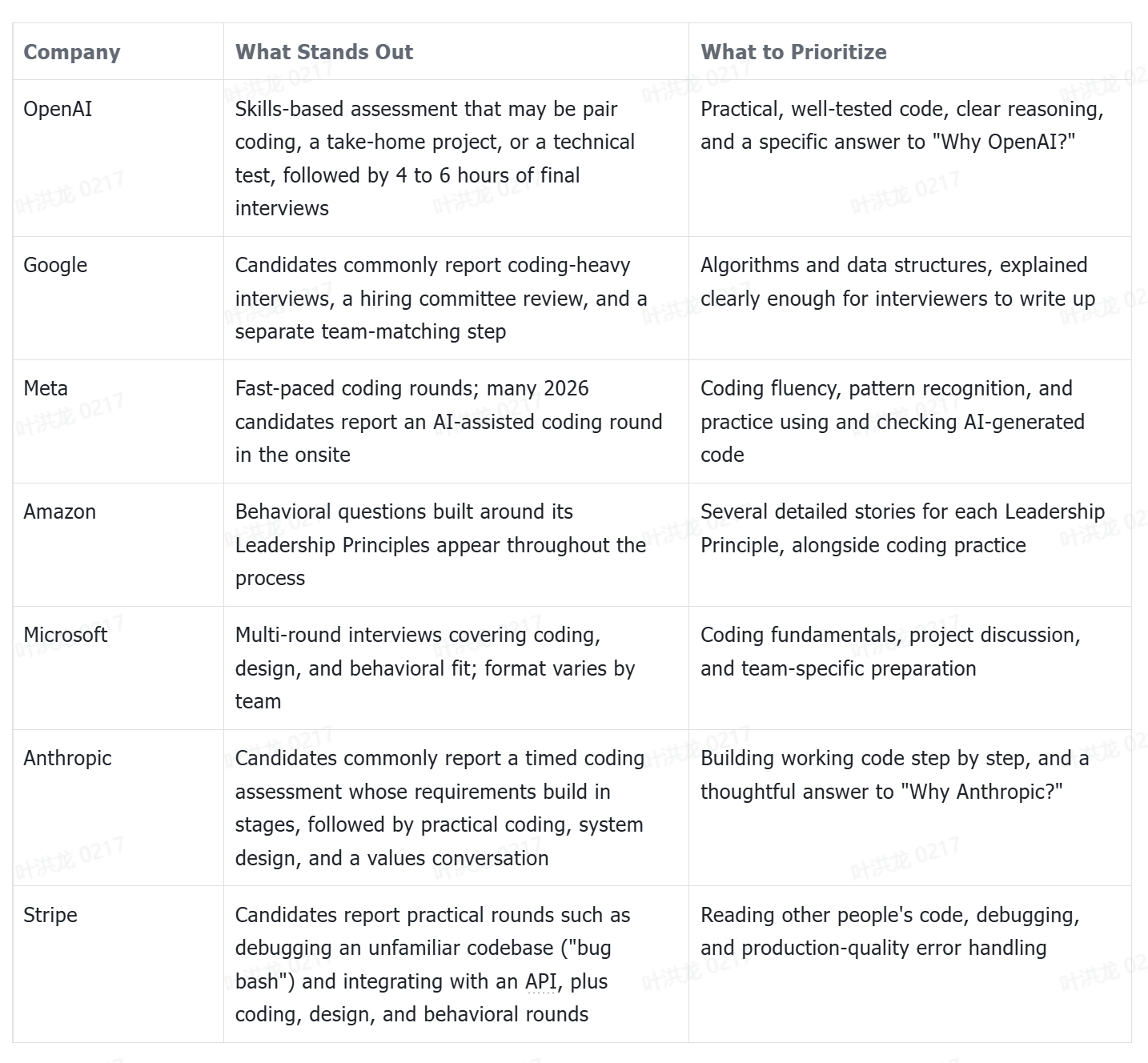
These descriptions are based on company materials and recent candidate reports. Formats change often and differ by level, team, and role, so confirm the details with your recruiter.
The practical takeaway is that one generic prep plan rarely fits every company. A student targeting Amazon needs well-prepared Leadership Principles stories, while a student focused on OpenAI interview prep needs to be comfortable building practical, well-tested code and explaining why that specific team interests them.
9.Why Do Strong Candidates Still Fail Tech Interviews?
Technical ability and interview performance are related, but they are not identical.
A student might be capable of building an impressive software project over several months but struggle to solve a smaller technical problem in 30 minutes while explaining every decision aloud.
Another candidate might know algorithms extremely well but freeze when an interviewer changes one requirement.
The gap can look like this:
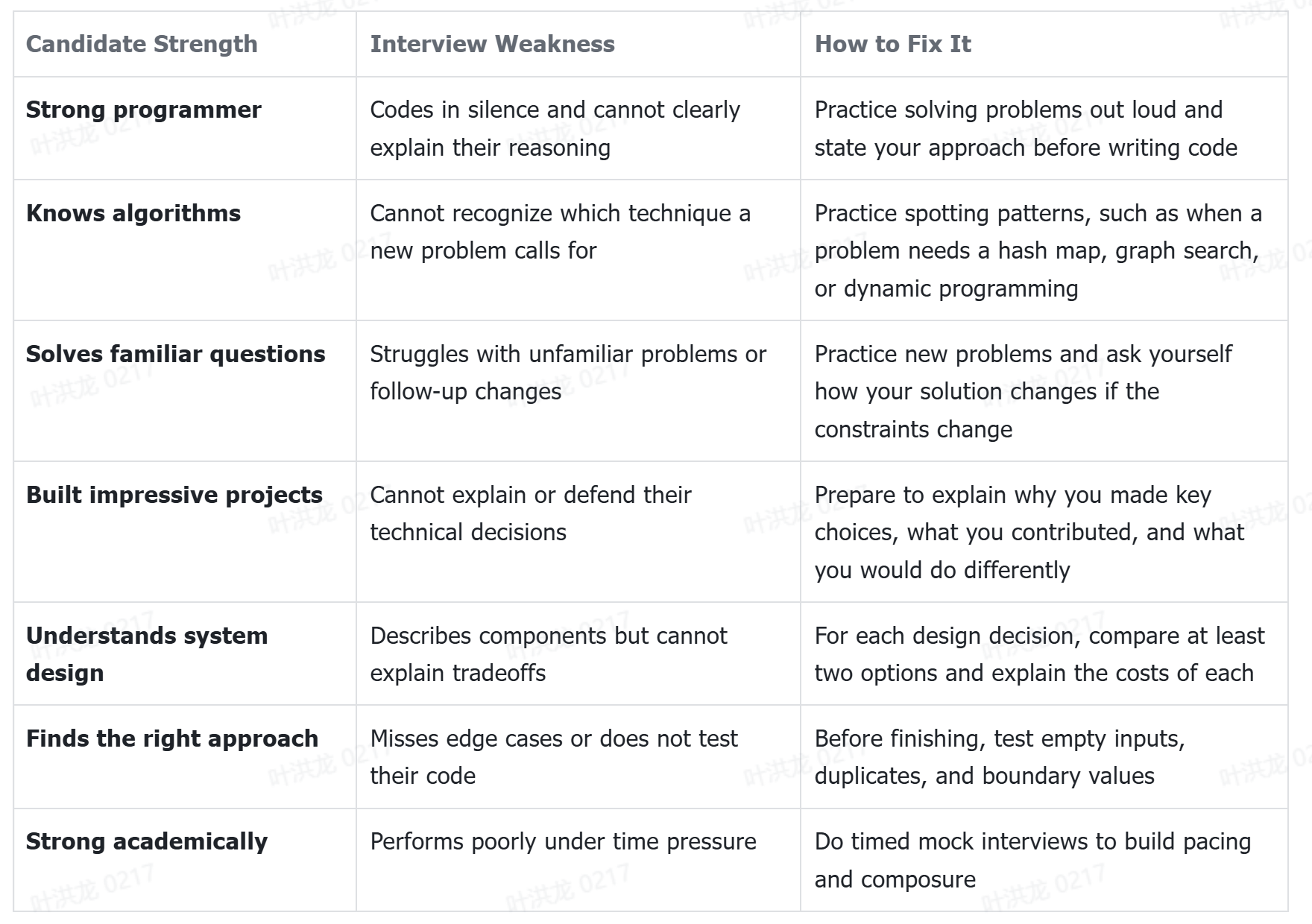
This is why effective mock interviews should diagnose more than whether the final answer was correct.
Two candidates can arrive at the wrong answer for completely different reasons. One may have a technical knowledge gap. Another may misunderstand the requirements. Another may select an inefficient data structure. Another may have the right technical idea but struggle to communicate it.
Each weakness requires a different solution.
10.How Do You Know If You Are Interview Ready?
Interview readiness should not be measured only by how many LeetCode questions a candidate has completed.
A better test is whether they can perform when the problem is unfamiliar.
Ask yourself:
Can I solve a technical problem I have not seen before?
Can I explain my approach before I start coding?
Can I identify assumptions and clarify requirements?
Can I explain time and space complexity?
Can I test my own solution?
Can I identify edge cases?
Can I discuss technical tradeoffs?
Can I respond when an interviewer changes a requirement?
Can I recognize when my original approach is wrong?
Can I explain my previous projects in technical depth?
Can I communicate clearly while under time pressure?
If several of these are difficult, completing another 100 familiar coding questions may not address the real weakness.
One way to find out where you stand is a simple self-test: pick a medium-difficulty problem you have never seen, set a 45-minute timer, and solve it out loud while recording yourself. Then watch the recording and note where you went silent, skipped testing, or changed approach without explaining why.
Once you know your weak spots, a useful preparation cycle is:
Learn Concept → Solve Problem → Explain Reasoning → Handle Follow Up → Receive Feedback → Improve → Retest
That is the difference between practicing questions and becoming interview ready.
11.How Does OSG Help Students Prepare for Tech and AI Recruiting?
In the most recent recruiting cycle, OSG students secured 58 tech offers. OSG's tech recruiting preparation begins by identifying each student's target roles, technical background, previous experience, and recruiting gaps.
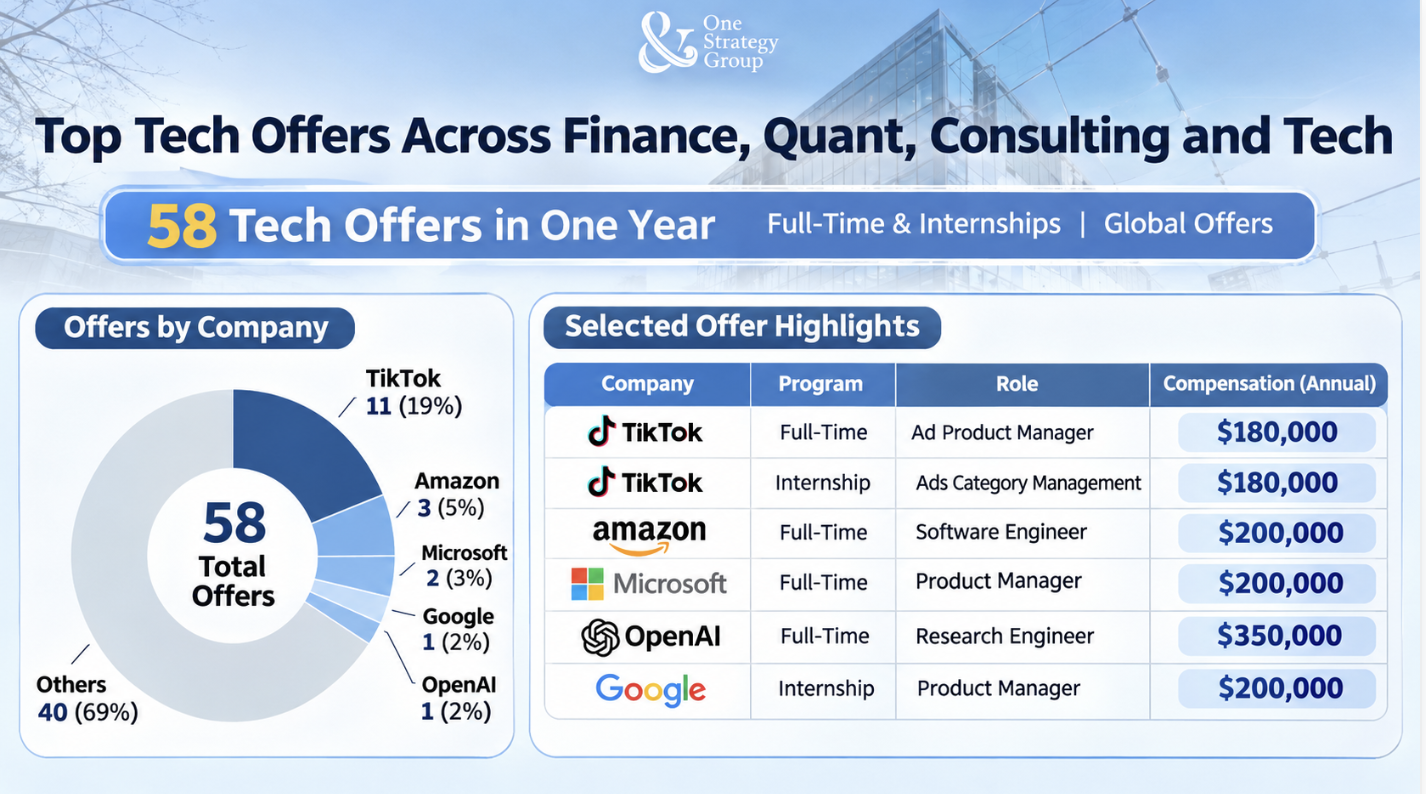
The goal is not to give every student the same preparation plan.
A freshman exploring software engineering may need help developing technical experience and projects. A junior entering recruiting may already have strong technical skills but need software engineering interview prep, resume positioning, application strategy, and mock interviews.
Another candidate may need system design preparation. Someone else may need behavioral practice or help identifying which technical roles actually match their background.
Preparation can therefore include technical training, coding and system design practice, resume and project positioning, application strategy, networking, behavioral preparation, company specific mock interviews, and targeted feedback.
This approach becomes particularly important when candidates recruit across companies such as OpenAI, Google, Meta, Microsoft, Amazon, TikTok, Databricks, and other technology and AI companies.
The technical foundations may overlap, but the positions, teams, interview formats, and evaluation criteria can differ.
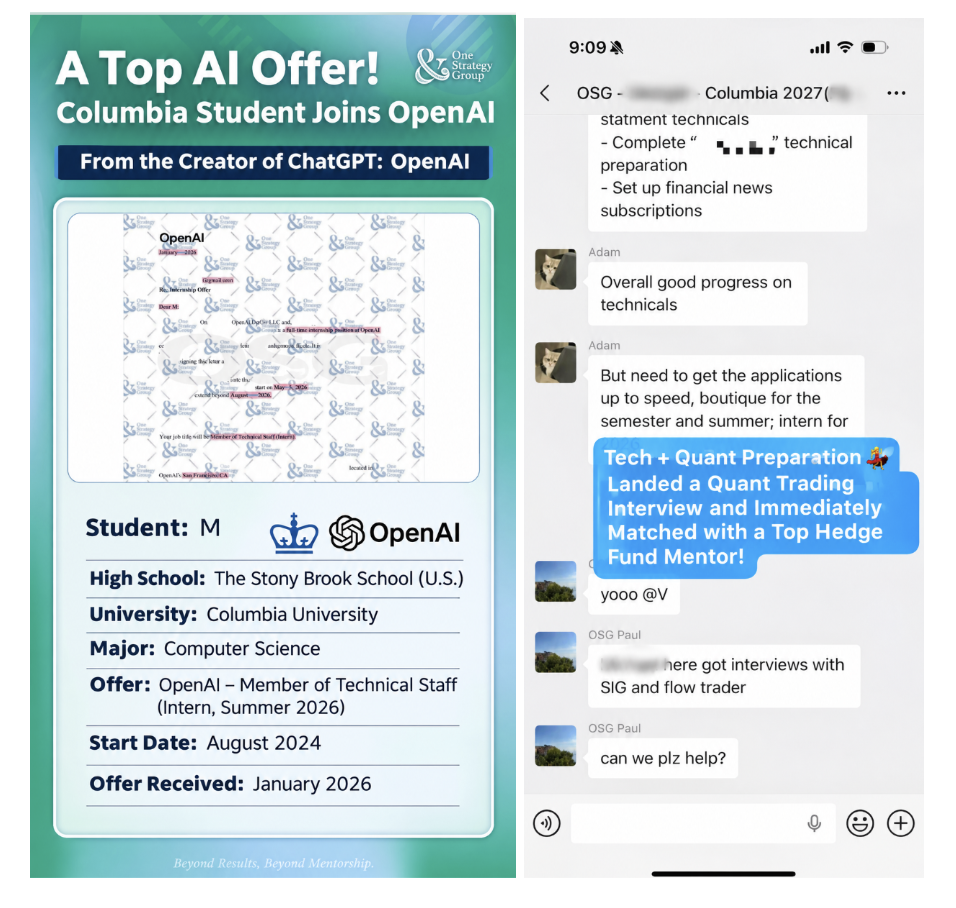
One OSG student case provides an example of what this preparation can look like in practice.
The student studied Computer Science at Columbia University and joined OSG during the summer after his first year while exploring quantitative finance, software engineering, and AI related opportunities.
OSG first worked with the student to clarify his career direction and make software engineering and AI research core recruiting targets. He was then matched with mentors from technology and AI backgrounds and worked on areas including algorithms, system design, technical projects, application strategy, networking, and interview preparation.
As recruiting progressed, the preparation became more targeted. OSG mentors worked with the student through multiple rounds of technical interview practice and feedback before he ultimately received a Software Engineering summer internship offer from OpenAI in San Francisco, according to OSG's student case materials.
Tech recruiting is a chain:
Career Direction → Technical Skills → Projects → Resume → Applications → Networking → Interviews → Offer
A weakness at any stage can prevent a technically strong student from reaching the next one.
The goal of structured preparation is therefore to identify where the gap actually exists and focus improvement there.
12.Conclusion: How to Approach Tech Recruiting
Breaking into OpenAI, Google, Meta, Microsoft, Amazon, or another leading technology company requires more than being good at coding.
Candidates need the technical foundation to solve difficult problems, but they also need to communicate their reasoning, clarify ambiguous requirements, understand tradeoffs, test their solutions, respond to follow up questions, and demonstrate that they can learn quickly.
OpenAI is a particularly clear example. Its recruiting materials emphasize high potential, communication, collaboration, openness to feedback, and the ability to ramp up quickly in unfamiliar domains. Its engineering interviews also evaluate code quality, solution design, performance, testing, communication, and collaboration.
For students preparing through tech interview prep, the most useful question may therefore not be:
“How many coding questions have I completed?”
It may be:
“If I were interviewed tomorrow, could I show the interviewer how I think?”
That difference separates knowing technical material from actually being interview ready.
About OSG
One Strategy Group (OSG) helps students navigate competitive recruiting across consulting, finance, and other career paths. We provide career exploration, technical preparation, application support, networking guidance, and mock interviews.
Our mentors work with students throughout different stages of the recruiting process, from exploring career options and building a strong resume to preparing for applications and interviews.
Students can also explore our student cases to see how candidates from different backgrounds have approached recruiting.
Free Career Planning Session
Book a one-on-one conversation to discuss target roles, your recruiting stage, and preparation priorities.
Explore More Resources
No More Performing: From Consulting to a Microsoft PM Role in Three Months
Can You Break Into Citadel Securities Quant Trading Without a Math Olympiad

Free Career Planning Session
Book a free 1-on-1 session with an OSG mentor and map out your path to top firms!
Book Your Free Session →Ready to Write Your Own Success Story?
Book a free 1-on-1 session with an OSG mentor and map out your path to top firms!
Book Your Free Session →Explore More Resources


Frequently Asked Questions
OpenAI recruits for highly technical and specialized positions and uses multiple stages of evaluation. Its official interview guide says final interviews typically involve four to six hours with four to six people over one or two days, although the exact process varies by role.
OpenAI currently recruits early career candidates. Its Software Engineer, Applied Emerging Talent (2027) role, for example, targets candidates with zero to one year of relevant experience.
OpenAI says its hiring philosophy is not credential driven and that it wants to understand each candidate's background and potential contribution.That does not mean credentials never matter in recruiting. It means candidates should not assume university name alone determines whether someone is competitive.