



Student Cases

Investment Banking (Finance)
Investment Banking (Finance)
From Saving Strays to Evercore M&A: What I Learned About Preparing Differently
Every time a mentor stumped me, I counted it as a win. It meant I'd found a hole in my prep before the interviewer did. So I started asking them for the strangest questions they could think of — and kept going until I could answer every one without hesitation.
Published on
June 4, 2026
6
min read
I started recruiting for investment banking without a target-school name to lean on, weak interview English, and one stubborn reason to want the offer. A few months earlier I had spent five months searching for a cat that never came home, and somewhere in that search I decided I wanted the kind of money that could keep an animal shelter running for good. Evercore investment banking recruiting was never the dream. It was the means. This is how a research-first approach got me there.
Why I Wanted the Money First
The decision came from a shelter. An elderly woman had spent decades and her entire savings keeping more than three thousand stray cats and dogs alive, borrowing constantly to cover close to a million in yearly costs. I watched her stooped back and understood something I had been avoiding. Good intentions run on resources, and resources were exactly what I didn't have.
So I made a plan that sounded backwards to most people. Instead of staying to volunteer, I would leave, earn, and fund the place for the long run. Finance was not the noble reason people expect. It was the most honest one I had.

Building a Technical Base as a Non-Target School Student
I signed with One Strategy Group early, on the recommendation of two people I trusted who had walked the path ahead of me and landed at the same firm. I came in with a clear first priority. Get the technical foundation right before anything else.
My method was slow on purpose. After each class I spent three to five hours replaying the recording, rebuilding the logic, and writing down every concept I understood but couldn't yet explain why. The next session I would spend half my time asking until each principle broke down into something I could explain myself. It was tedious. It also gave me a technical base solid enough to join my school's finance club as a freshman, even when my spoken English and behavioral answers were still rough.
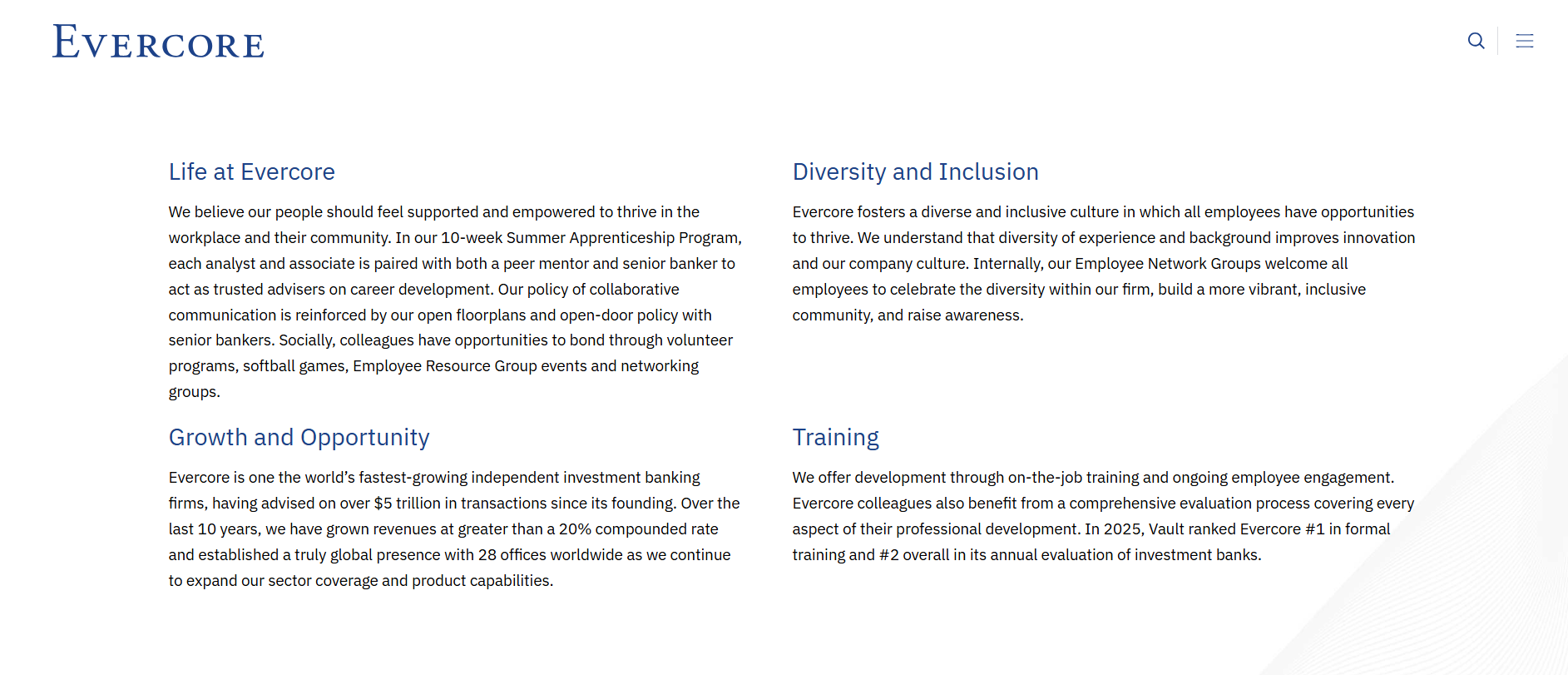
The training focus was deliberate, and it mirrored how the firm I was aiming at thinks about its own people. Evercore's careers materials note that the firm was ranked first for formal training in Vault's 2025 evaluation of investment banks, and second overall. I read that as a signal. The places that win on rigor reward people who arrive already built for rigor. So I kept grinding the fundamentals long after they felt comfortable.
Choosing IB Groups That Reward Research
In October, a call with my mentor Paul became the turning point. He asked me a question I sat with for a long time. What was my real edge against other candidates? My answer was technical and research skills. So we built the strategy around that.
Paul pointed me toward groups where depth matters more than polish, the sector and technical teams like Healthcare, Energy, and Private Capital Advisory, the group that advises on fund and secondary transactions. The logic was simple. Put yourself where the thing you are best at is the thing they value most. One Strategy Group mentorship was less about generic prep and more about this kind of positioning.
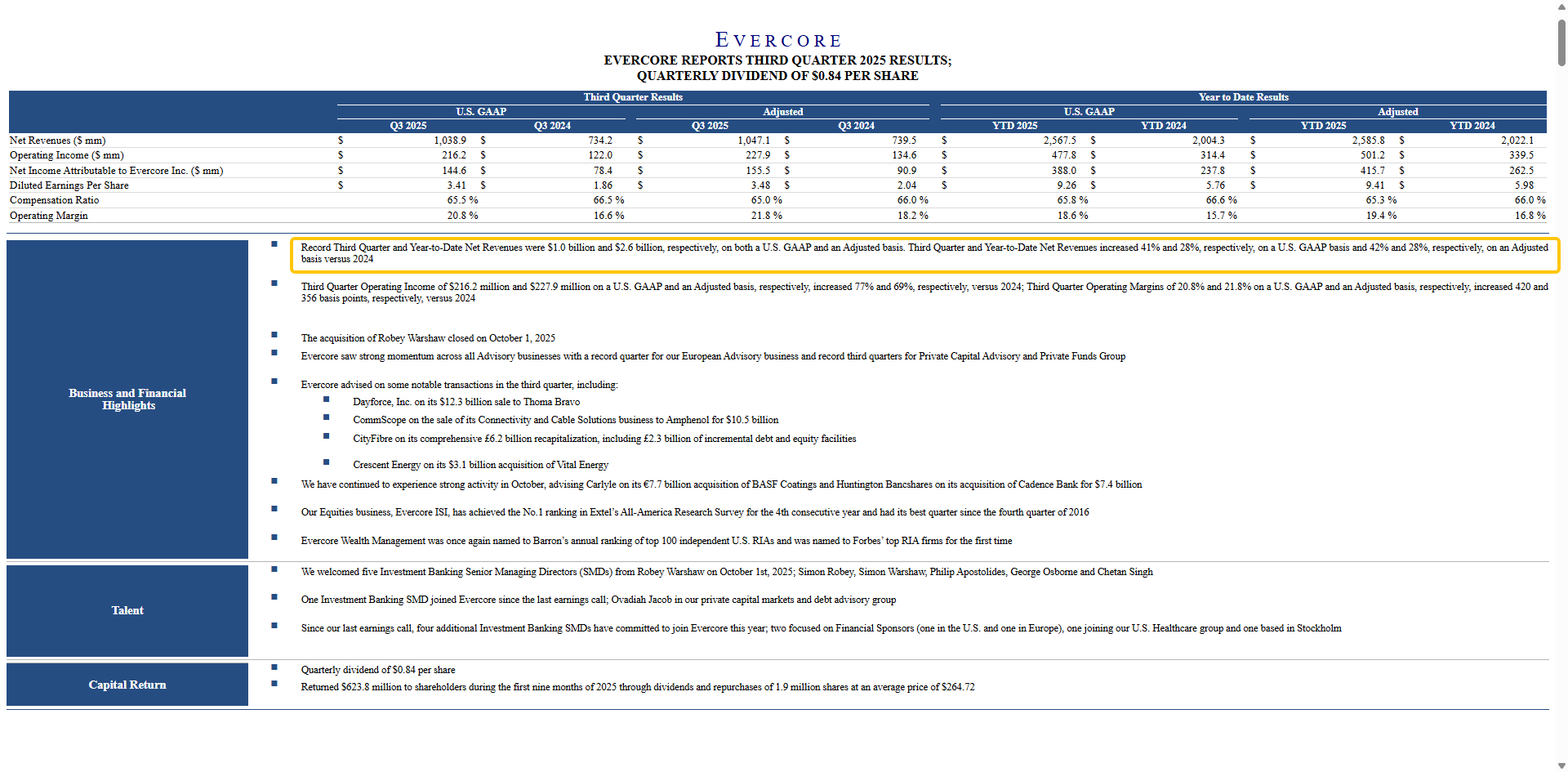
It helped to know the market I was walking into was strong. According to Evercore's third quarter 2025 results, the firm reported record quarterly net revenues of $1.0 billion, up 41 percent year over year on a U.S. GAAP basis. A firm advising on that kind of volume hires selectively, and I knew the room would not grade me on effort.
How Many Mock Interviews Before a Superday
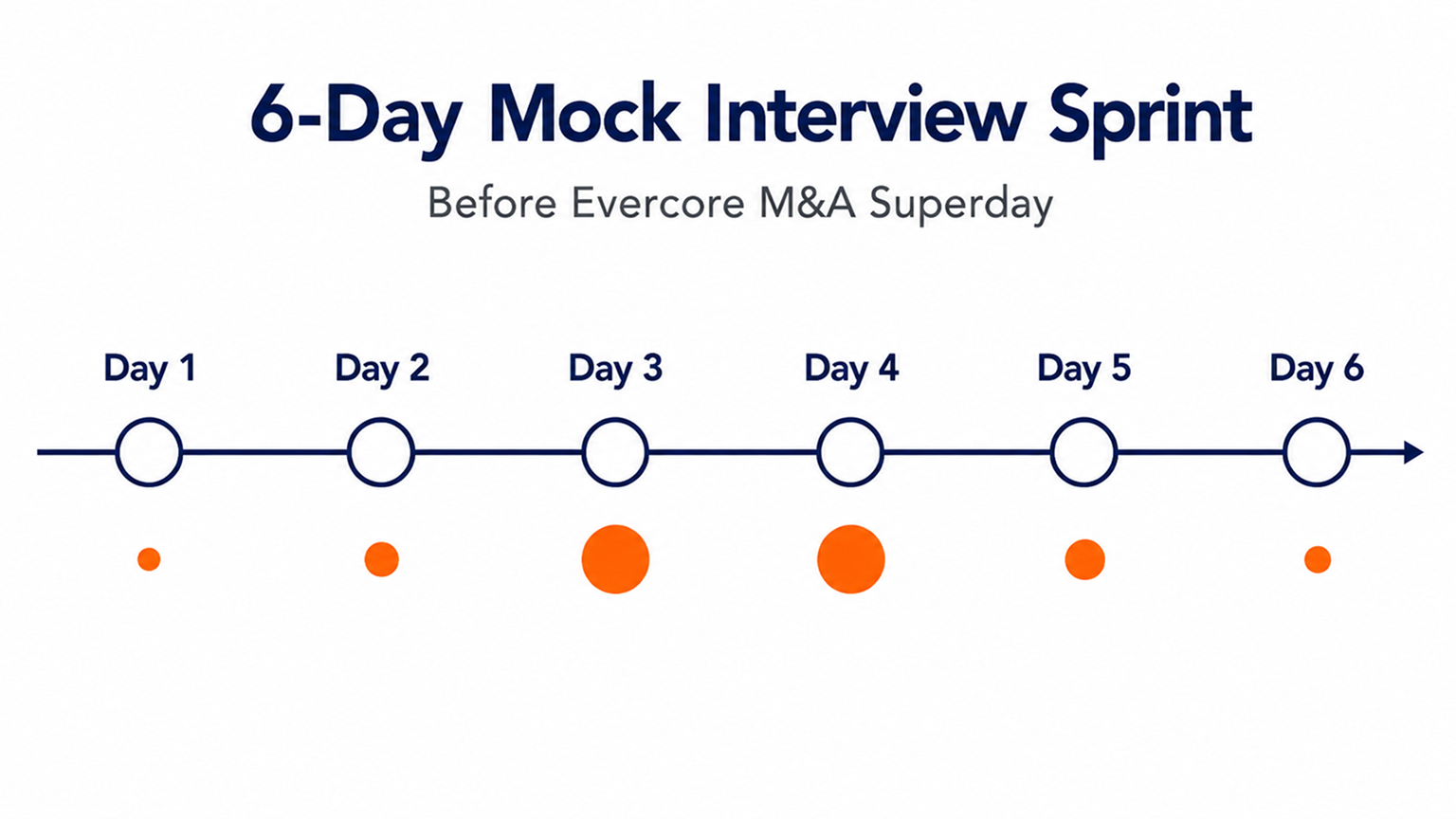
The timeline for Evercore M&A was brutal. Two days from the first-round invite to the interview, four more to the superday. Six days to pull it together.
I could only attempt that because of the month before it. Over a twenty-day winter break I ran about twenty mock interviews, so by the time the real invite came my behavioral answers and core technicals were already steady. That left me free to throw everything at one gap, the sector trends I did not yet know cold.
Across those six days I did roughly ten more mocks, all aimed at industry trends, often more than thirteen hours a day. These were not rehearsals. I asked my mentors to hit me with the strangest, most awkward questions they could invent. Getting stumped was the point. Every blank meant a hole found before the interviewer found it, and I would go research it until I could talk through it without pausing.
The High-Risk Stock Pitch That Paid Off
The clearest example was a stock pitch on a company with a famously complex business model. Most people told me the choice was too risky. Two One Strategy Group mentors happened to know the company well and pushed me to go deeper instead of safer. It worked. During the superday, after I finished, the managing director told me he had worked with that company himself and agreed with my read.
The Coffee Chat That Became the Interview
One thirty-five minute coffee chat turned into something better. The interviewer spent more than half of it walking me through a well-known deal in the sector from the inside, the valuation discount, the room left to add value. That perspective was not something I could have pulled off a search engine. It became my sharpest point in the superday, especially since the senior banker I spoke with had worked on that same transaction.

Superday and the Story I Almost Didn't Tell
The night before, Paul reworked my introduction in a final mock. He told me to stop reciting a resume and answer three things instead. Who I am, where I come from, why I am here. Be real, he said, and let it be a story.
It saved me. In a later round, an associate asked about my background, and I talked about growing up moving between cities and never quite feeling settled. Something landed. She told me about her own path across three countries and the conversation stopped being a test. For a few minutes it was just two people talking. When the offer came, I cried in the street walking home that night. The reason behind all of it, the cat I never found, felt close again.

What I'd Tell Anyone Stuck in the Waiting
Two things carried me, and I would give them to anyone caught in the same anxious quiet.
Focus on the process, not the result. I spent all of January with no interviews and a lot of fear. What calmed me was simple math. For five months I had given nine and a half hours a day, no weekends, no breaks. Once you know you have done everything you could, the self-blame loses its grip, and even a bad outcome leaves no regret behind.
Then value what the process gives you. The tasks that look impossible break down into small, doable pieces, and what you take away is more than an offer. You build grit, steadiness, and focus, and those outlast any single line on a resume. For me, One Strategy Group career coaching mattered most here, in the steadying more than the strategy.
The end of this finance road was never Wall Street. It was the life I actually wanted to protect. However wide that world looks, in my head it stays the size of one small cat. That is where I started, and it is the whole reason I went.
Free Career Planning Session
Book a free 1-on-1 session with an OSG mentor and map out your path to top firms!
Book Your Free Session →Ready to Write Your Own Success Story?
Book a free 1-on-1 session with an OSG mentor and map out your path to top firms!
Book Your Free Session →Explore More Resources



Frequently Asked Questions
Yes. A non-target background can work when you compete on depth instead of pedigree. This candidate focused on technical and research strength, targeted sector groups that reward it, and ran about thirty mock interviews before the superday.
There is no fixed number, but volume builds calm. Here it was roughly twenty over a winter break, then ten more in the final six days, each one aimed at exposing a specific weak spot before the real interview did.
One Strategy Group pairs candidates with mentors who shape positioning, not just answers. It works best for students who need help choosing the right group, drilling technicals, and rebuilding their interview story under tight timelines.



.jpg)