


Student Cases

Buy-side (Finance)
Buy-side (Finance)
From Gearhead to Ares: How a Car Obsession Built My Investing Thesis
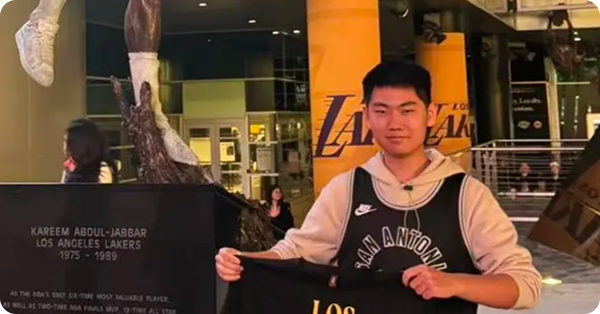
People assume I got into credit through a finance class. I didn't. I got into it because I spent middle school reading about automakers borrowing against their inventory and unpaid invoices. So when the Ares interviewer asked why credit, I wasn't reaching for an answer. I'd had one for a decade.
Published on
May 29, 2026
6
min read
"So, why credit specifically?"
The Ares interviewer leaned back. It was a Wednesday, the third round of three I had done in six days. I had answered some version of that question maybe forty times by then, across coffee chats and mocks. The version I gave him was not the rehearsed one. It was the one I had actually been thinking about since I was twelve. I told him about automakers borrowing against their inventory.
He leaned forward. I got the offer the next week.
From Cars to Capital Markets at a Liberal Arts College
I was a car kid before I was anything else. I spent most of middle school reading forum threads about transmission engineering and brand histories. At some point the reading shifted. I cared less about how the cars worked and more about how the companies behind them worked.
BMW buying Rover-Land Rover to get four-wheel-drive technology was the first M&A story I understood, even though I did not have a name for it yet. Companies could buy each other. Sometimes that was faster than building the thing themselves. That was the door into business, and by the time I applied to college, I knew I wanted economics.
I picked Claremont McKenna for the social science focus, but the underrated reason was the 5C consortium. Cross-registering at Harvey Mudd gave me enough computer science to be comfortable in modeling-heavy interviews later. The combination was useful. CMC's brand, on the other hand, was not the issue I thought it would be in LA but absolutely was on the East Coast. Wharton and Columbia get the first call from New York banks. CMC does not. I knew that before recruiting started, which is why I started looking for outside support during freshman winter, well before the broder finance recruiting landscape opened up to me through structured mentorship.
Building a Credit Thesis Before Recruiting Season
A senior from my high school recommended One Strategy Group. I joined during freshman winter break, before I had narrowed down what I wanted to do.
The mentor network wNas broad enough that whatever sub-sector I was curious about, there was someone working in it. My primary mentor Steven did not try to feed me a recruiting answer. He walked me back through my actual interests and asked what naturally connected to them.
Locking In a Tech, Industrials, and Credit Search Lane
The honest answer was that I cared about how industrial companies financed themselves. Automakers were the obvious example. They borrow against inventory sitting on lots, against receivables from dealers, against equipment they have not finished paying for. That was the financing story I had been reading about since I was a kid without knowing it had a name. The name was private credit.
Once we locked in "tech, industrials, and credit" as the search lane, the One Strategy Group mentorship stopped being general and got specific. When I needed to understand how a direct lending fund underwrites a software company, Steven matched me with a mentor who did exactly that. When I needed to prep for an industrials credit conversation, there was someone for that too.
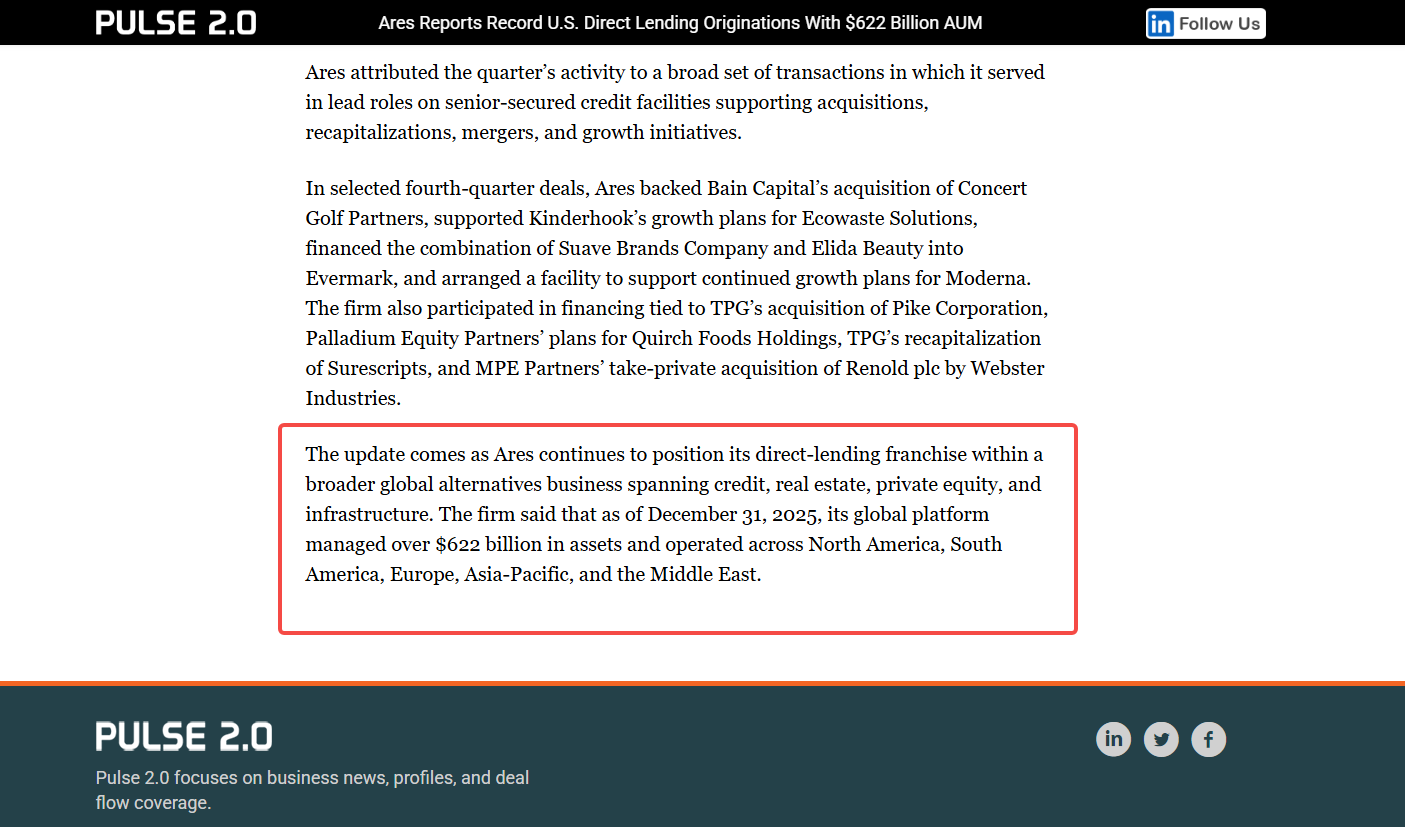
For context on the scale of platforms I was targeting, the Ares Credit Group alone managed approximately $406.9 billion in AUM as of December 31, 2025, part of a firm-wide $622 billion platform. These are not small seats to walk into without a thesis.
My behavioral story also got rebuilt during this stretch. The first draft of "tell me about yourself" wandered. The One Strategy Group career coaching sessions did not rewrite it for me. They forced me to cut it down and find the version that started with cars and ended with credit without sounding rehearsed. This is roughly what investment banking career coaching looks like in practice when it works.
70 Coffee Chats in Four Months
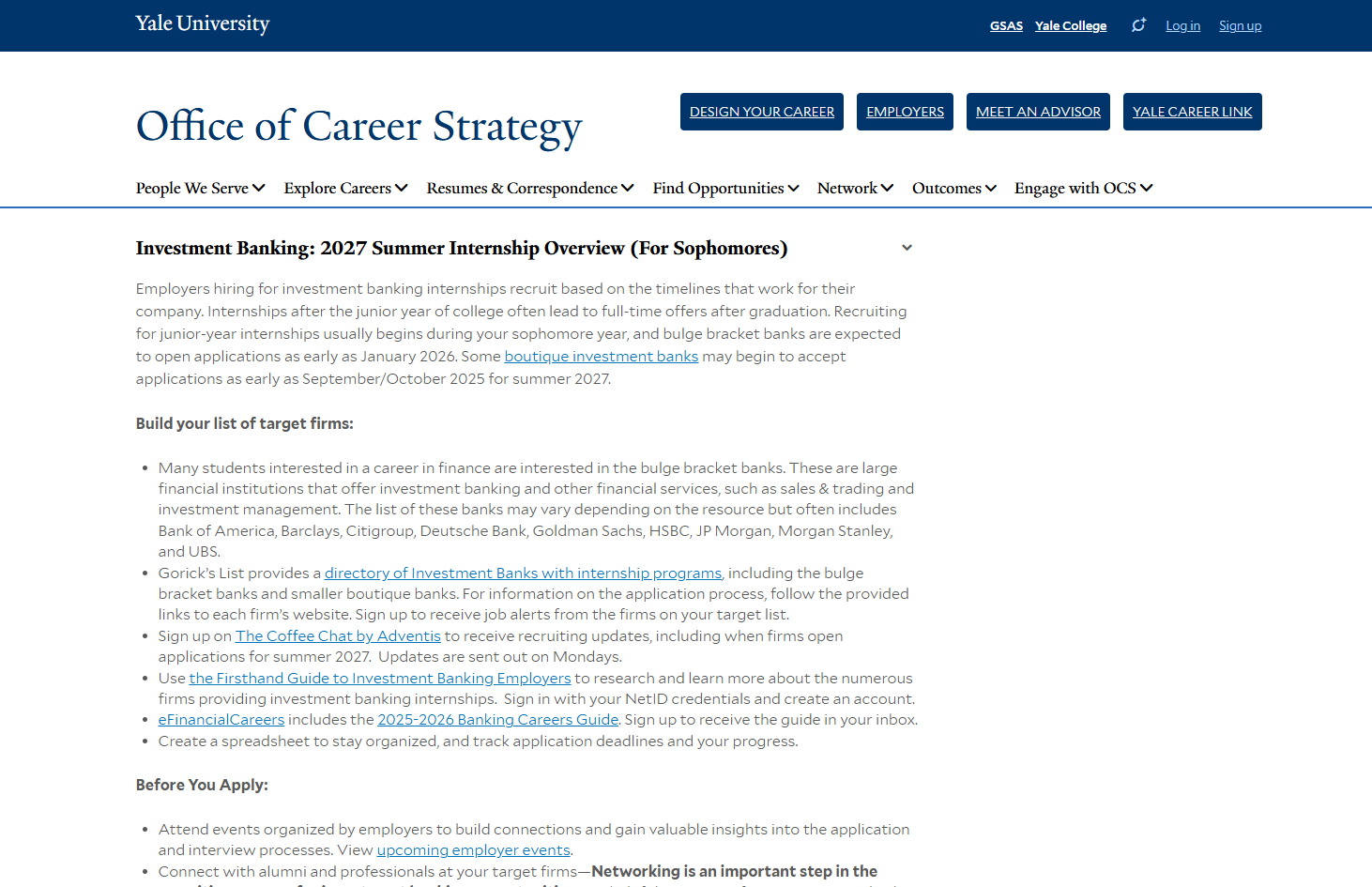
Sophomore-year buy-side recruiting is real, even if it sounds early. Yale's Office of Career Strategy confirms that bulge-bracket applications now open as early as January of sophomore year, and the broader industry data from Adventis shows boutique and buy-side processes follow a similar arc, which mirrors how IB and buy-side recruiting timelines differ across firm types. So when fall of sophomore year hit, I was already behind if I wasn't networking.
I made roughly 70 calls between September and Christmas. Every one was prepped for. The prep for each call had three parts:
1. Look up the person's deal history and recent transactions
2. Read whatever public commentary they had written or appeared in
3. Write a question list specific to their seat, not their firm
Generic chats waste everyone's time and burn the relationship. The work itself was manageable. What was not manageable was what came after.
Handling the Silence
You send an email. You do not hear back. You have no way to know if you did something wrong or if the person was just busy. After enough of those, the temptation is to send more emails to more people, faster, with less prep. That is the failure mode. I forced myself to keep the per-chat prep heavy and the volume manageable.
Steven and the One Strategy Group mentors kept telling me the same thing during this stretch: every call is practice for the next call, not a transaction you need to close. That reframe is the only reason I made it through October.

Two Finalists, One Offer
Interview season hit and the prep I had done quietly for months finally had somewhere to go. The advice from the One Strategy Group team was direct: do not wait for an interview invite to start mocking. By the time invites went out, I had already done multiple case mocks with mentors who covered specific buy-side credit and special situations seats. The work resembled behavioral interview preparation frameworks applied at high volume.
The Bain Final Round and What Followed
My first super-finalist was Bain Capital's Special Situations group. I flew through three rounds in a single day. The thinking felt right. The conversation with the senior investor felt real. I left thinking it had gone well.
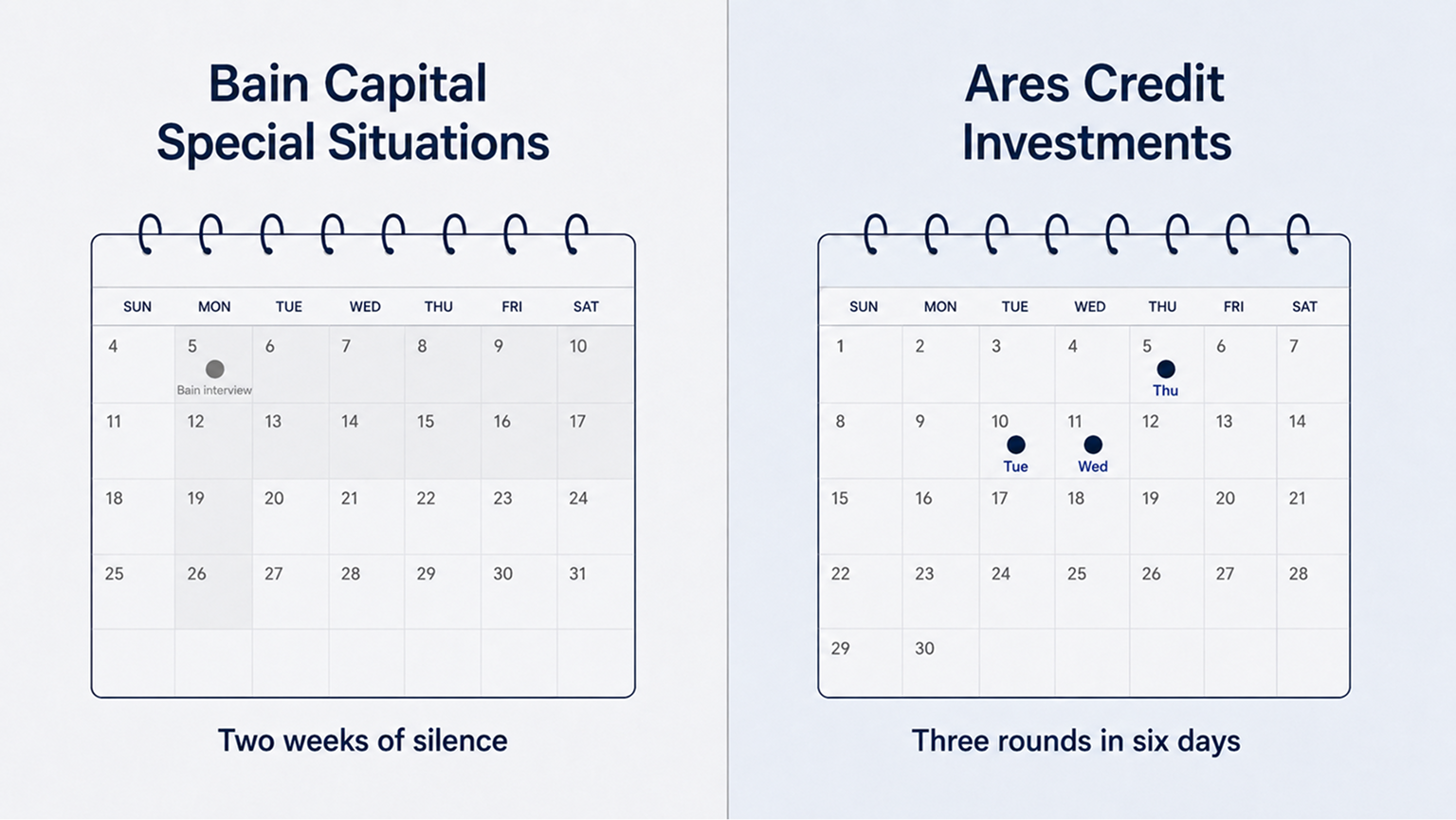
Then nothing. No email, no call, no rejection. Just silence for two weeks until I stopped checking.
That is one of the parts of buy-side recruiting nobody warns you about. Rejection is often not an event. It is the absence of one.
Three Rounds at Ares in Six Days
Two days after I gave up on Bain, Ares opened its U.S. credit process. First round Thursday. Second round the following Tuesday. Final round Wednesday. Six days, three rounds, no buffer. The only reason I survived the pace was that the One Strategy Group career coaching mock interviews had drilled credit underwriting questions into me for months. I was not learning the framework during the actual interview. I was applying it.
The Ares team cared about how I judged a company and how I thought about credit risk specifically. The technical answers were table stakes. What I think actually moved the needle was the behavioral round, where I told the inventory-financing story. The interviewer said that was one of the more interesting angles he had heard, because it was the kind of asset-based lending logic Ares actually does.
Four Things I'd Tell Anyone Recruiting for Private Credit
1. Use what is actually yours. Your weird hobby is more useful than another finance club bullet. Mine was cars. Yours is something else. Specific beats polished.
2. Pick a lane before you network. Seventy calls without a thesis is noise. Seventy calls inside a defined lane builds a real network.
3. Mock before you have to. If you are doing your first case study during a real interview, you are already behind.
4. Train the reset. You will get ghosted. You will lose interviews you thought you won. The skill is forgetting the last one in time to be ready for the next one.
Free Career Planning Session
Book a free 1-on-1 session with an OSG mentor and map out your path to top firms!
Book Your Free Session →Ready to Write Your Own Success Story?
Book a free 1-on-1 session with an OSG mentor and map out your path to top firms!
Book Your Free Session →Explore More Resources



Frequently Asked Questions
Yes, though the path is harder than from East Coast targets. Liberal arts schools like Claremont McKenna have weaker Wall Street pipelines, but cross-registration access to quantitative coursework and early networking can offset the school-brand gap. The Ares Credit offer in this case came after 70 cold calls and a year of focused mentorship.
Networking should begin by freshman winter or summer at the latest, since Yale's Office of Career Strategy confirms that applications open as early as January of sophomore year. Roughly 70 prepared coffee chats over four months is a realistic baseline for breaking into buy-side processes.
One Strategy Group connects students with mentors actively working in the sub-sectors they are targeting, including direct lending and credit investments seats. The program is most useful for students recruiting outside obvious target schools who need both technical preparation and a structured search lane.



.jpg)