



Student Cases

Buy-side (Finance)
Buy-side (Finance)
From Culinary Dreams to Point72: How an NYU Stern Undergrad Secured a Top Hedge Fund Offer
Every piece of my journey, from culinary research to late-night stock pitches, built a more authentic version of myself. The Point72 offer was simply the final piece that clicked into place.
Published on
May 19, 2026
6
min read
Navigating Buy-Side Recruiting: How I Landed a Point72 Undergraduate Internship from NYU Stern
Breaking into a top-tier hedge fund straight from an undergraduate program used to be an exceptional rarity. Most finance students automatically default to the traditional investment banking route. They choose it because the alternative feels too unpredictable and lacks a structured timeline.
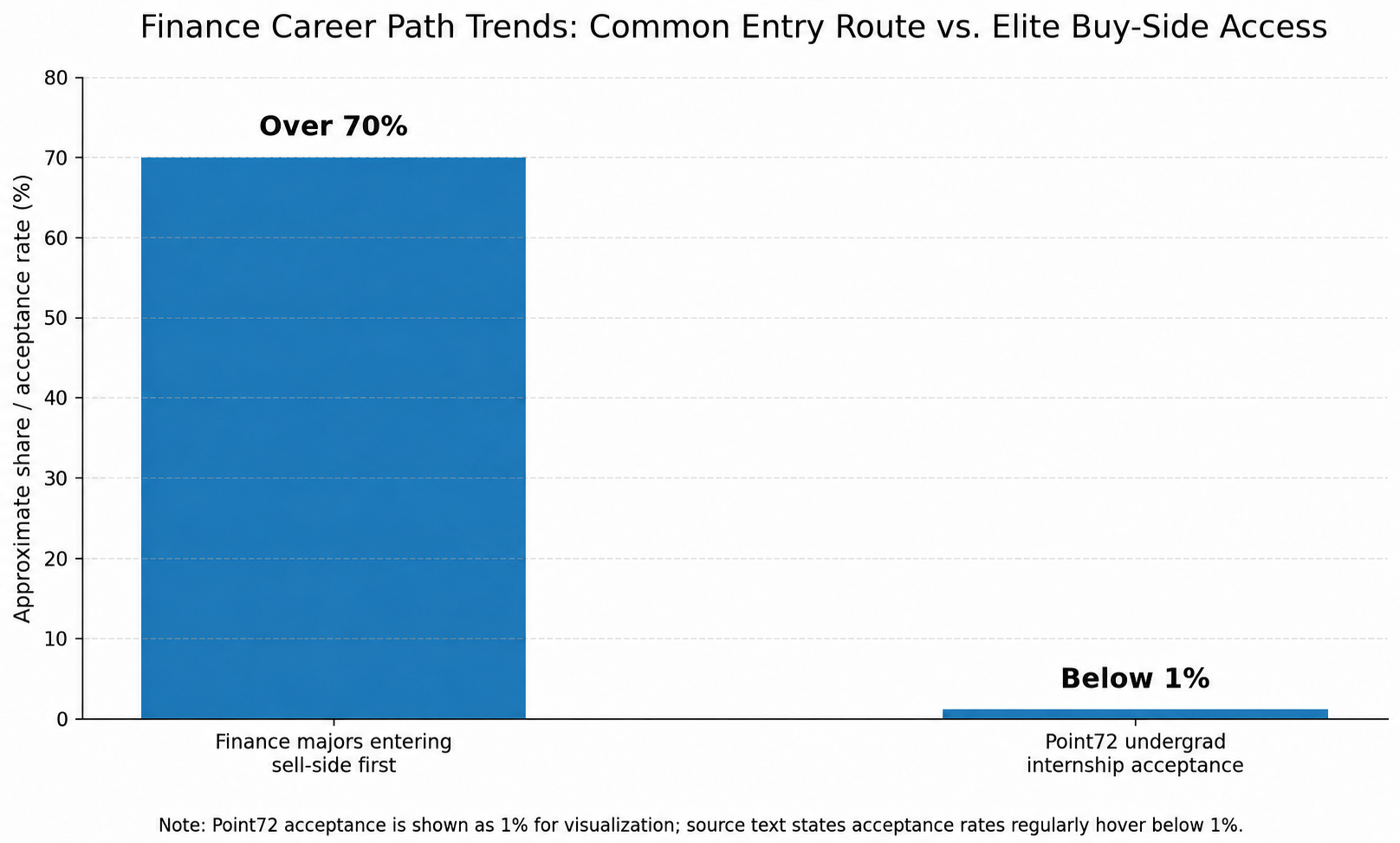
Recent data on careers in finance trends shows: over 70% of finance majors heading to Wall Street still enter sell-side roles first. Securing a Point72 undergraduate internship directly out of college is notoriously difficult. Industry acceptance rates regularly hover below 1%.
Are you currently weighing investment banking vs buy-side out of college? If so, you already know how stressful it is to stray from the beaten path. This is the story of how I stopped following the campus crowd. I focused on my specific strengths. Then, I navigated the competitive buy-side recruiting process to land my dream offer.
Why I Chose Finance Over Food Science
I entered NYU Stern with a plan tailored to the culinary industry, not Wall Street. My initial goal was corporate hospitality, and traditional finance was not even on my radar. However, orientation week brought an immediate culture shock. Everyone around me was already obsessing over hyper-competitive investment clubs. To fit in with the campus culture, I applied to a few organizations. I unexpectedly landed a spot in a student-run public markets fund.
The initial transition was brutal. I quickly found myself putting in 30 hours a week on research assignments. I struggled constantly with unfamiliar industry jargon on top of my regular coursework. The workload was overwhelming. I felt so out of place that I seriously considered quitting the fund to transfer into a specialized food science program.

Two distinct conversations changed my trajectory. First, my parents encouraged me to stick it out a little longer to see what I could learn. Second, I scheduled a meeting with a food management professor who had an extensive background in corporate consulting. Instead of mapping out a direct path into food companies, he gave me a counterintuitive piece of advice. He told me to stay in finance. He explained that finance provides the ultimate strategic lever to enter and influence the consumer sector later in my career.
I took his advice and stayed. I spent more time building quantitative valuation models and defending my investment theses. Slowly, my perspective shifted. I realized that analyzing companies was genuinely exciting.
Investment Banking vs Buy-Side Out of College
Junior year summer recruiting arrived. The collective anxiety to secure an investment banking position at NYU was intense. I preferred public market investing. Still, I let the campus culture dictate my choices. I networked heavily with banking divisions and explored niche restructuring groups.
However, my resume did not match my targets. My practical background was built entirely around public equities. I had spent a year writing company reports and pitching to my student fund. A major turning point occurred when an industry mentor named Paul reviewed my profile. His evaluation was completely unfiltered. He noted that my resume was a structural mismatch for the sell-side. This was exactly the objective perspective you would expect from an experienced investment banking career coach. He doubted I would receive a single traditional banking interview.
That feedback felt like a cold shower, but it provided immediate clarity. I was pursuing investment banking only because it felt safe. I did not actually want to do deal execution. My true interest lay in long/short equity and deep fundamental research. I stopped splitting my focus and committed entirely to buy-side recruiting.

Committing Fully to the Hedge Fund Interview Process: Buy-Side Preparation Tips
Choosing to target hedge funds directly as an undergraduate is a high-risk strategy. Paul warned me that it was a double-edged sword. Because top-tier funds hire incredibly small cohorts compared to large banks, I was risking walking away with no internship at all.
To make this transition successful, I utilized One Strategy Group career coaching to elevate my research style from standard student pitches to institutional-grade investment ideas. The team quickly connected me with active buy-side professionals who understood exactly what modern portfolio managers look for.
For me, the technical modeling components were manageable due to my student club experience, but the behavioral elements of the hedge fund interview process proved challenging. As a naturally introverted person, standing out in an aggressive interview pool required effective interview preparation and deliberate execution.
Through structured One Strategy Group mentorship, I practiced how to clearly communicate my personal investment philosophy. I learned how to tackle hedge fund behavioral interviews. This training helped me answer the critical question of why I wanted to manage capital without sounding like I was reciting a memorized textbook.
How 12 Stock Pitches Landed Me the Point72 Interview
Hedge fund recruiting timelines are highly irregular. My first interview invitation arrived suddenly from Citadel. The preparation window was incredibly short. I spent an intense weekend working through rigorous stock pitch preparation sessions with an OSG mentor named Simon. We worked around the clock to ensure my core ideas could withstand heavy scrutiny.
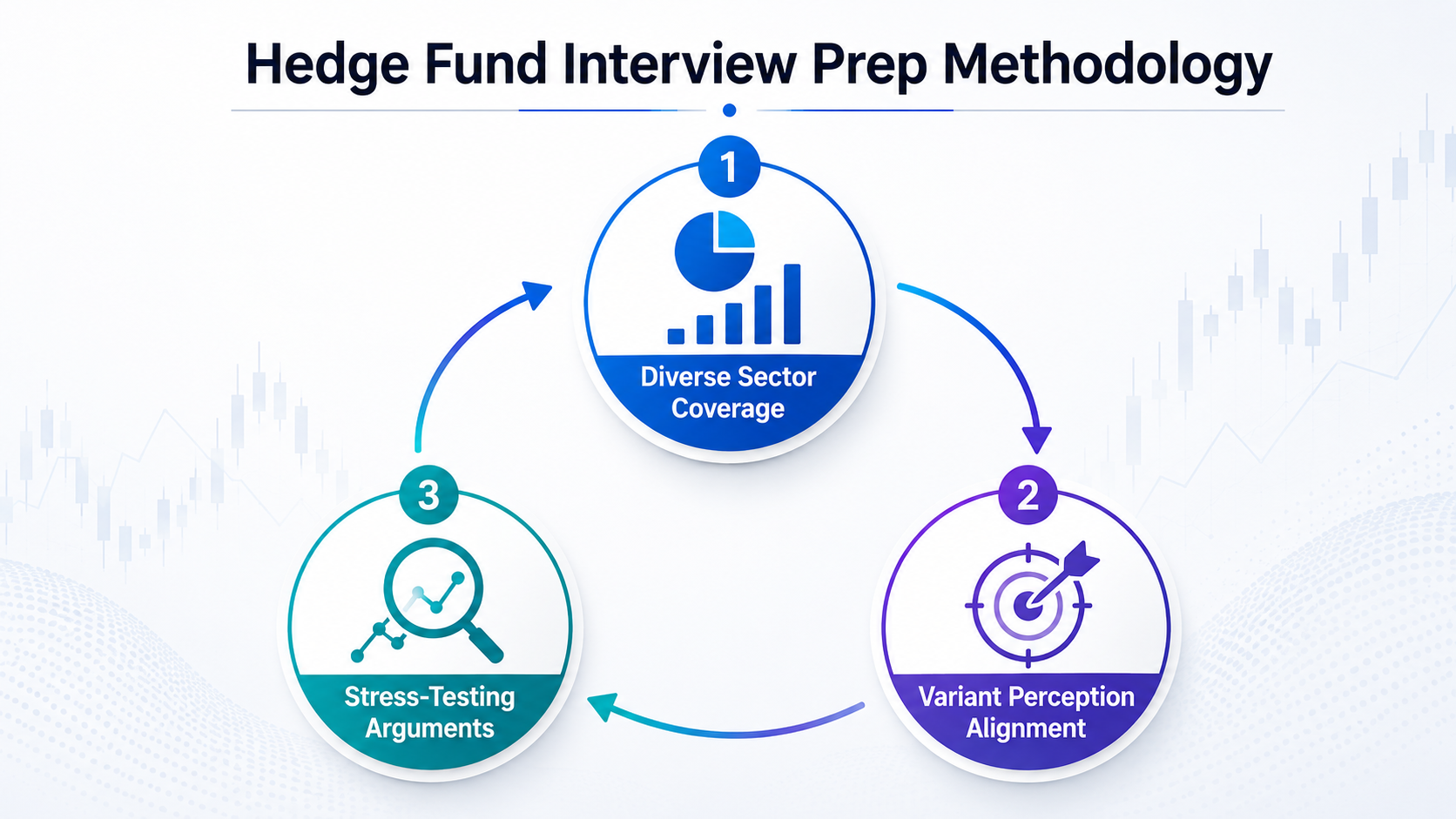
To survive the intense hedge fund interview process, I built a structured methodology. Instead of mastering just one or two ideas, I developed a deep portfolio using three core steps:
1. Diverse Sector Coverage: I built a personal repository of 12 distinct stock pitches. I did not limit myself to one industry. My research covered consumer trends, technology, and software valuations, covering multiple industries to prepare for hedge fund interview questions.
2. Variant Perception Alignment: I clearly identified my variant perception for every company. I focused on why my view differed from the market consensus, which is a critical element in stock pitch preparation.
3. Stress-Testing Arguments: I used One Strategy Group career coaching to pitch directly to active portfolio managers. They treated me like a professional analyst, stress-testing arguments against professional buy-side standards.
When my formal interviews began, the environment was completely different from the stressful interrogations I had anticipated. Instead, the meetings felt like high-level business conversations. During the evaluation process for the Point72 undergraduate internship, the interviewers spent significant time trying to understand my underlying cognitive framework. They asked open-ended questions about why I enjoyed market research and how I express failure experiences from my past research mistakes.
Because of my extensive preparation, I could comfortably pivot to match whatever direction the interviewer preferred. I had a thoroughly researched company ready for debate at any moment. This depth allowed me to talk naturally about financial details and structural industry trends.
The Point72 Undergraduate Internship Offer Call
On the Monday following my final round interviews, the wait for feedback became agonizing. A friend and I decided to step away from our laptops and take a spontaneous trip to the Museum of Modern Art (MoMA) to clear our heads. Spending a few hours surrounded by art completely broke my anxiety loop.
The next morning, I received the official call offering me the Point72 undergraduate internship. While I was incredibly happy, I also felt a distinct sense of calm. I knew exactly how much deliberate effort had gone into that specific result. I hadn't achieved it by following the standard campus playbook or choosing the easiest path.
My long-term fascination with the culinary and consumer sectors has not faded. However, this competitive process taught me how to take a high-pressure corporate track and transform it into a tool for self-discovery and advanced skill acquisition. Every single component—the initial confusion in my student club, the tough feedback on my resume, and the countless hours dedicated to stock pitch preparation—ultimately helped me build a much more capable version of myself.
Free Career Planning Session
Book a free 1-on-1 session with an OSG mentor and map out your path to top firms!
Book Your Free Session →Ready to Write Your Own Success Story?
Book a free 1-on-1 session with an OSG mentor and map out your path to top firms!
Book Your Free Session →Explore More Resources



Frequently Asked Questions
Buy-side roles like hedge funds offer faster exposure to investment decisions but hire smaller cohorts. Sell-side IB has a more predictable recruiting cycle and broader exit options. Choose based on whether you prefer executing deals or analyzing public market companies.
At least 8 to 12 pitches across different sectors. One or two pitches is not enough because interviewers will pick the company you know least and stress-test it. Each pitch should include a clear variant perception against market consensus.
One Strategy Group mentorship connects undergrads with active portfolio managers for live pitch stress-tests and helps shape institutional-grade investment ideas. This is especially useful for students whose resumes look more like banking than buy-side and need help repositioning.



.jpg)