



Student Cases

Consulting
Consulting
A Social Sciences Major at LSE Lands Both BCG and Bain — Without Playing It Cold
I never understood why people assume finance types must be cold and cutthroat. Competition exists, but recruiting felt more like learning than a battle — and after my superday, what I heard most was 'Wow, you're so nice.
Published on
June 15, 2026
5
min read
When everyone around you is talking about Spring Weeks and you don't even know what a "three-statement model" is, breaking into management consulting can feel impossible, especially from a non-business degree. That was Chloe's starting point at LSE. Two years later, she held full-time BCG and Bain consulting offers in London. She got there without a finance pedigree and without elbowing anyone aside: by staying organized, telling an honest story, and not pretending to be someone she wasn't.
Discovering Finance From Zero
I grew up in Sydney, and at some point its comfort stopped being enough for me. I've never been good at standing still, so when it came time to choose a university, I chose the UK, somewhere harder. I arrived in London not knowing a single person, with no upperclassmen to ask and no obvious path to follow.
LSE's recruiting culture is intense and starts early. Everyone around me was chasing Spring Weeks while I was still learning the vocabulary. I knew almost nothing about finance or consulting, and no one was teaching me.
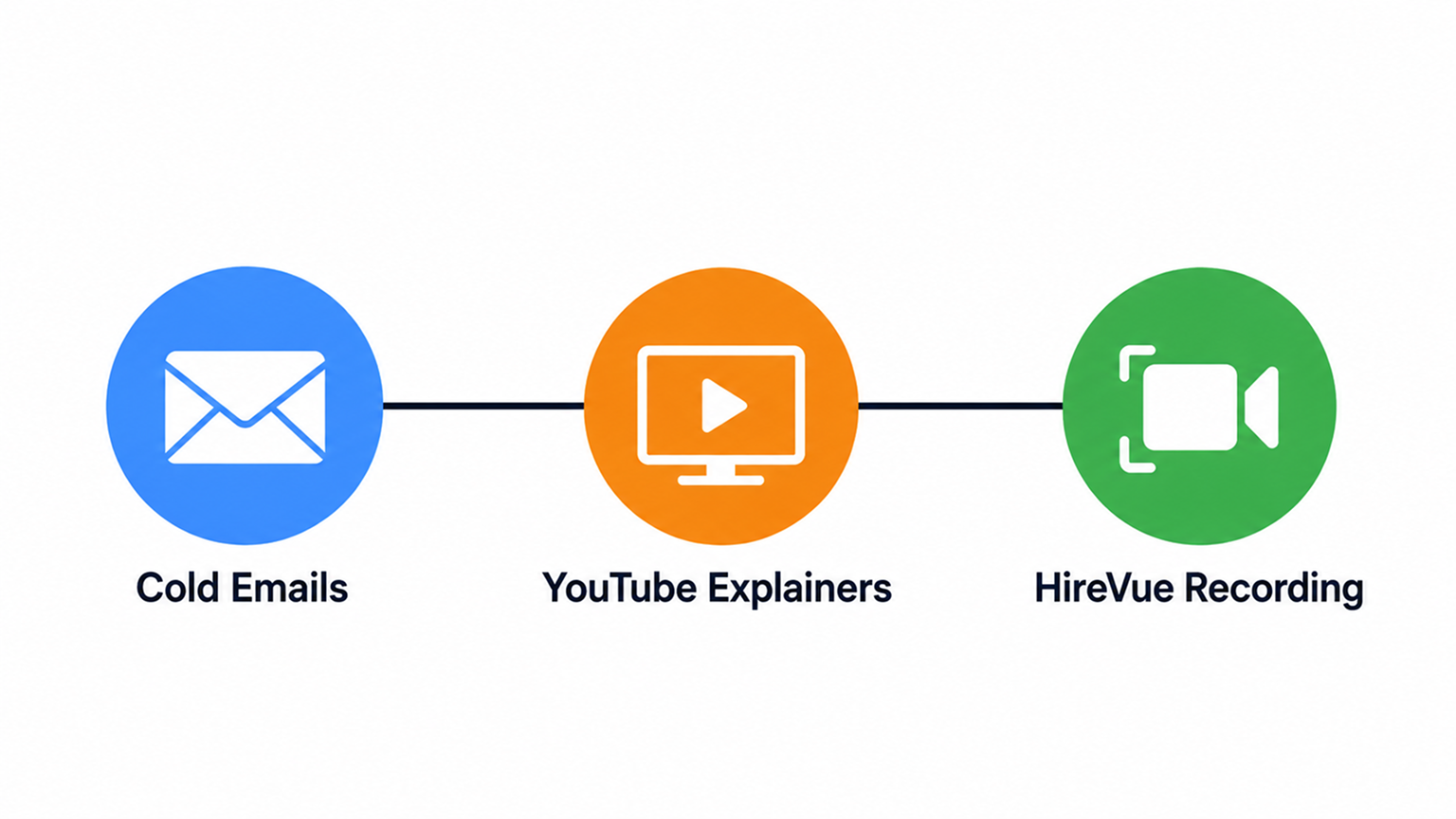
So I taught myself. I watched YouTube explainers, sent cold emails, and asked anyone a year or two ahead of me how the process actually worked. To record my HireVue video interviews, I balanced my laptop on a cabinet in a small dorm room and recorded take after take. Anxiety, nerves, and constant self-doubt defined most of those months.
The work paid off in a handful of spring internship offers at smaller firms. But none of them excited me, and none felt difficult enough. That was the first sign I needed real guidance rather than another round of self-study.
Why She Turned to OSG
I trusted my own work ethic. What I didn't have was someone who could see the whole picture and point me toward the right next move. The summer after my first year, I reached out to OSG.
What drew me in was the access. OSG put students in front of senior bankers and professionals who had done the job for years. I wasn't looking for another list of interview tricks. I wanted to understand how experienced people spoke, how they worked through a problem, and how they read an industry, none of which I could learn from videos alone. About twenty minutes after my first call with an OSG mentor, I signed.
From Banking to Consulting: Building a Story She Believed
A summer internship across eight banks confirmed what I had suspected: I didn't want to specialize in one field for years. I wanted range. Consulting offered exactly that, with exposure across industries, the chance to use my policy background on work that shipped, and teams to think alongside.
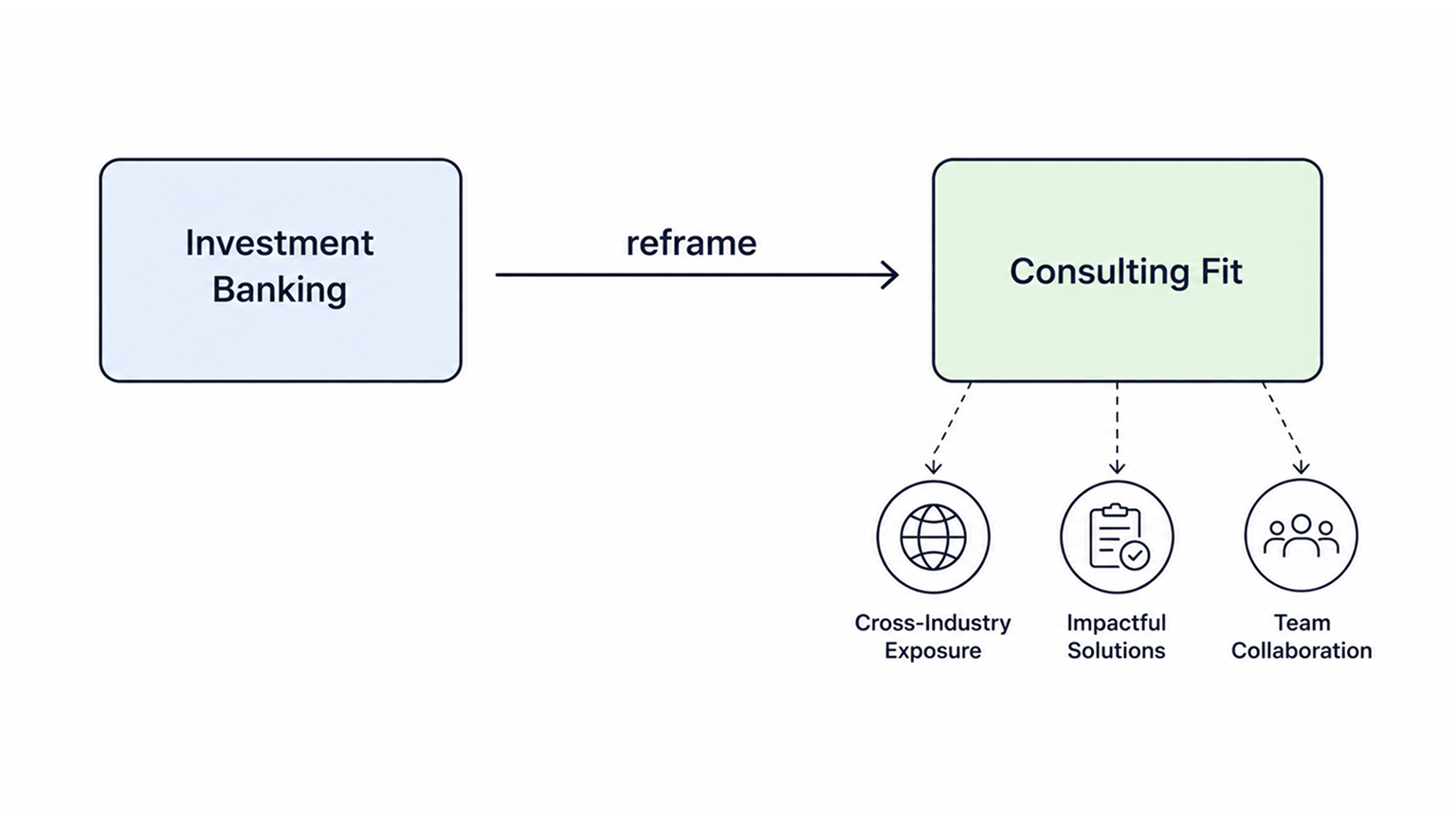
Once I committed to consulting, my mentor Zoran began not with the technical side but with the story. The first task was learning to explain "why I'm moving from banking to consulting" in a way that was true and that I could repeat a hundred times without hesitation.
He also arranged a steady supply of mock interviewers. At 8 AM or after the workday ended, someone was always available to run a case with me. Having people take it that seriously made me take it more seriously too.

Extreme Mode: Inside a High-Intensity Recruiting Sprint
I am a planner by nature, with little patience for wasted time. During recruiting, that tendency intensified considerably.
I ended up with more than 200 pages of mock-interview notes. In the weeks before interviews, I was doing three mocks a week and staying in the library until it closed at midnight, not to study for class but to work through case interview practice until the unfamiliar prompts began to feel familiar.
The round I remember most was a four-hour Bain interview. By the third hour I was exhausted, and a protest outside filled the office with sirens. I had to raise my voice and hold my focus. The interviewer told me afterward that the noise had bothered him too, but that I had handled it well. The offer call came not long after.

Two Honest Lessons for the Next Cohort
OSG helped me with the obvious things: case math, structured thinking, interview delivery. But the more important change was internal. For anyone in the middle of recruiting now, two things stand out.
Don't try to be someone you're not. I performed best in interviews once I stopped performing and simply showed up as myself. I spent the early months embarrassed about studying social sciences and trying to hide it, and in the end that background was what interviewers remembered about me.
Treat the interview as a conversation, not a contest. When you genuinely listen and think alongside the person across the table, it shows. The process is competitive, but I never accepted the idea that you have to be cold to succeed. After my superday, the comment I heard most often was that I was easy to talk to. You don't have to gatekeep or undercut anyone to do well.
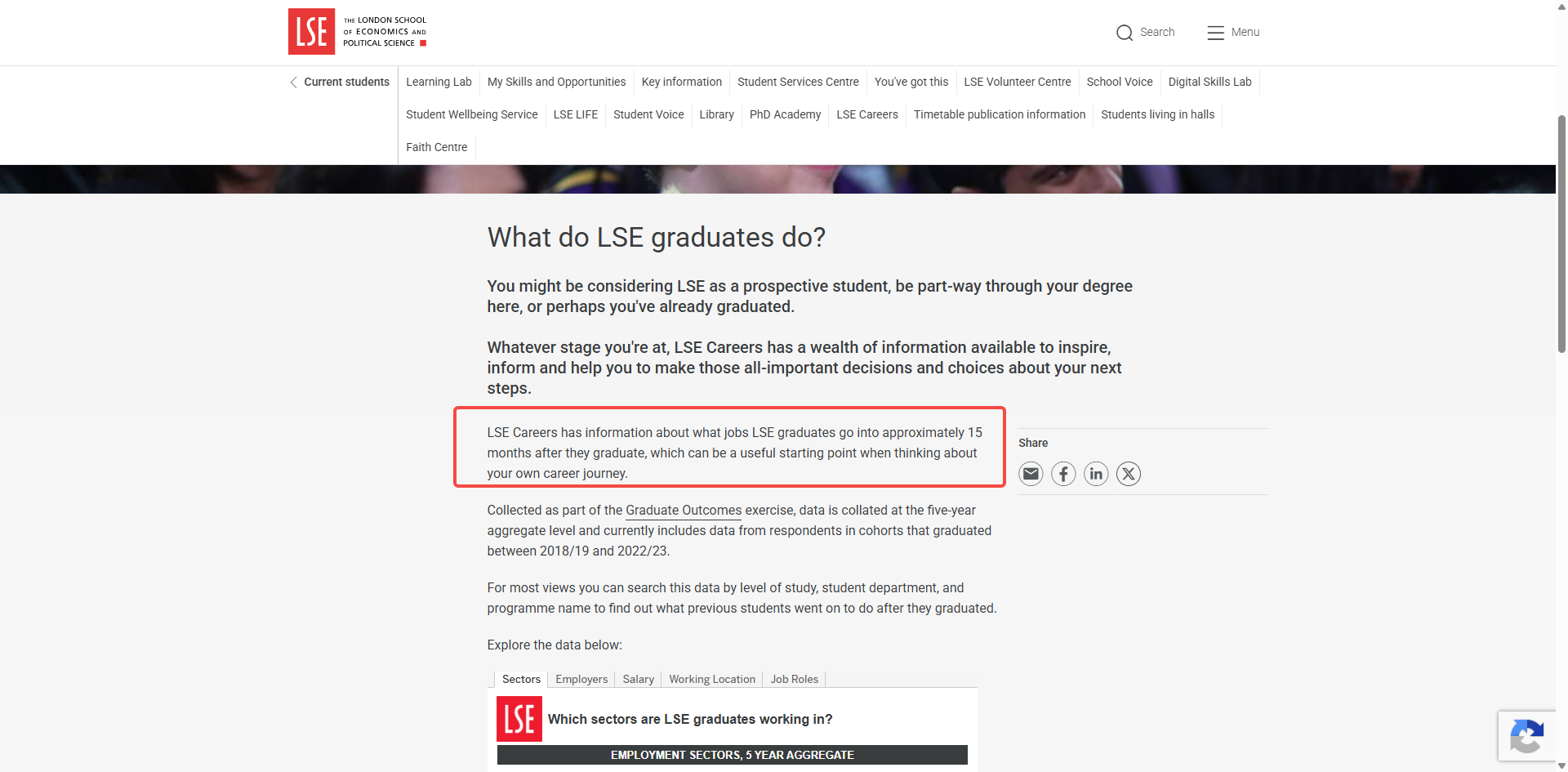
LSE consistently sends a large share of its graduates into financial and professional services, the leading destination tracked in LSE Careers' Graduate Outcomes data, collected by the UK's Higher Education Statistics Agency roughly 15 months after graduation. I'm one of them now, and I arrived on my own terms.
Disclaimer: OSG has no partnership or affiliation with BCG, Bain, or any other company mentioned in this article. OSG students build their own capabilities through OSG's services and secure offers through official campus and lateral recruiting channels.
Free Career Planning Session
Book a free 1-on-1 session with an OSG mentor and map out your path to top firms!
Book Your Free Session →Ready to Write Your Own Success Story?
Book a free 1-on-1 session with an OSG mentor and map out your path to top firms!
Book Your Free Session →Explore More Resources



Frequently Asked Questions
Yes. Chloe studied social sciences at LSE and still landed BCG and Bain offers. Firms value structured thinking and a credible story over a specific major, which is what let her pivot from investment banking into consulting.
There's no fixed number, but intensity matters. In the run-up to interviews, Chloe did three mocks a week and built over 200 pages of case notes—repetition that made the real four-hour Bain interview feel like another practice round.
One Strategy Group connects students with senior mentors who fix the behavioral narrative first, then match steady mock interviewers. It works best for candidates pivoting careers or recruiting from non-business backgrounds who need structure they can't self-teach.



.jpg)