



Student Cases

Investment Banking (Finance)
Investment Banking (Finance)
Can You Break Into Healthcare Banking From an Art History Major?
You probably aren't the most technically polished person in the room. The thing you bring that no one else can copy is the part of you that looks unrelated to finance.
Published on
June 2, 2026
6
min read
In January, the morning of my first superday, snow was coming down hard across campus and I walked to the library with one thought looping in my head. I wanted the offer so badly that I'd stopped being myself. I'd built a recruiting process around the wrong industry, learned an entire sector from zero, and rehearsed answers until they sounded like someone else's. That walk in the snow was where it started to come apart, and where I figured out what was actually holding me back. This is how I ended up with a healthcare investment banking offer, and what the path looked like from the outside in.
A Snowy Walk to a Superday I Wasn't Ready For
My first final round set the tone for everything that came after. I wanted it so much that the wanting got in the way. The technical prep was there. What wasn't there was any ease, any sense that I could simply talk to the people across the table instead of performing for them. I walked out knowing I'd tightened up, and knowing it had cost me. The useful part came later, when I sat with why it happened.
Why an Art History Major Chose Investment Banking
Before college I was the kind of reader who could finish a book in a day and forget to eat. In high school I started writing instead of just reading, won a national creative writing prize, and spent winter weekends in a ceramics studio firing pieces to sell for a local food bank. By the time I got to Northwestern, I'd doubled down on what I loved and declared economics and art history together.
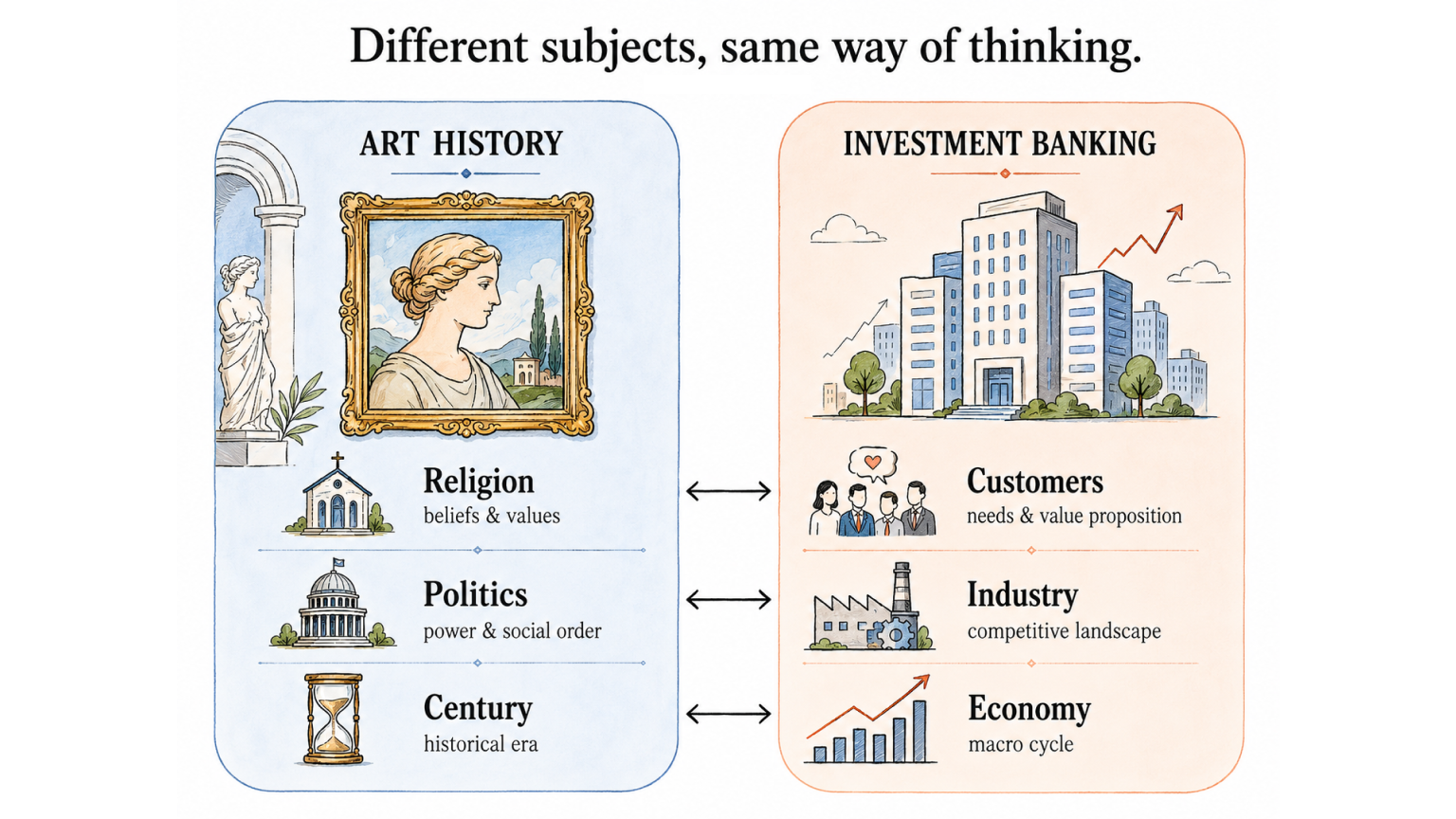
People ask why those two fields belong in the same sentence. To me they ask the same question. Art history hands you one painting and asks what the religion, the politics, and the century around it were doing. Finance hands you one company and asks the same thing about its industry, its customers, and the economy. Both are windows. I wanted a stage wide enough to hold the analytical side and the curious side at once, and that was how I decided to break into banking.
Finding Biotech Through a Single Stock Pitch
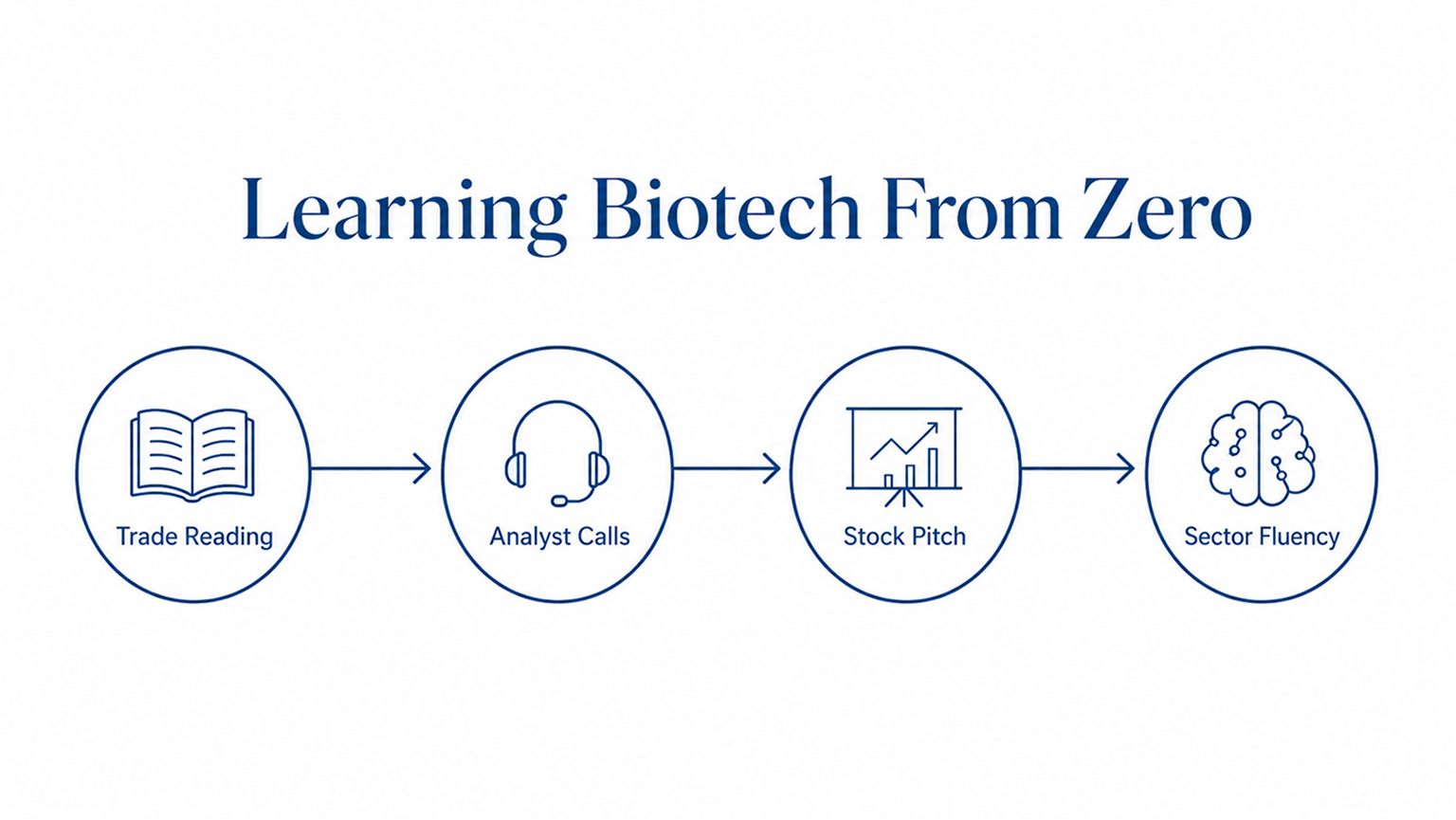
I joined Northwestern's investment club and got assigned a stock pitch on a medical device company that built temperature-controlled organ-transport technology. To do it right, I cold-emailed two equity research analysts who covered the name and asked how they thought about it. When I learned the company had acquired an airline to expand its logistics, something clicked. Mergers weren't abstract. A deal could change whether a patient got an organ in time.
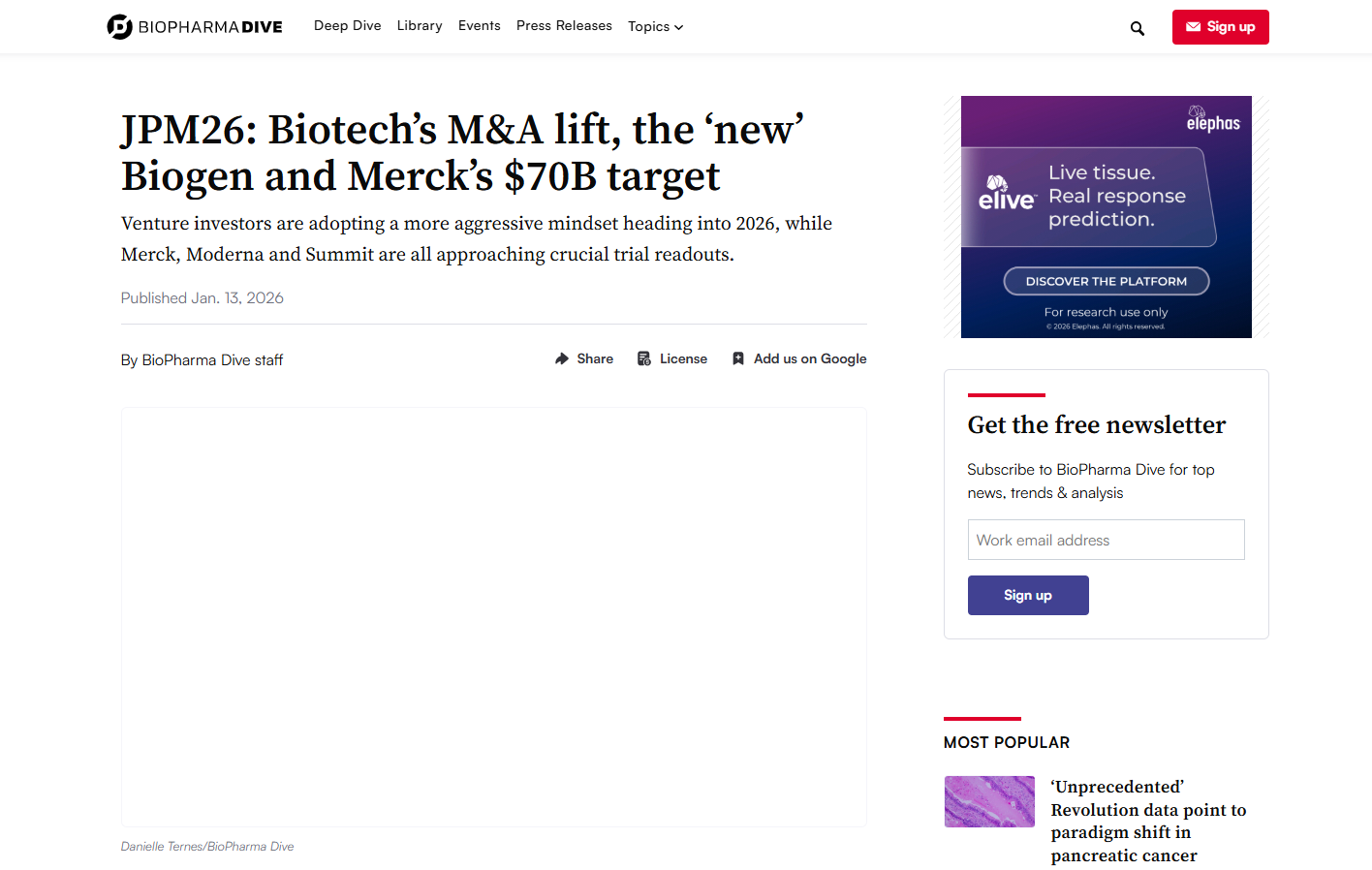
That was the moment healthcare stopped being a coverage group on a list and became the thing I wanted to do. The sector backs it up. According to BioPharma Dive's January 2026 reporting, acquisitions of venture-backed biotechs reached roughly $64 billion in total deal value in 2025, driven by large buyouts of companies developing real pipelines. Every one of those deals decides whether years of research actually reaches people.
Learning an Industry From Zero
Coming in without a science background, biotech coverage looked impossible. One Strategy Group mentorship paired me with a senior pharma specialist who walked me through therapeutic areas, drug pipelines, and how to read deal logic the way an analyst would, one of the skills that mattered most. I read trade coverage like Fierce Biotech, listened to industry podcasts on my commute, and slowly stopped feeling lost. TMT had made my head spin. Biotech modeling, oddly, calmed me down. Each deal wasn't just a pipeline changing hands. It was a startup's years of work getting a real shot at a patient.
Preparing for an Investment Banking Superday
Theory only takes you so far. Starting in December I parked myself in a coffee shop near home for six hours a day over the holidays, running mock interviews and grinding technicals. By January the pace jumped. I had nine interviews in one week and barely time to eat.
My first final round went badly. I wanted it so much that I tightened up, second-guessed every answer, and lost the ease that makes an interview feel like a conversation. Sitting with it afterward, I realized my real problem was never technical. It was that I kept telling myself I wasn't ready.
How One Strategy Group Career Coaching Rebuilt the Pitch
My coach put it plainly. My biggest weakness was that I always believed I hadn't prepared enough. Through One Strategy Group career coaching we tore up the formulaic self-introduction and rebuilt it around what I actually cared about, the writing, the art, the way I'd taught myself an industry. Before the next final round I went into a bathroom and stood in a power pose like it was a private joke with myself. It worked.

The Offer Came When I Stopped Performing
At the Evercore final round, a managing director asked about a biotech company I'd already pitched cold. The answer came out fluid and sure, and I knew the months had paid off. Evercore is one of the most selective seats in banking, an independent advisory firm that says it has advised on over $5 trillion in transactions since its founding, so I'd braced for the hardest version of the conversation. Instead it felt like talking shop with someone who got it.
The boutique that mattered most ran six rounds over nearly three hours. Past the technicals, they asked about the Mediterranean and the Renaissance, about seeing a Caravaggio in person in Rome, about the ceramics fundraising. The tension drained out of me. When they asked me to introduce myself, I dropped the rehearsed strengths and said the true thing instead. My curiosity and my willingness to start from nothing were the throughline from art history to investment clubs to teaching myself biotech, and that was my real edge. When I mentioned a drug-delivery detail I'd dug out of a research report, I watched the interviewer's face change. The offer call came in under three hours later.
What I'd Tell Anyone Starting From the Outside
Before recruiting season, my parents told me to just be myself, and I pushed back hard. I was sure no firm would want the real version. The real version is what opened the door.

So a few things I'd pass on. Refuse the spiral. Trade anxiety for action, because networking and interview skill are never things you finish preparing for, they get built in the doing. When the positive feedback isn't there yet, move anyway.
Be your own loudest fan even when it feels like self-delusion, because that belief is what pulled me back from the edge during a brutal winter. And trust the part of you that seems out of place. You might not be the most technical candidate or the smoothest in a behavioral round. The odd thing on your resume, the art history, the ceramics, could be the exact thing that makes you memorable in a room full of people who all sound the same.
Disclaimer: One Strategy Group has no partnership or affiliation with any company mentioned in this article. One Strategy Group students improve their own capabilities through its services and secure offers through standard recruiting channels.
Free Career Planning Session
Book a free 1-on-1 session with an OSG mentor and map out your path to top firms!
Book Your Free Session →Ready to Write Your Own Success Story?
Book a free 1-on-1 session with an OSG mentor and map out your path to top firms!
Book Your Free Session →Explore More Resources



Frequently Asked Questions
Yes. A non-science background is workable if you build real sector fluency. The case here shows an art history and economics major teaching herself biotech through trade reading, a stock pitch, and analyst conversations, then landing a healthcare banking offer. Genuine curiosity about the sector mattered more than a prior science degree.
Start with one company and go deep. The student here cold-emailed two equity research analysts covering the name, read trade coverage like Fierce Biotech, and learned to read deal logic the way an analyst would. Understanding why a pipeline matters to patients, not just the multiples, made the pitch land in interviews.
One Strategy Group career coaching focuses on candidates whose real obstacle is mindset, not technicals. It pairs students with industry mentors and rebuilds the self-introduction around what they actually care about. For someone freezing in final rounds because they feel underprepared, that reframing is often what turns interviews into conversations.



.jpg)