



Student Cases

Investment Banking (Finance)
Investment Banking (Finance)
I Landed a Citi Energy Banking Offer Before I Could Read a 10-K
Bankers who played soccer were the tightest network I found, and if a firm had even one of them, I knew I'd get the interview. Sport opened doors my resume never could on its own.
Published on
June 8, 2026
5
min read
Most people researching energy investment banking recruiting assume the edge comes from a perfect resume or a finance pedigree. Mine started in the back of an airport cab at midnight, talking to a driver about oil. I came to Rice as a former athlete with no finance background, yet a year later, I had a Citi offer in a Houston energy group. This is the part that doesn't show up on a resume: the conversations, the timing, and that one interview I was sure I'd blown.
I was a few minutes into my first-round interview with Citi when I realized I had been answering the wrong question. The banker had been walking me through an asset acquisition he led. On too little sleep, I had heard a different energy company with a similar name, and I had just given him a confident, detailed read on a deal he never mentioned. He glanced at his colleague. I kept talking for another sentence before it landed: I had misheard the entire thing.
I left certain I had lost the offer. Citi sent the final-round invite anyway. That gap, between how badly I thought it went and what actually happened, taught me that reflecting on a failed interview is most of what I learned about energy investment banking recruiting.
Why a Non-Target Background Was Not the Obstacle
I came to Rice with one of the lowest predicted profiles you could imagine, no finance background, and no idea how to get a job in investment banking. On paper I was not the candidate Houston energy desks recruit.
What I had instead was a habit of paying attention. One December night I caught a cab from the airport. The driver was Venezuelan — his English rough, my Spanish three months old - and we talked the whole ride about why he left and how much of it traced back to oil.
I went home and pulled filings on the major producers, read everything on Venezuelan crude, and built a view on where prices might move. A month later Maduro was on every front page, and my "why energy" answer was something I had reasoned out rather than rehearsed. Interviewers can tell the difference.
How Soccer Became an Investment Banking Network
The technical learning curve was slow. It took most freshman years to understand how the three financial statements connect. By sophomore fall I was recruiting full-time, living in either a suit or pajamas.
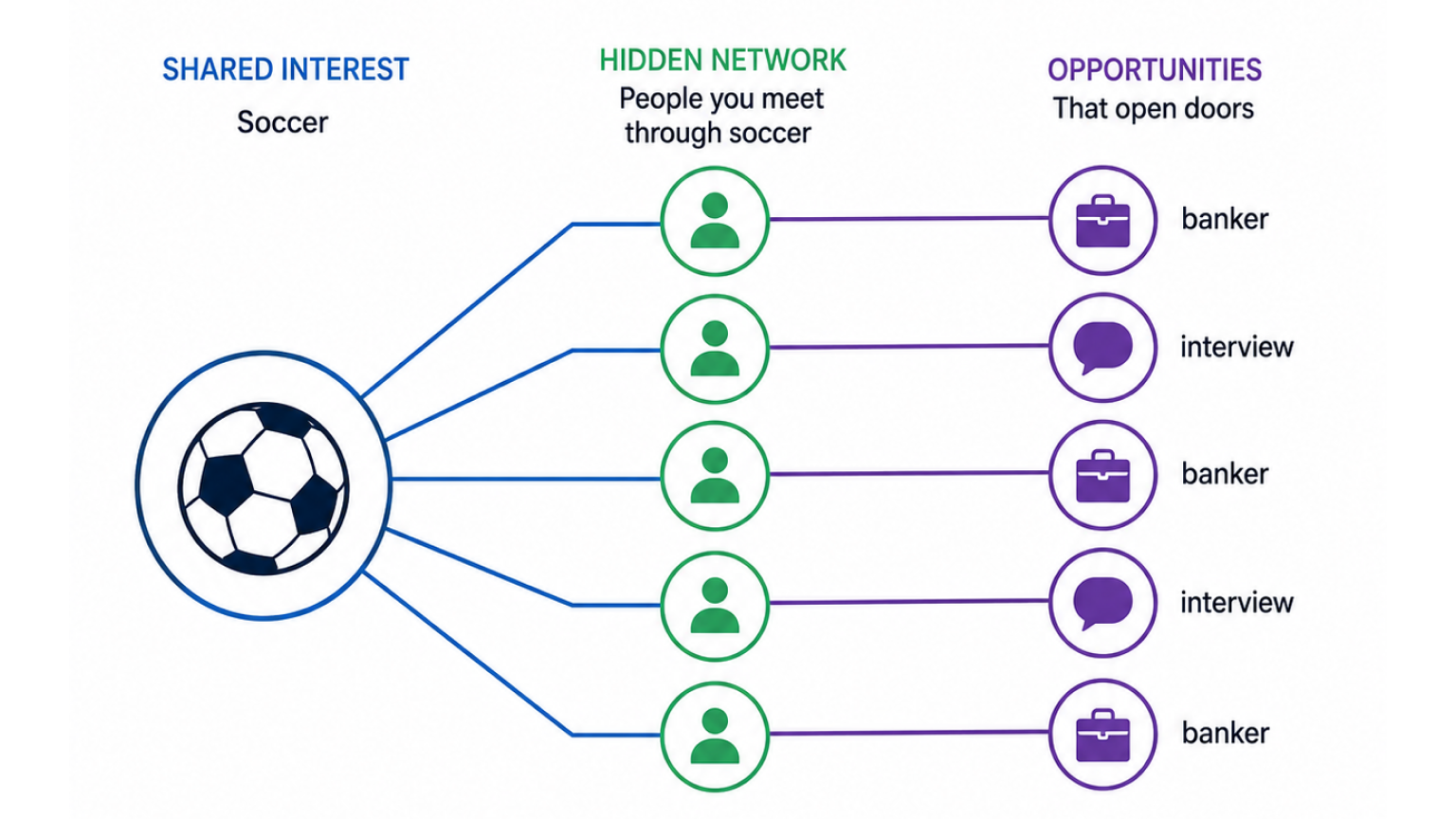
The asymmetric advantage came from something off my resume. I had spent years on soccer and volleyball, and bankers who played soccer formed a tight, informal network inside the industry. Once I found someone who supported the same club, a stiff call turned into a real conversation. If a firm had even one of them, I was confident I would get an interview. My self-introduction opened with my favorite club being acquired, and that alone carried a Bank of America call. A shared connection to one player's college team broke the ice with a Citi associate. A semi-target candidate is supposed to be locked out of these rooms. Soccer was how I got in.
Why Houston Is a Harder IB Market for Women
Houston was where I wanted to be, and oil and gas was the group I actually enjoyed reading about. The market itself is unforgiving in ways outsiders miss.
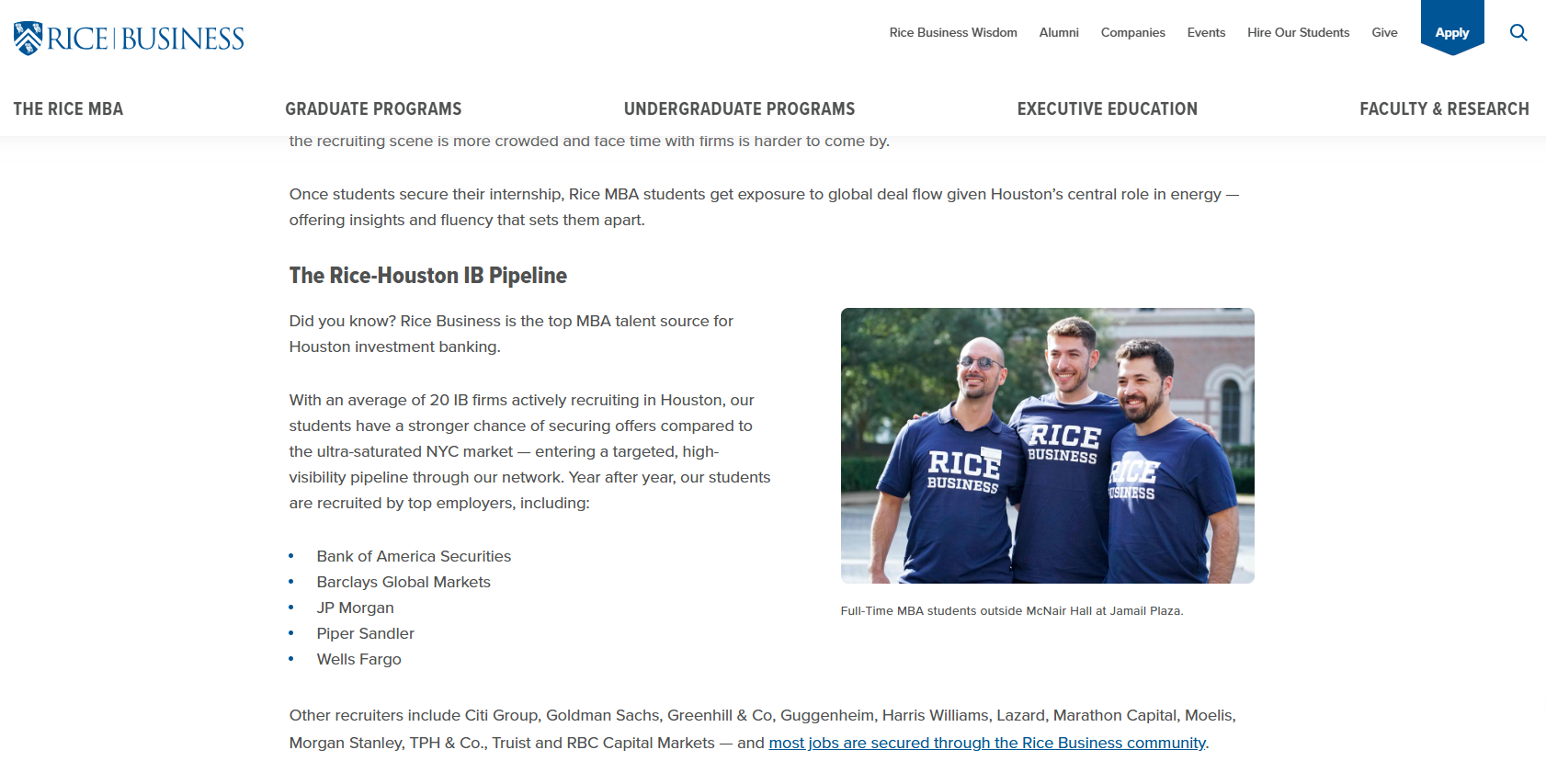
The timeline is compressed. Half the firms closed before Christmas that year and the rest finished in the first working week of January, leaving almost no margin for error. The access, though, is real. Rice Business reported in September 2025 that an average of 20 investment banking firms recruit in Houston each year, Citi among them, the kind of weekly in-person contact a saturated market like New York rarely allows.

Recruiting as a Woman in Energy
Houston also skews heavily male, and is one of the few places where recruiting can run harder for women than men. Being a woman in finance here means being noticed takes extra work, since investment banking stays male-dominated at senior levels. My practical takeaway: build pipelines in San Francisco and New York too, so one city's odds do not decide everything.
How Mentorship Helps a Compressed Recruiting Timeline
Compressed timelines punish anyone working alone. One Strategy Group mentorship was where I closed that gap. My lead mentor, Sarah, could name the exact weakness in a single sentence, and the night before a key interview she reworked my "why energy" answer until an answer I had practiced two hundred times suddenly clicked into place just from a few changed words.
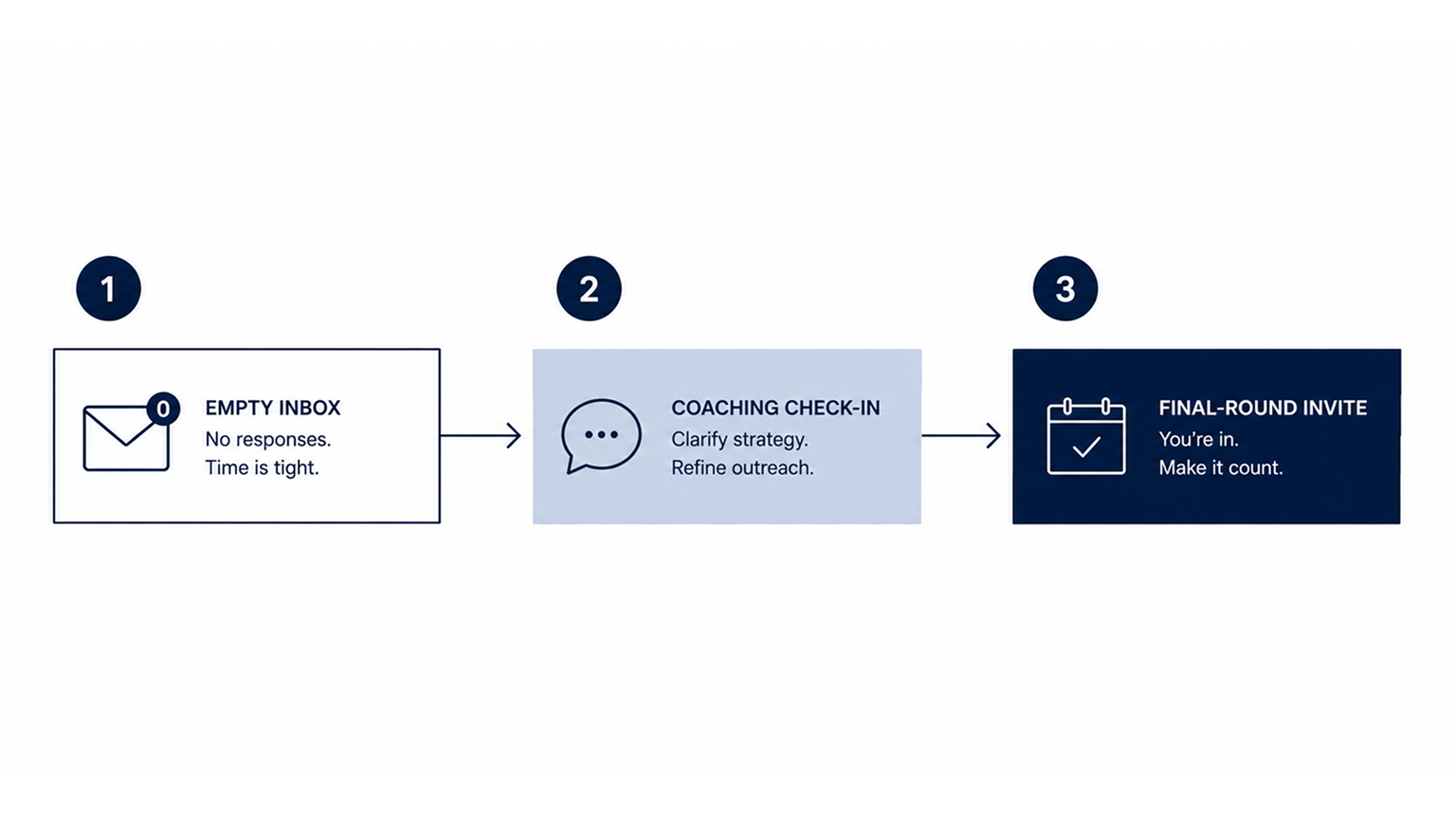
The rest was just staying steady. After calls I was sure had gone well, my inbox stayed empty. But OSG's coaching kept me from spiraling — silence didn't mean rejection, and one wrong word didn't blow the whole process. The athlete who used to run the field is heading into energy trading. The trading floors here run late, and that is where I start.
Disclaimer: One Strategy Group has no partnership or affiliation with any company mentioned. OSG students build their own capabilities through OSG services and secure offers through standard recruiting channels.
Free Career Planning Session
Book a free 1-on-1 session with an OSG mentor and map out your path to top firms!
Book Your Free Session →Ready to Write Your Own Success Story?
Book a free 1-on-1 session with an OSG mentor and map out your path to top firms!
Book Your Free Session →Explore More Resources



Frequently Asked Questions
Yes. Location matters more than pedigree in Houston, where roughly 20 banks recruit on the ground each year. In-person access and a sharp, self-built market view can outweigh a non-target label for energy coverage roles.
Find a shared interest that bankers care about, then let it carry the conversation. A common hobby, sports team, or background turns a cold call into a real exchange, and one warm contact inside a firm often leads to an interview.
Targeted coaching helps most under time pressure. One Strategy Group mentorship works with students to sharpen interview answers and read recruiting signals, so a candidate facing a tight window does not waste it second-guessing alone. It suits students recruiting into competitive finance roles.



.jpg)