



Student Cases

Investment Banking (Finance)
Investment Banking (Finance)
From IBD Tracks to UBS Sales & Trading: A Semi-Target Sophomore's Path
UNC isn't a target for Wall Street, and after the technicals I realized macro was more interesting than modeling anyway. Sales & trading was the only honest answer to both.
Published on
May 22, 2026
5
min read
It was New Year's Eve in a friend's living room in Houston. I was supposed to be on holiday. Instead I had a borrowed suit jacket hanging off the back of a kitchen chair, a laptop balanced on a stack of coffee table books, and another email from Paul telling me the HireVue deadline was tomorrow. I recorded it sitting on the floor. The audio picked up someone's dog barking in the next room. That was the moment recruiting stopped being a plan and started being the actual thing I was doing.
A Late Bloomer's Bet on the Secondary Market
I came into college without a clear plan. I was a sophomore at UNC Chapel Hill studying computer science, more athlete than analyst on paper, and I spent most of my freshman year taking courses that had nothing to do with finance. Religion. Philosophy. Political theory. I read a lot. I wrote a lot. What I came out of that year with wasn't a career thesis. It was the idea that markets were the most interesting game on the board, so I should figure out how to play it.
UNC is a semi-target. That word gets thrown around a lot, but what it meant in practice was that the on-campus banking infrastructure I'd read about on Wall Street Oasis simply didn't exist for me. There were no resume drops with a guaranteed first round. There were no alumni info sessions where a managing director showed up. I had to build the pipeline myself.
Why Sales & Trading, Not IBD
The default path most semi-target finance students chase is IBD. I'd already started down it — the modeling courses, the M&A walk-throughs, the standard sophomore curriculum at One Strategy Group. But somewhere around the third DCF I built, I realized I was more curious about why rates moved than about whether the LBO returns hit 25 percent.
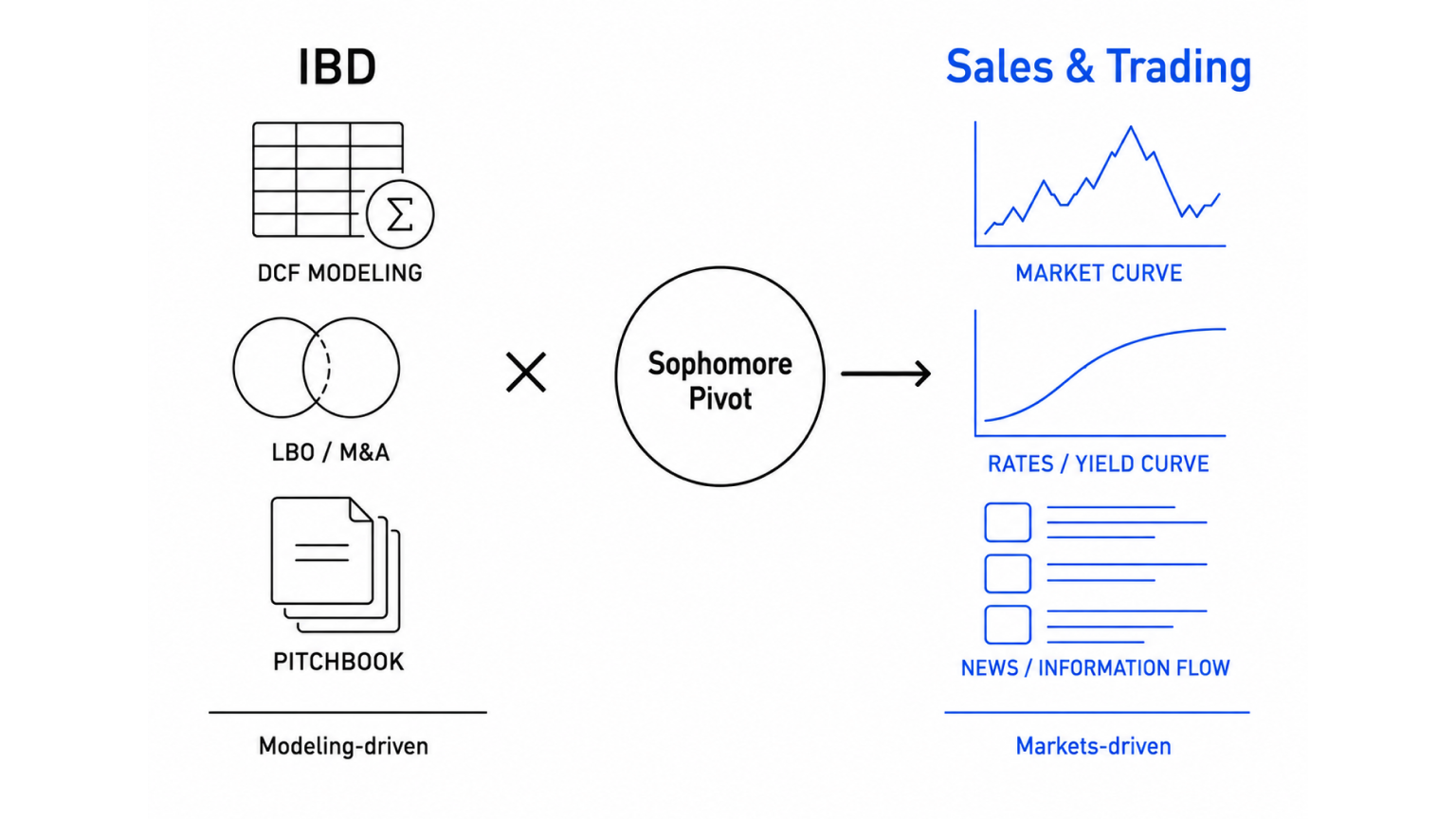
There was also a strategic argument. Industry estimates suggest the share of bulge-bracket analyst hires coming from non-target and semi-target backgrounds is meaningfully smaller than from core target schools, with most of that gap concentrated in IBD groups at elite boutiques. S&T at the bulge brackets tends to be more open to candidates whose edge is genuine markets curiosity rather than a brand-name resume. The math was simple. My interest was in macro was more interesting than modeling. My school was not Wharton. Sales & trading was the only honest answer to both.
Once I committed, I changed how I spent my mornings. WSJ before class. Morning Brew in line for coffee. I started saving Fed transcripts to read on the bus. When I saw a headline I didn't understand, I'd write it down and bring it to my next One Strategy Group mentorship session. My mentor would walk me through what the bond market was actually pricing, and I'd go back and read the next day's headline with two more layers of context. That was how market sense got built. Slowly. By repetition.
The KKR Rejection That Reset Everything
My first real interview was KKR in January. I didn't get the offer. I made it through the first round and into the second, then got cut.
I remember sitting in my dorm afterward and being more confused than disappointed. The interview had gone well. The interviewers had said as much. I'd spent days reading the group's most recent reports cover to cover. I'd skipped most of my twentieth birthday to prep. And then it just ended.
The most useful thing anyone said to me that week came from a One Strategy Group career coaching session. The feedback was specific. The resume was working — KKR doesn't bring semi-target candidates to a second round otherwise. The delivery was working. What I needed wasn't to overhaul anything. I needed to take more swings. So I went back to applications. Spring break that year was a series of mock interviews on Zoom, run with different mentors so I'd hear the same questions in different voices.
The Cost of Recruiting at a Non-Recruiting School
Friends were doing the things friends do in college. Concerts. Road trips. Long lunches that turned into long dinners. Weekend gatherings where someone always cooked too much food and no one left until midnight.
I missed most of it. Not because I was avoiding it. I would commit to dinner, then a HireVue invite would come in, and I'd cancel to spend the night running through behaviorals with a mentor instead. I went through a stretch where my actual social life was reduced to the half-hour walks between buildings.
I wrote about it in my journal once, and the line that stayed with me wasn't dramatic. It was something like: the recruiting season ends either when you get an offer or when you decide what you're missing is worth more than what you're chasing. I never decided that. So I kept going.

From Morgan Stanley to UBS Insight Day
The first offer came on a Friday afternoon in the UNC Student Union. I was at a table with a friend going over a stock pitch. My phone rang with a New York area code, and I stepped outside. Morgan Stanley.
The week after, I flew to New York on UBS's reimbursement to attend the Global Markets Insight Day. I was, as far as I could tell, the only UNC student in the room. Most of the others were from Ivies, still in the middle of their recruiting cycles. I was sitting there having already signed one offer.
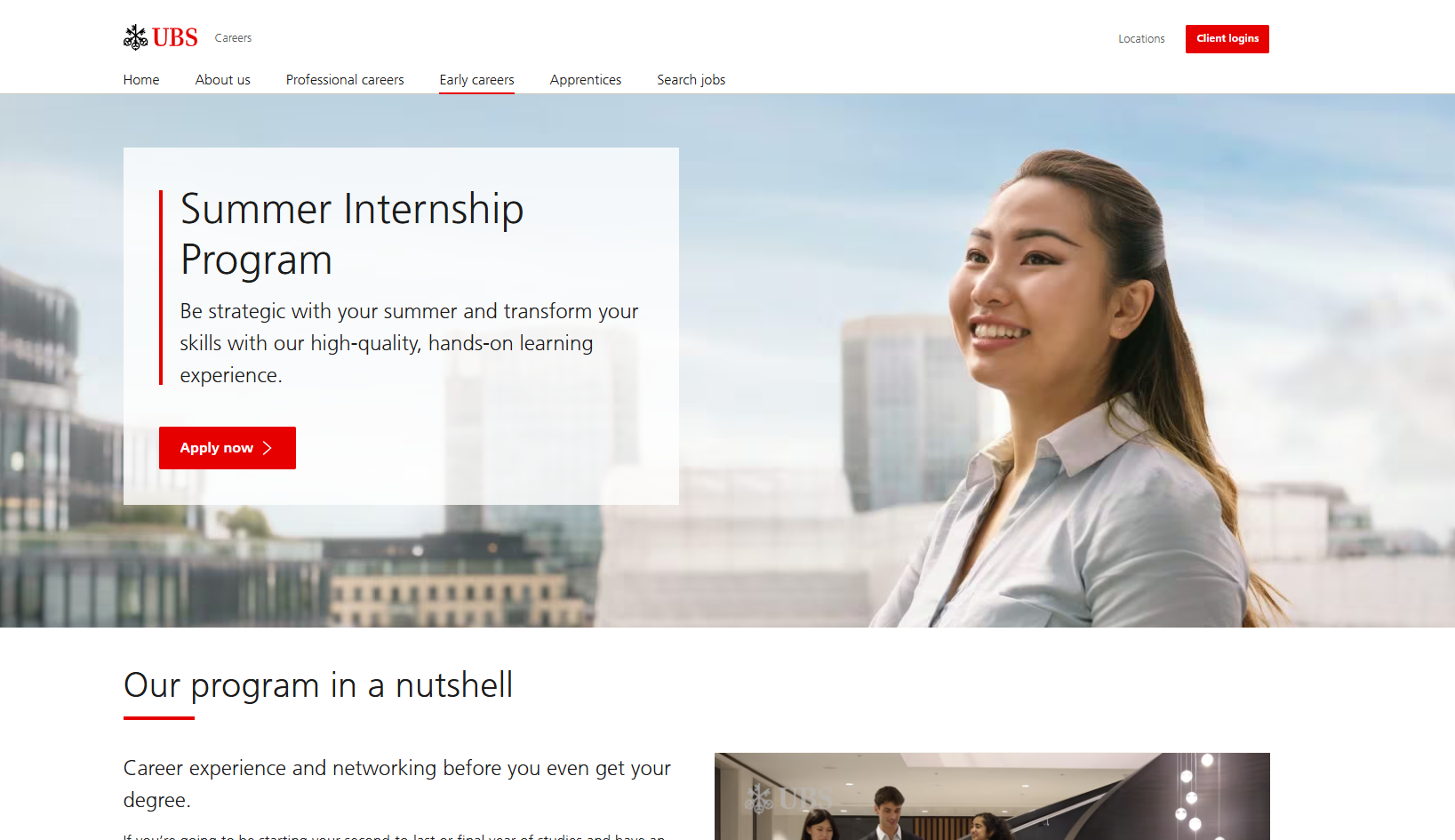
UBS runs its Sales & Trading summer analyst program out of New York as a ten-week paid internship starting in June, with a GPA threshold of 3.0 and rotations across Global Markets desks (UBS Careers, 2026). The Insight Day was effectively a preview of that program. The final round came a few days after I got back. I walked in knowing the product set, knowing the desks, knowing why I wanted to be on the rates side versus equities. The offer came through the same week.
What I'd Tell a Sophomore Starting This Process
Three things, all operational.
1. Build market sense before you build market opinions. Read one financial paper every morning for sixty days before you try to have a view on anything. Most sophomore interviews go badly not because the candidate is wrong but because the candidate is confident about something they read twice.
2. Pick the seat that fits how you think, not the one that fits your resume. If you find yourself bored by modeling and energized by macro, that's information. It costs nothing to act on it in sophomore year. It costs a lot to ignore it for two more.
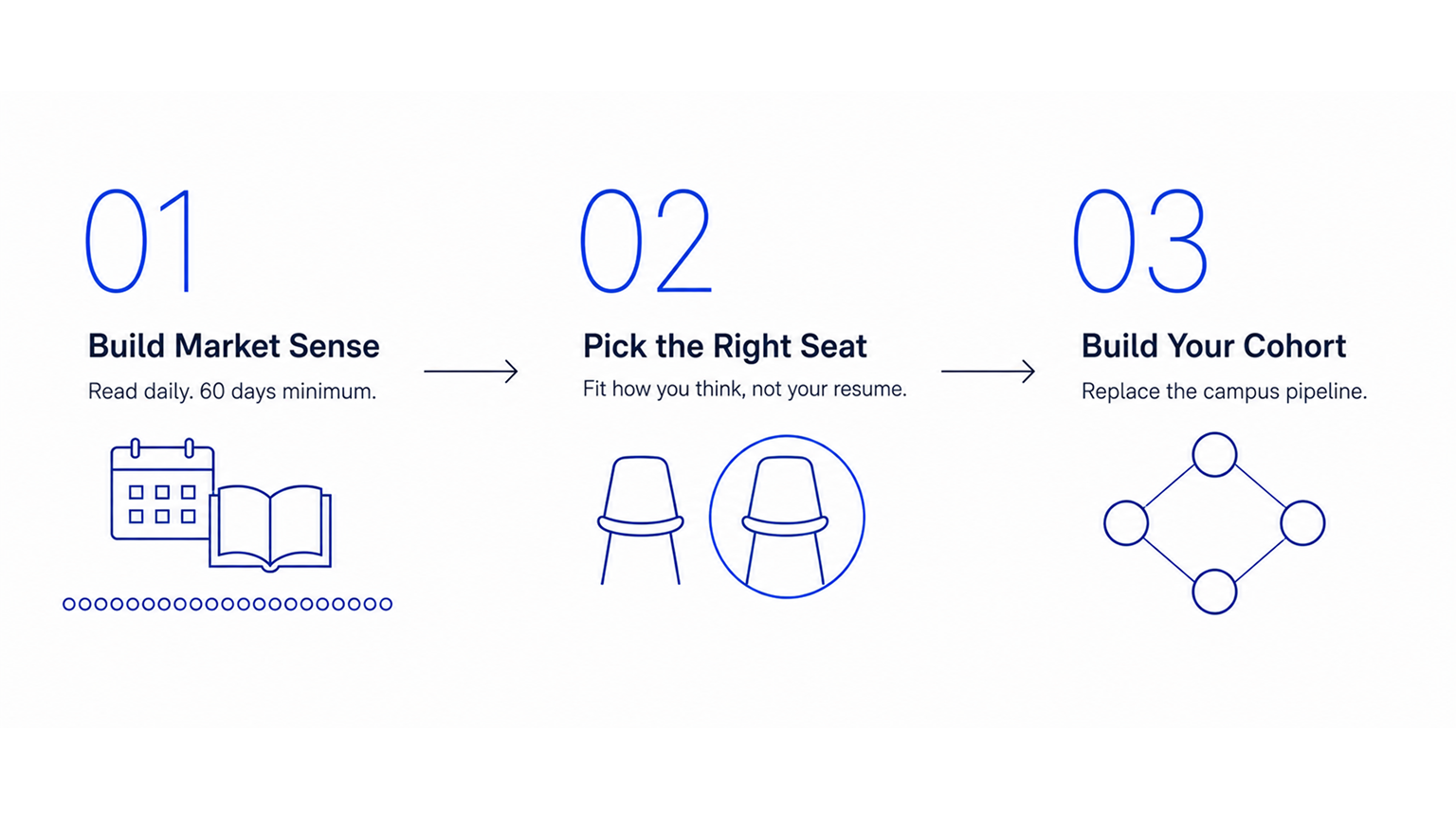
3. Build a recruiting cohort if your school doesn't have one. A semi-target school doesn't give you a built-in network of people going through the same process at the same time. That's the resource gap that matters most. The One Strategy Group mentorship structure filled that for me, not because of any single resource but because there was always someone a year ahead who'd done the exact interview I was prepping for the next morning.
I am not done. The internship starts in June. But the part that took the longest — figuring out which seat I actually wanted, then showing up well enough to get it — that part is finished. For a late bloomer, that's a head start I'll take.
Disclaimer: This case study reflects one student's individual recruiting experience and is published for informational purposes only. Outcomes vary by candidate, school, market cycle, and program. One Strategy Group is not affiliated with, endorsed by, or sponsored by UBS, Morgan Stanley, KKR, or any other firm mentioned in this article. All firm names are referenced solely to describe the student's recruiting trajectory.
Free Career Planning Session
Book a free 1-on-1 session with an OSG mentor and map out your path to top firms!
Book Your Free Session →Ready to Write Your Own Success Story?
Book a free 1-on-1 session with an OSG mentor and map out your path to top firms!
Book Your Free Session →Explore More Resources



Frequently Asked Questions
Yes, but the path is different. Semi-target candidates typically clear interviews on macro fluency and product knowledge rather than brand-name resume signals. Aaron landed UBS S&T NYC from UNC by pivoting away from IBD-default prep and building daily market reading habits over a full year.
Build market sense before market opinions. Read one financial paper every morning for sixty days. Track Fed transcripts, run macro headlines past a mentor, and learn the product set on each desk you target. Mock interviews matter more than additional reading once the foundation is in place.
It pairs students with mentors who have worked the desks they are targeting. The structure covers technicals, macro frameworks, mock interviews, and resume review. For semi-target candidates, the program replaces the on-campus banking infrastructure their school does not provide.



.jpg)